
The Real Essence of Qurbani: Beyond the Sacrifice of Animals

Mudasir Nazir Wani


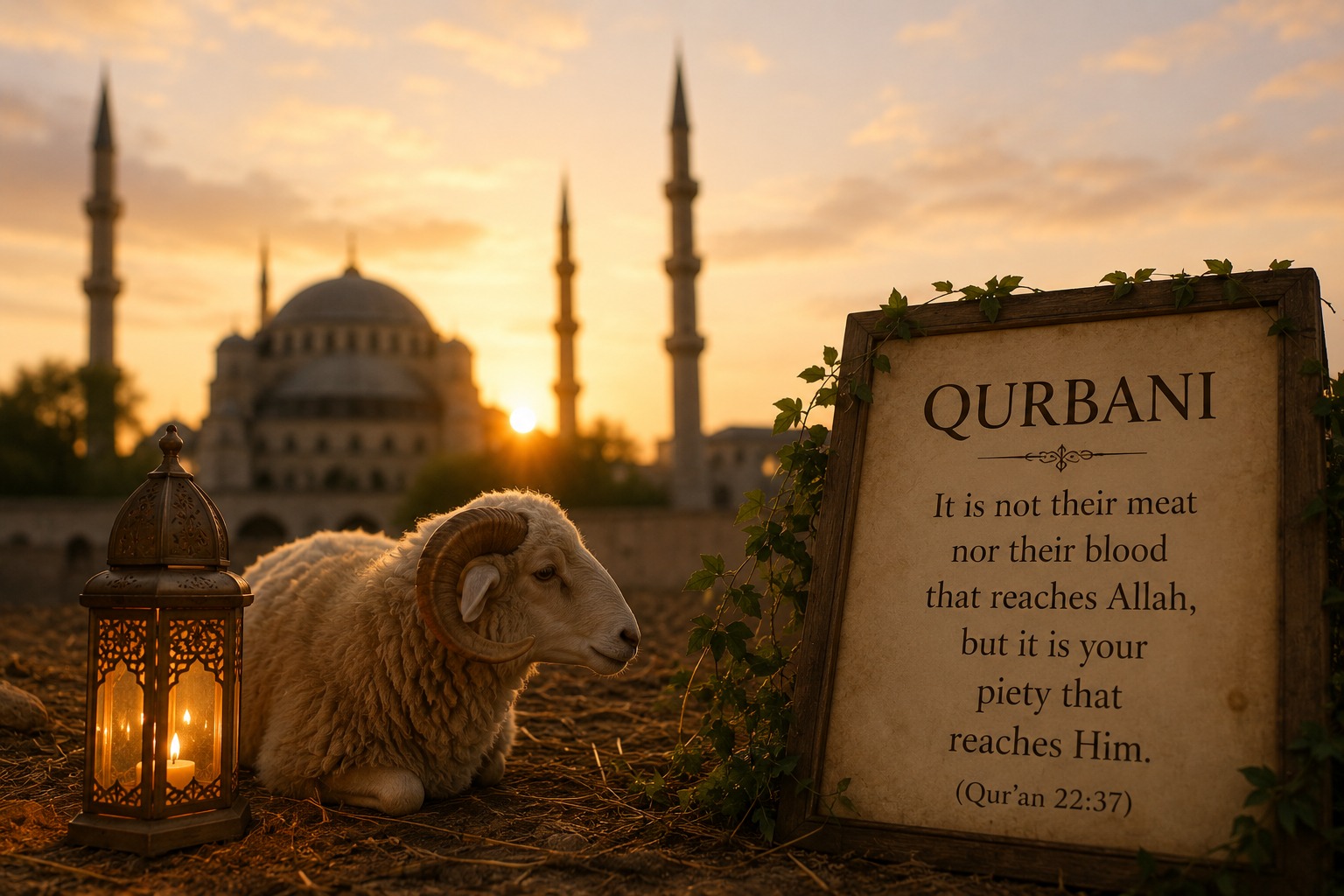
“The Qur’an reminds believers that neither the flesh nor the blood of sacrificed animals reaches Allah; what truly reaches Him is sincerity, righteousness, purity of intention, and the consciousness of the heart.”

Every year, Muslims across the world celebrate Eid al-Adha with devotion, gratitude, and joy. Markets overflow with sacrificial animals, homes are filled with excitement, and communities unite in prayer and festivity. At the centre of this sacred occasion lies Qurbani, the sacrifice performed in the path of Allah. Yet amid the celebrations, an important question quietly remains: Have we truly understood the real meaning of Qurbani, or has it gradually been reduced to a ritual whose deeper message is being forgotten?

For many people today, Qurbani has become confined to the slaughtering of an animal, the distribution of meat, family gatherings, photographs, and social media displays. In some cases, it has even turned into a matter of social prestige, where the focus shifts toward the size, price, or appearance of the animal rather than the spirit behind the act itself. But the true essence of Qurbani lies far beyond blood and flesh. It is a lesson in faith, humility, sacrifice, obedience, and spiritual transformation.

The story of Eid al-Adha is rooted in the unwavering devotion of Prophet Ibrahim and his son Prophet Ismail. After years of longing, Prophet Ibrahim (AS) was blessed with a son whom he loved dearly. Yet when Allah tested him with the command to sacrifice his beloved child, he submitted completely to the will of his Creator. More remarkable still was the response of Ismail (AS), who accepted the command with patience, trust, and faith.

The greatness of this event lies not in tragedy but in submission and sincerity. It teaches humanity that faith is not merely words spoken in comfort; true faith is demonstrated through obedience during moments of hardship and sacrifice. At the final moment, Allah replaced Ismail (AS) with a ram, sparing his life and transforming this act of devotion into a timeless lesson for generations to come.

Sadly, many people today remember only the animal and forget the sacrifice behind it. The word “Qurbani” itself signifies closeness to Allah. It is not simply about sacrificing an animal; it is about sacrificing ego, greed, arrogance, jealousy, dishonesty, hatred, and attachment to worldly desires.

Modern society often celebrates Eid al-Adha while ignoring its deepest message. Some compete with relatives and neighbours over expensive animals and extravagant displays. Social media becomes flooded with pictures and videos showcasing wealth rather than sincerity. Yet the real spirit of Eid asks a far more important question: What have we sacrificed within ourselves?

Have we sacrificed pride?
Have we sacrificed dishonesty and corruption?
Have we sacrificed hatred, selfishness, injustice, and arrogance?

If Qurbani ends only with the slaughter of an animal and does not transform the human soul, then its greatest purpose remains incomplete. Qur’an reminds believers that neither the blood nor the meat reaches Allah; what reaches Him is sincerity, righteousness, and purity of intention.

The lesson is profound. Allah does not need flesh or blood. What He desires is humility of heart, sincerity of intention, obedience in action, and compassion in character. The real sacrifice of Eid is therefore internal before it becomes external.

A businessman who cheats customers but proudly performs Qurbani has misunderstood part of the lesson. A wealthy individual who sacrifices an expensive animal while neglecting the poor has failed to grasp its spirit. A corrupt leader who harms society but publicly celebrates Eid must ask whether the message of Ibrahim (AS) has truly entered his heart.

Qurbani teaches surrender. It reminds humanity that faith sometimes requires giving up what we love most for something greater. In today’s world, this lesson feels more relevant than ever. We live in an age where success is often measured by wealth, fame, possessions, and influence. People sacrifice morality for profit, truth for convenience, and humanity for selfish ambition.

Eid al-Adha returns every year to remind us that true greatness lies not in what we possess but in what we are willing to surrender for righteousness.

For one person, Qurbani may mean sacrificing pride and seeking forgiveness. For another, it may mean giving up dishonest income or abandoning destructive habits. For parents, it may mean sacrificing comfort for the future of their children. For leaders, it may mean putting public welfare above personal interests. The spirit of sacrifice is not seasonal; it is lifelong.

One of the most beautiful dimensions of Qurbani is its message of compassion and social equality. The meat distributed during Eid symbolizes that no one should remain forgotten, especially the poor, widows, orphans, and struggling families. In many places, Eid becomes the only time when impoverished households can enjoy proper food and celebrate with dignity.

This social dimension reminds society that faith cannot be separated from empathy. A meaningful Qurbani is not only about what enters our own homes; it is about what reaches the homes of those who silently struggle.

Unfortunately, extravagance and wastage have also become common realities. Some families overspend merely to impress others, while nearby families continue to suffer quietly. The message of Ibrahim (AS) teaches simplicity, humility, and sincerity—not vanity and competition.

Perhaps one of the greatest forgotten sacrifices today is the sacrifice of the ego. Human beings often find it easier to slaughter an animal than to surrender pride, anger, envy, or arrogance. We seek recognition for charity, judge others quickly, and struggle to forgive. Yet spiritual sacrifice demands something far more difficult: breaking the idol of the self.

The story of Ibrahim (AS) is ultimately a lesson against unhealthy attachment. It teaches that no worldly desire should overpower truth, justice, morality, or faith.

Imagine a society where the true spirit of Qurbani was genuinely practiced. Merchants would refuse dishonesty. Leaders would reject corruption. Families would heal broken relationships. Communities would unite instead of divide. Young people would choose values over temptations. Society itself would become kinder, fairer, and more compassionate.

This is the hidden wisdom behind Eid al-Adha. Unfortunately, many remember the knife but forget the lesson, remember the meat but forget mercy, and remember the celebration but forget reform.

Before sacrificing an animal, every believer should pause and ask: What inside me needs sacrifice?

Is it pride? Greed? Hatred? Dishonesty? Neglect of prayer? Disrespect toward parents? Lack of compassion for the needy?

Because the real Eid begins when the heart changes.

The greatest Qurbani is often invisible to the world. Sometimes it happens silently when a person abandons sin, forgives someone who caused pain, controls anger, feeds the hungry, gives charity quietly, or chooses truth despite hardship. Such sacrifices may never trend online, but they hold immense value before Allah.

The message of Eid al-Adha is timeless: sacrifice whatever distances you from goodness in order to move closer to Allah.

Animal sacrifice is indeed an act of worship, a sacred Sunnah, and a symbol of devotion. But its spirit extends far beyond ritual. The knife is meant to cut more than flesh; it is meant to cut selfishness. The sacrifice is meant to awaken conscience, revive gratitude, and strengthen compassion.

As the takbirs echo and families gather in celebration, humanity must remember that Eid al-Adha is not merely about slaughtering animals; it is about reviving souls.

The world today desperately needs the forgotten message of Qurbani. A world drowning in greed needs sacrifice. A world divided by hatred needs compassion. A world obsessed with status needs humility. A world consumed by selfishness needs generosity.

In the end, the real question of Eid is not how expensive our animal was or how grand our celebration appeared. The real question is: After Eid, what changed within us?

If our hearts become softer, our character kinder, our intentions purer, and our relationship with Allah stronger, then perhaps we have truly understood the essence of Qurbani.

Because the greatest sacrifice has never been the animal alone; it has always been the transformation of the human soul.


Author can be reached at wanimudasirnazir@gmail.com

Comments are closed.