


Sonmarg’s Gates Open, and the Valley Feels It First

Mohammad Muslim Bhat


“The next chapter of Kashmir’s development will not be written in boardrooms alone. It will be written in the fragrance of saffron fields, the blossoms of apple orchards, the golden waves of paddy, and the determined hands of every farmer.”

The road to Sonmarg tells you everything about how Kashmir’s tourism season actually begins. Not with an announcement in Srinagar, not with a press release from the tourism department, but with snow-clearance crews working through the last week of April, cutting a path through drifts that can still be ten feet deep near Zojila. By the time the Border Roads Organisation declares the axis open, the town itself has already started stirring,  shopkeepers pulling shutters up on establishments that stood frozen for five months, pony owners walking their animals down from wherever they wintered them, hotel staff airing out rooms that have held nothing but cold air since October.

This year the opening came in the last week of April, slightly earlier than the previous two seasons, and it set off the usual scramble. Houseboat owners in Srinagar don’t feel the Sonmarg effect directly, but travel agents do. A cluster of Kashmir bookings now routes through a Sonmarg stopover almost by default — tourists arrive with Gulmarg and Pahalgam already fixed in their itinerary, and Sonmarg gets added once agents realize the Zojila road has opened and the meadow beyond Thajiwas glacier is accessible again.

What makes Sonmarg different from the valley’s other hill destinations is that it is, functionally, two towns. There’s the base market, a strip of shops and dhabas that has grown haphazardly along the Srinagar-Leh highway, and then there’s the approach to Thajiwas, where ponies still do the heaviest lifting of the local economy. A pony ride up to the glacier costs anywhere between six hundred and a thousand rupees depending on the season and how aggressively a tourist negotiates, and for many families in the area, that trade has to sustain them through winters when almost nothing else is earning.

The numbers this season, going by early estimates from local trade bodies, suggest footfall is running ahead of last year, though nobody in Sonmarg treats these figures as gospel. Tourism officials count vehicles at checkpoints; traders count something closer to actual spending, and the two don’t always align. What is clear is that Sonmarg has stopped being purely a stopover en route to Ladakh and has become, for a meaningful share of visitors, a destination worth two or three nights on its own. That shift has happened gradually over the better part of a decade, helped along by better road connectivity and by Kashmir’s broader post-pandemic tourism recovery, but it has real consequences for a town that was never built with that kind of sustained footfall in mind.

Infrastructure is the obvious strain point. Sonmarg’s drainage and waste systems were designed for a much smaller, more seasonal population, and every year the gap between what the town can handle and what arrives shows up somewhere — overflowing bins near the market, traffic bottlenecks on the single access road during peak hours, hotel construction that keeps outpacing the civic planning meant to regulate it. Locals have raised these concerns with the tourism department for years, and the responses tend to be reactive: a cleanup drive here, a temporary traffic diversion there, rarely anything that addresses the underlying capacity problem.

There is also the matter of the Zojila tunnel project, which has hovered over Sonmarg’s future for years now. Once complete, it will make the Srinagar-Leh corridor usable through winter for the first time, cutting travel time and removing the seasonal closure that currently defines Sonmarg’s entire economic rhythm. Locals are of two minds about what this means. Some see it as inevitable progress, year-round connectivity, less dependence on a five-month tourist window, more stable incomes. Others worry that a town whose character is partly defined by its remoteness and seasonal quiet will lose something once it becomes a through-point on a busy all-weather highway rather than a destination people specifically choose to visit.

For now, though, the immediate story is simpler: the season has begun, and the town is working through its familiar rituals of reopening. Hotel owners are hiring seasonal staff, many of them returning workers who spend winters in Srinagar or further south and come back up once the road clears. Restaurant owners are restocking supply chains that essentially shut down for winter, dealing with the reality that fresh produce still has to be trucked in from Srinagar’s wholesale markets, a three-hour drive each way when the road is clear and considerably longer when it isn’t.

Weather remains the wildcard it has always been. Even after the official opening, Sonmarg is subject to sudden closures, a landslide, an avalanche warning, unseasonal snowfall that shuts the Zojila axis for a day or two at a stretch. Tour operators build this unpredictability into their planning now, more than they used to, keeping buffer days in itineraries and warning clients that Sonmarg, unlike Gulmarg or Pahalgam, still operates on genuinely fragile infrastructure.

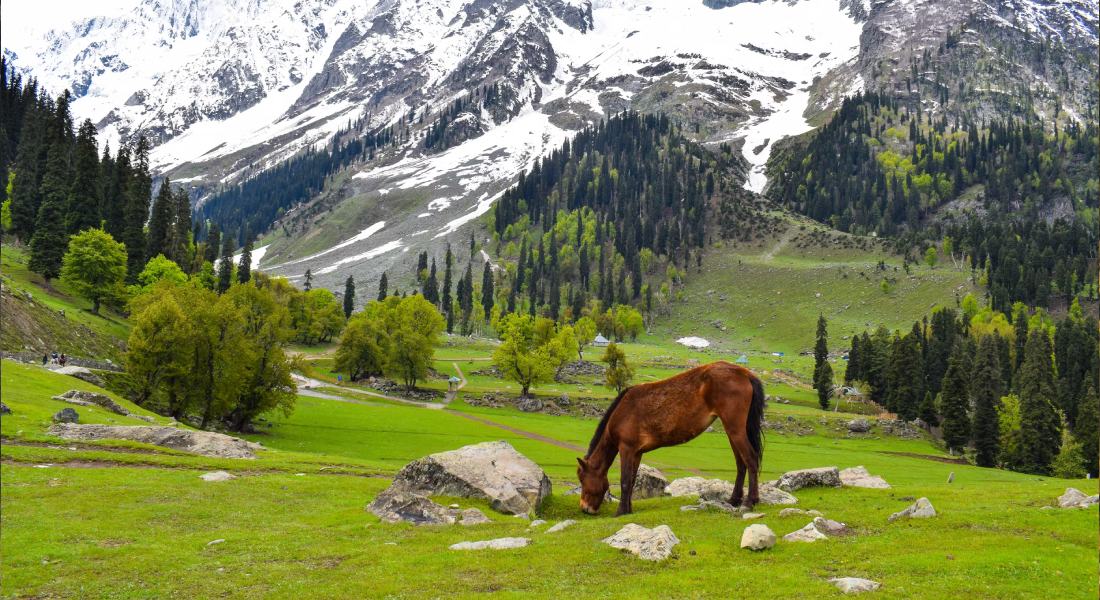
What doesn’t change, season after season, is the pull of the place itself. Thajiwas glacier remains one of the more accessible high-altitude sights in Kashmir, reachable without technical trekking gear, which is part of why it draws families and older tourists who might avoid more demanding treks elsewhere in the valley. The meadows below it, green and waterlogged in early summer before the real heat sets in, are what most visitors actually remember once they’ve left, not the traffic near the market, not the crowded pony stand, but the quiet stretch of grass and glacier melt that makes the whole difficult journey up from Srinagar worth it.

Whether Sonmarg can hold onto that character while absorbing ever-larger tourist numbers is the question hanging over the town every year the road reopens. Nobody in Sonmarg has a confident answer to it. They just know the season has started again, and there’s work to do.


Writer can be reached at mdmuslimbhat@yahoo.com

Comments are closed.