


Usuf Mir
“If everything inside the mosque is clean and beautiful, yet the road leading to the House of Allah is neglected, something feels incomplete. Sometimes the path we walk reflects the state of the hearts that walk upon it.”
(This short story explores the role of proactive action by individuals. Through a simple incident of cleanliness, it highlights how many positive changes in society begin when individuals choose to act instead of waiting for others. It is also a story about self-reflection, sincerity, and the connection between outward deeds and inner transformation.)
Sahil was not the kind of worshipper who could be seen in his local mosque five times a day. The demands of work and his government job kept him away from home for much of the time. Yet one desire remained alive in his heart: to become a regular worshipper at his local mosque. Whenever he raised his hands in prayer, he would ask Allah to make him steadfast in worship and to shape his life according to His guidance.
In recent months, he had begun visiting the local mosque more frequently. During these visits, however, one thing continued to trouble him.
Inside the mosque, everything was spotless. The carpets were clean, the walls were well maintained, and every facility was arranged for the comfort of worshippers. Yet the narrow lane leading from the main road to the mosque was filled with dust, dry weeds, and scattered litter.
Each time he walked along that path, he felt a quiet uneasiness.
“How can the road leading to the House of Allah be neglected like this?” he often wondered.
One afternoon, after the Zuhr prayer, he met Saqib. The regular imam was absent that day, and Saqib had led the congregation.
As they walked through the mosque courtyard toward the road, Sahil pointed to the lane.
“Saqib Sahib,” he said, “have you ever noticed how untidy this path to the mosque has become?”
Saqib glanced at it and nodded.
“You are right,” he replied. “I have thought about it many times. God willing, I will ask the madrasa students to clean it.”
Sahil nodded in agreement.
When they reached the road, they went their separate ways. Saqib headed home, but Sahil stopped after only a few steps.
The words lingered in his mind.
I will ask the students to clean it.
Suddenly, a memory from several years earlier resurfaced.
He had once travelled to a large congregational mosque in another district to offer Friday prayers. The mosque was magnificent, a multi-storey structure capable of accommodating thousands of worshippers.
Yet while praying on the upper floor, he noticed a layer of dust covering parts of the carpet and flooring. When he rose from prostration, traces of dust marked his forehead.
After the prayer, he approached one of the mosque administrators.
“The mosque is beautiful,” he said politely, “but it deserves more attention when it comes to cleanliness.”
As he spoke, he took five hundred rupees from his pocket and handed it to the administrator.
“Please use this to hire a worker for a day and have the place cleaned.”
The administrator thanked him warmly and assured him that it would be done.
Satisfied, Sahil returned home.
But when he visited again the following Friday, nothing had changed.
The dust remained.
The cleaning had never taken place.
It was not the money he regretted. What troubled him was the realization that an important responsibility had been ignored.
The memory returned with surprising clarity.
“Perhaps the same thing will happen here,” he thought.
Without hesitation, he turned around and walked back toward the mosque.
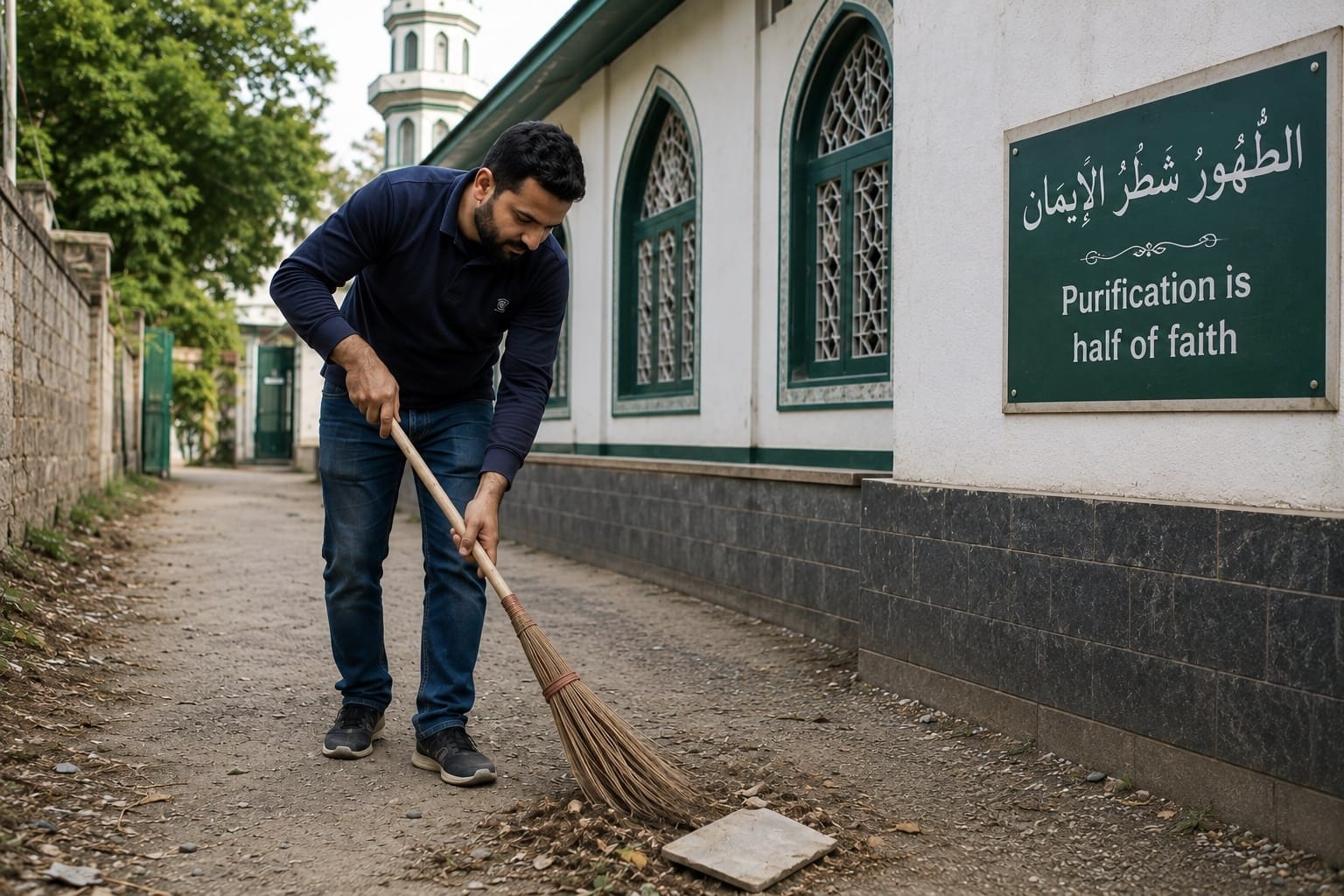
After looking around, he found a broom in one corner of the veranda. He picked it up and began cleaning. There was no proper tool available to collect the dust and debris. After searching for a while, he found a broken piece of tile and used it like a small shovel.
He bent repeatedly, pulling out dry weeds, gathering dust, and clearing the pathway.
As he worked, words of remembrance flowed quietly from his lips.
“La hawla wa la quwwata illa billah.”
The afternoon was warm. Sweat ran down his forehead, yet an unusual sense of peace settled in his heart.
Sometimes he swept. Sometimes he paused and looked toward the sky.
“O Allah,” he whispered, “without Your help, a person can do nothing. Whatever happens is by Your will.”
A few moments later, another prayer rose from within him.
“O Allah, just as this path is being cleaned, cleanse my heart as well. Forgive my shortcomings. Make me a better person, a better Muslim, and bring goodness to my community.”
While sweeping, his eyes fell upon a string of prayer beads half-buried beneath the dust. He carefully picked it up, brushed it clean, and placed it in his pocket.
A thought crossed his mind.
“I have only cleared the dust from this path. Perhaps Allah is reminding me that it is time to clear the dust from my own heart as well.”
At that moment, the prayer beads no longer seemed like an ordinary object.
They felt like a silent message.
A reminder that inner purification is just as important as outward cleanliness.
His eyes grew moist.
It seemed to him that not only the road to the mosque was being cleaned, but something within him was being cleansed as well.
After a long effort, the courtyard, the veranda, and the entire lane leading to the mosque had been transformed.
Just then, the last worshipper leaving the mosque approached him.
The man had a thick beard and wore a maroon cap. As he came closer, he embraced Sahil without saying a word and gently kissed his forehead.
Sahil stood there in surprise.
“Please pray for me,” the man said with a smile. “And recite a prayer for me as well.”
Sahil looked at him curiously.
“Why do you say that?”
The man smiled again.
“Because today I have seen a truly good human being.”
They introduced themselves to one another. The man’s name was Rashid Dar. He was not from the village but had come from another town to visit a friend.
During their conversation, Sahil said,
“I am not a particularly devout person. I constantly pray that Allah makes me regular in the five daily prayers. But one thing has always troubled me. If everything inside the mosque is clean and beautiful, yet the road leading to it is neglected, it does not feel right. That is why I did not wait for anyone else. I simply started cleaning.”
Rashid listened quietly.
Sahil continued,
“A few years ago, I even gave money to a mosque administrator to have a mosque cleaned, but nothing came of it. Since then, I have learned that some tasks are better done with your own hands than left entirely to others.”
Rashid nodded.
“May Allah preserve this spirit within you,” he said.
A little later, he prepared to leave. Before departing, he gently pressed Sahil’s hand and looked at him with deep respect.
Sahil remained standing there for a moment.
Then he returned the broom to its place and looked once more at the freshly cleaned path.
A deep sense of contentment filled his heart.
That day, Sahil had not only cleaned the road leading to the mosque.
He had also cleared from his heart the habit of waiting for others to act first.
In recent months, he had begun visiting the local mosque more frequently. During these visits, however, one thing continued to trouble him.
Inside the mosque, everything was spotless. The carpets were clean, the walls were well maintained, and every facility was arranged for the comfort of worshippers. Yet the narrow lane leading from the main road to the mosque was filled with dust, dry weeds, and scattered litter.
Each time he walked along that path, he felt a quiet uneasiness.
“How can the road leading to the House of Allah be neglected like this?” he often wondered.
One afternoon, after the Zuhr prayer, he met Saqib. The regular imam was absent that day, and Saqib had led the congregation.
As they walked through the mosque courtyard toward the road, Sahil pointed to the lane.
“Saqib Sahib,” he said, “have you ever noticed how untidy this path to the mosque has become?”
Saqib glanced at it and nodded.
“You are right,” he replied. “I have thought about it many times. God willing, I will ask the madrasa students to clean it.”
Sahil nodded in agreement.
When they reached the road, they went their separate ways. Saqib headed home, but Sahil stopped after only a few steps.
The words lingered in his mind.
I will ask the students to clean it.
Suddenly, a memory from several years earlier resurfaced.
He had once travelled to a large congregational mosque in another district to offer Friday prayers. The mosque was magnificent, a multi-storey structure capable of accommodating thousands of worshippers.
Yet while praying on the upper floor, he noticed a layer of dust covering parts of the carpet and flooring. When he rose from prostration, traces of dust marked his forehead.
After the prayer, he approached one of the mosque administrators.
“The mosque is beautiful,” he said politely, “but it deserves more attention when it comes to cleanliness.”
As he spoke, he took five hundred rupees from his pocket and handed it to the administrator.
“Please use this to hire a worker for a day and have the place cleaned.”
The administrator thanked him warmly and assured him that it would be done.
Satisfied, Sahil returned home.
But when he visited again the following Friday, nothing had changed.
The dust remained.
The cleaning had never taken place.
It was not the money he regretted. What troubled him was the realization that an important responsibility had been ignored.
The memory returned with surprising clarity.
“Perhaps the same thing will happen here,” he thought.
Without hesitation, he turned around and walked back toward the mosque.
After looking around, he found a broom in one corner of the veranda. He picked it up and began cleaning. There was no proper tool available to collect the dust and debris. After searching for a while, he found a broken piece of tile and used it like a small shovel.
He bent repeatedly, pulling out dry weeds, gathering dust, and clearing the pathway.
As he worked, words of remembrance flowed quietly from his lips.
“La hawla wa la quwwata illa billah.”
The afternoon was warm. Sweat ran down his forehead, yet an unusual sense of peace settled in his heart.
Sometimes he swept. Sometimes he paused and looked toward the sky.
“O Allah,” he whispered, “without Your help, a person can do nothing. Whatever happens is by Your will.”
A few moments later, another prayer rose from within him.
“O Allah, just as this path is being cleaned, cleanse my heart as well. Forgive my shortcomings. Make me a better person, a better Muslim, and bring goodness to my community.”
While sweeping, his eyes fell upon a string of prayer beads half-buried beneath the dust. He carefully picked it up, brushed it clean, and placed it in his pocket.
A thought crossed his mind.
“I have only cleared the dust from this path. Perhaps Allah is reminding me that it is time to clear the dust from my own heart as well.”
At that moment, the prayer beads no longer seemed like an ordinary object.
They felt like a silent message.
A reminder that inner purification is just as important as outward cleanliness.
His eyes grew moist.
It seemed to him that not only the road to the mosque was being cleaned, but something within him was being cleansed as well.
After a long effort, the courtyard, the veranda, and the entire lane leading to the mosque had been transformed.
Just then, the last worshipper leaving the mosque approached him.
The man had a thick beard and wore a maroon cap. As he came closer, he embraced Sahil without saying a word and gently kissed his forehead.
Sahil stood there in surprise.
“Please pray for me,” the man said with a smile. “And recite a prayer for me as well.”
Sahil looked at him curiously.
“Why do you say that?”
The man smiled again.
“Because today I have seen a truly good human being.”
They introduced themselves to one another. The man’s name was Rashid Dar. He was not from the village but had come from another town to visit a friend.
During their conversation, Sahil said,
“I am not a particularly devout person. I constantly pray that Allah makes me regular in the five daily prayers. But one thing has always troubled me. If everything inside the mosque is clean and beautiful, yet the road leading to it is neglected, it does not feel right. That is why I did not wait for anyone else. I simply started cleaning.”
Rashid listened quietly.
Sahil continued,
“A few years ago, I even gave money to a mosque administrator to have a mosque cleaned, but nothing came of it. Since then, I have learned that some tasks are better done with your own hands than left entirely to others.”
Rashid nodded.
“May Allah preserve this spirit within you,” he said.
A little later, he prepared to leave. Before departing, he gently pressed Sahil’s hand and looked at him with deep respect.
Sahil remained standing there for a moment.
Then he returned the broom to its place and looked once more at the freshly cleaned path.
A deep sense of contentment filled his heart.
That day, Sahil had not only cleaned the road leading to the mosque.
He had also cleared from his heart the habit of waiting for others to act first.
Comments are closed.