


Meer Irfan
“The tragedy of Karbala did not end on Ashura. It continues wherever truth is exchanged for comfort, integrity for influence, and faith for worldly gain.”
As Imam Husayn journeyed toward Karbala with his family and companions, he was offered safety if he abandoned his mission, returned from his journey, and pledged allegiance to Yazid. He refused. Instead, he declared: “No, by Allah! I will never give you my hand in humiliation, nor will I flee like a slave.” With those words, he continued towards Karbala.
What followed is a tragedy that Muslims, both Sunni and Shia, have mourned for over thirteen centuries. But while we mourn the sacrifice, have we overlooked one of its most profound lessons? Karbala was not only a stand against tyranny; it was also a rejection of the temptation to trade faith for worldly comfort, dignity for security, and principle for power. In an age where wealth, privilege and status increasingly define success, the moral struggle of Karbala may be more relevant today than ever before.
The story of Karbala did not begin on the plains of Karbala. It began more than fifty years earlier, when Prophet Muhammad invited the people of Mecca to accept Islam. They rejected his message, and much of that rejection was rooted in worldly interests.
The first reason was economic. The Kaaba housed hundreds of idols that were revered by tribes from across Arabia. Every year, people travelled to Mecca to worship these idols, and during their stay they traded in its markets. This pilgrimage made Mecca a thriving commercial centre. The powerful Quraysh feared that if they accepted Islam and removed the idols from the Kaaba, people would stop coming, trade would decline, and their wealth and influence would suffer.
The second reason was their attachment to a life of luxury and privilege. The Prophet’s message challenged a social order in which the elite enjoyed comfort while much of the hard labour was carried out by slaves. He called for justice, dignity and compassion towards the weak, and lived a life of remarkable simplicity himself. The leaders of Mecca, however, were accustomed to wealth, status and ease. They were proud of their position and saw little reason to abandon a lifestyle that had given them power and privilege for generations.
Decades passed. Five caliphs ruled after the Prophet, and Islam spread far and wide across Arabia and beyond. Yet beneath that remarkable expansion, another struggle was quietly unfolding. It was the spread of wealthy lifestyles, materialism, moral corruption, patronage and privilege, replacing the moral authority and simplicity that had defined the Prophet’s leadership.
During the negotiations in 41 Hijri, Mu’awiya sent Abd Allah ibn Amir ibn Kurayz and Abd al-Rahman ibn Samura to Imam Hasan with offers described in Sahih al-Bukhari simply as “so and so.” Imam Hasan did not exchange his principles for worldly gain. Instead, he concluded peace on conditions of his own, placing the interests of the Muslim community above personal power.
Years later, as Yazid sought to consolidate his rule, he expanded a system of gifts, stipends, political favours and patronage to secure the loyalty of influential Muslim figures and tribal leaders. Many accepted and became part of a system that rewarded loyalty with worldly gain. Wealth, status and luxury increasingly became instruments of political power, standing in sharp contrast to the simplicity, justice and humility that the Prophet had preached in Mecca.
It was in this atmosphere that Imam Husayn took his stand. Even when offered safety if he abandoned his mission and acknowledged Yazid’s authority, he refused to compromise. Explaining why he had risen, he declared, “I have not risen out of insolence, arrogance, corruption or oppression. I have risen only to seek reform in the community of my grandfather. I desire to enjoin what is right and forbid what is wrong.”
Karbala was therefore not merely a struggle over political authority. It was a rejection of a culture in which power was increasingly sustained through patronage, privilege and worldly gain, and an affirmation that truth, justice and moral responsibility could never be exchanged for comfort, security or political favour.
Many classical Muslim historians portray Yazid’s reign as a turning point in the moral character of the caliphate. The historian al-Mas’udi describes Yazid as a ruler devoted to wine, hunting, singers, musicians and courtly pleasures. Rather than leading through piety and justice, the Umayyad court came to rely on political patronage, rewarding influential tribal leaders and prominent figures with gifts, stipends, offices and prestige in return for loyalty. The result, according to these historians, was the growth of a political culture that celebrated wealth, privilege and luxury over humility, sacrifice and moral responsibility, the very values that Prophet Muhammad had sought to replace in pre-Islamic Arabia.
In 60 AH (680 CE), following the death of Mu’awiya, Yazid assumed the caliphate. By this time, the Islamic empire stretched from North Africa to Central Asia. Mosques were full, the Qur’an continued to be recited, the call to prayer echoed across the empire, and Islam continued to spread into new lands. Outwardly, Islam appeared stronger than ever.
Yet beneath this expansion, Imam Husayn believed that something fundamental had changed. The caliphate had increasingly become hereditary, while political loyalty was cultivated through gifts, stipends, offices and patronage. The historian al-Tabari records the demand for allegiance to Yazid, while al-Mas’udi portrays Yazid’s court as one devoted to wine, hunting, singers, musicians and courtly pleasures. In ‘The Origins and Early Development of Shi’a Islam’, Syed Husain Mohammad Jafri argues that Husayn’s opposition was not a struggle for power but a moral stand against a political order that had departed from the ideals of the Prophet. Ali Shariati similarly viewed Karbala as a confrontation with a civilisation in which religion had increasingly become subordinate to worldly authority.
It is this dimension of Karbala that is often overlooked. Imam Husayn was not opposing the existence of mosques, the recitation of the Qur’an or even the outward practice of Islam. These continued throughout the Umayyad empire. What he opposed was a political culture in which the spirit of Islam was increasingly overshadowed by dynastic rule, patronage, privilege and worldly ambition.
Soon after Yazid became caliph, he instructed the governor of Medina, Walid ibn Utbah ibn Abi Sufyan, to obtain Imam Husayn’s allegiance without delay. Walid summoned him at night and informed him of Mu’awiya’s death and Yazid’s accession. Present at the meeting was Marwan ibn al-Hakam, who urged Walid to imprison or execute Husayn if he refused to pledge allegiance. Imam Husayn rejected the demand, declaring, “A person like me does not give allegiance to a person like him.”
Imam Husayn then left Medina for Mecca, refusing to legitimize a rule he believed had departed from the principles established by the Prophet. Four months later, as he departed Mecca for Kufa, Yahya ibn Sa’id, accompanied by Abd Allah ibn Ja’far, conveyed assurances of safety if he would abandon his journey and submit to Yazid. Submission would have meant more than the preservation of his life. It would have meant accepting a political order sustained by patronage, stipends, gifts, privilege and proximity to power, a system that rewarded loyalty with worldly gain. Imam Husayn refused.
When the Umayyad army finally blocked his path on the plains of Karbala and promised him safe passage, he declared, “No, by Allah! I will never give you my hand in humiliation, nor will I flee like a slave.”
These were not merely words of defiance. Imam Husayn consciously rejected every worldly advantage that submission could have offered: security, comfort, political favour and a life free from persecution. Instead, he chose sacrifice over compromise. Explaining the purpose of his stand, he declared:
“I have not risen out of insolence, arrogance, corruption or oppression. I have risen only to seek reform in the community of my grandfather. I desire to enjoin what is right and forbid what is wrong.”
Read in this light, Karbala was not only a rejection of tyranny. It was also a rejection of a civilisation in which worldly gain, political patronage and attachment to power increasingly threatened to eclipse the moral vision that Prophet Muhammad had brought to the world.
The message of Karbala also echoes one of the central themes of the Qur’an: the struggle against becoming enslaved by the dunya. The Qur’an repeatedly reminds believers that worldly life is temporary and must never become greater than truth, justice and obedience to Allah. “Know that the life of this world is but play, amusement, adornment, boasting among yourselves and rivalry in wealth and children” (Qur’an 57:20). Elsewhere it warns, “The worldly life is nothing but the enjoyment of delusion” (Qur’an 3:185).
For centuries, scholars have explained that these verses do not condemn wealth, trade, family or the blessings of this world. Rather, they condemn attachment to them when they distract a person from Allah and from moral responsibility. Few scholars expressed this more clearly than Imam Abu Hamid al-Ghazali in ihya’ ‘Ulum al-Din. Al-Ghazali explains that the world is not blameworthy in itself; what is blameworthy is loving it for its own sake and allowing it to become an obstacle between the servant and Allah. He famously compares wealth to water beneath a ship: if it remains beneath the ship, it carries it safely; if it enters the ship, it sinks it.
If this was the message of Karbala, why has this dimension received so little attention?
Perhaps because it is easier to mourn Karbala than to live by it.
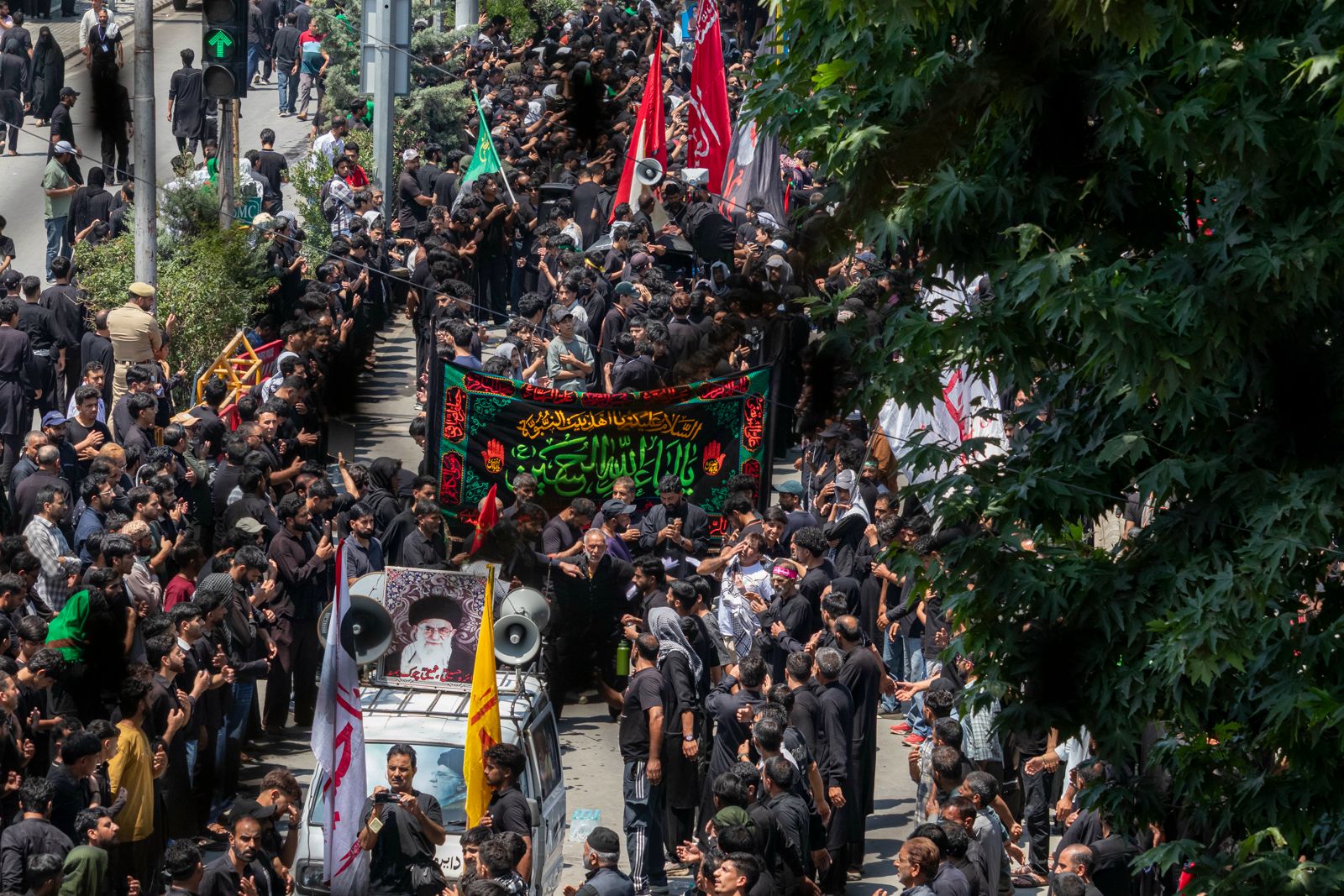
Every Muharram, millions gather to remember Imam Husayn. We weep for his sacrifice, condemn Yazid and recount the events of Ashura. Yet how often do we ask whether the values Imam Husayn stood against have disappeared—or simply changed their form?
Today, even some religious leaders who speak passionately about Karbala arrive in luxury cars, deliver sermons before expensive 5D productions and leave without challenging the culture of wealth, privilege and worldly status that Imam Husayn refused to accept. Has the mourning of Karbala become a ritual while its message is forgotten?
Karbala demands more than tears. It demands self-reflection. It asks every Muslim: What would you refuse to sell? Your faith? Your principles? Your conscience? Your courage?
The tragedy of Karbala did not end on the 10th of Muharram, 61 AH. Its challenge continues wherever truth is exchanged for comfort, integrity for influence and faith for worldly gain.
Imam Husayn did not merely give his life resisting a ruler. He gave his life resisting the triumph of the dunya over the soul. Until Muslims recover that lesson, Karbala will remain something we commemorate every year, but not necessarily something we truly understand.
Comments are closed.