

S Ahmad
The success of a modern economy is not measured merely by the size of its markets or the scale of its industries. It is equally determined by how easily a citizen with an idea can turn that idea into an enterprise. When entrepreneurs spend more time navigating paperwork than building products, economic growth slows. When businesses struggle to secure permits, access credit, or resolve disputes, innovation suffers. Conversely, when governments reduce barriers and create enabling ecosystems, entrepreneurship flourishes and economies thrive.
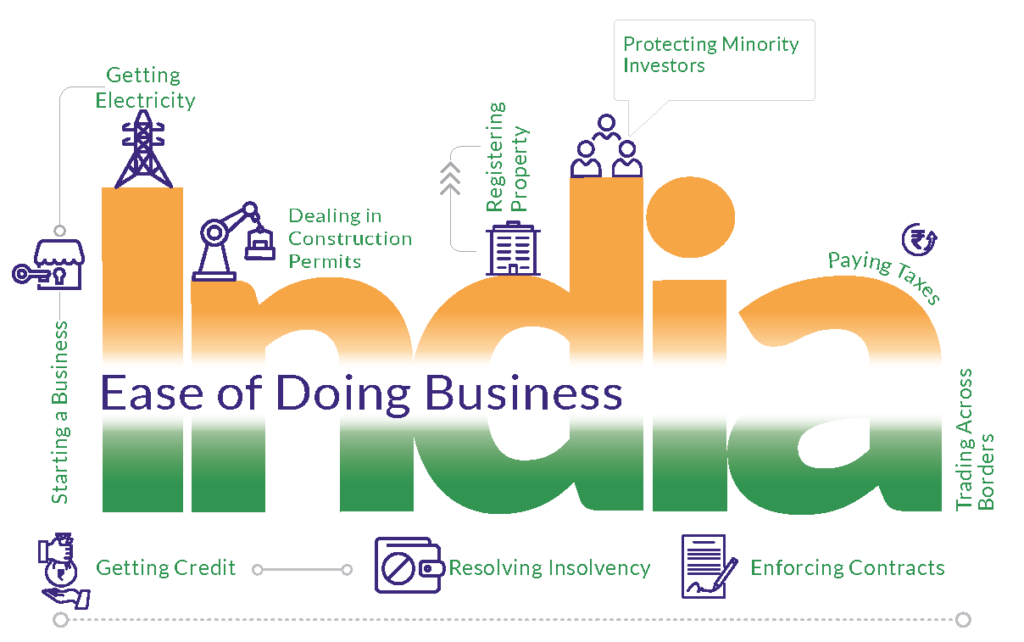
Over the past decade, India has embarked on one of the most ambitious regulatory and digital transformation exercises in its history. The objective has been clear: move from a compliance-heavy, paperwork-driven system toward a facilitation-based framework where governance enables rather than obstructs enterprise. This philosophy forms the backbone of India’s Ease of Doing Business (EoDB) agenda.
The story of India’s business reforms is often told through rankings and statistics. Indeed, those numbers are significant. India’s ranking in the World Bank’s Doing Business assessment improved dramatically from 142 in 2014 to 63 in 2019, an unprecedented leap that signalled global recognition of domestic reforms. Improvements in digital governance, logistics, taxation, credit access, and regulatory simplification have further strengthened investor confidence and enhanced India’s attractiveness as a business destination.
Yet the real significance of these reforms lies not in rankings but in what they mean for millions of entrepreneurs, startups, MSMEs, exporters, and workers whose economic aspirations depend on an efficient and responsive state.
Reimagining the State-Entrepreneur Relationship
For decades, doing business in India was associated with procedural complexity. Entrepreneurs often encountered multiple approvals, overlapping regulations, extensive documentation requirements, and delays that increased costs and uncertainty.
The challenge was not simply bureaucracy; it was fragmentation. Different departments operated independently, information remained scattered across institutions, and businesses were often required to submit the same documents repeatedly.
The reform agenda of the past decade has sought to address precisely these structural inefficiencies.
The shift has been profound. Rather than viewing regulation solely as a mechanism for control, policymakers increasingly view governance as a service that should facilitate economic activity while maintaining accountability and public interest.
Digitalisation has become the primary vehicle for achieving this transformation.
Today, an entrepreneur can register a company, obtain tax registrations, access credit, participate in government procurement, file returns, and make payments through integrated digital platforms that barely existed a decade ago.
This evolution represents more than technological modernization. It reflects a broader change in governance philosophy—from regulation through paperwork to regulation through technology.
The Rise of India’s Startup Economy
Perhaps no sector better illustrates the impact of business reforms than the startup ecosystem.
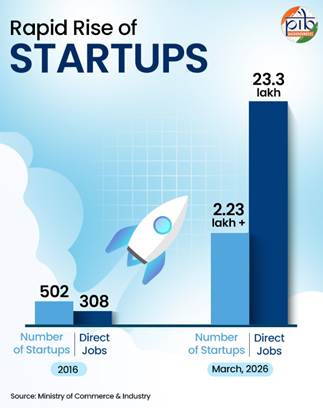
When the Startup India initiative was launched in 2016, India’s startup landscape was still emerging. Only a few hundred startups had formal recognition, and access to funding, mentorship, and policy support remained limited.
A decade later, the transformation is remarkable.
More than 2.23 lakh startups have been officially recognised, generating over 23 lakh direct jobs. These numbers reveal not only entrepreneurial energy but also the effectiveness of policy support systems that have helped innovators convert ideas into enterprises.
Importantly, the growth has not been restricted to metropolitan centres. Smaller cities and emerging entrepreneurial hubs are increasingly contributing to India’s startup ecosystem. The fact that nearly half of recognised startups have at least one woman director or partner indicates a growing inclusivity that strengthens economic participation.
The success of Startup India demonstrates that entrepreneurship thrives when governments reduce entry barriers and create supportive ecosystems.
Making Business Registration Simpler
One of the least glamorous but most important aspects of business reform involves registration processes.
Historically, establishing a company required interactions with multiple departments and extensive documentation. Entrepreneurs often spent considerable time navigating administrative requirements before commencing operations.
The introduction of the SPICe+ platform transformed this experience by integrating multiple services into a single digital interface. Company incorporation, tax registrations, social security enrolment, bank account opening, and several other procedures can now be completed through one consolidated process.
Similarly, the Udyam Registration Portal has simplified registration for micro, small, and medium enterprises. By adopting a paperless and self-declaration-based approach, it has removed procedural hurdles that previously discouraged formalisation.
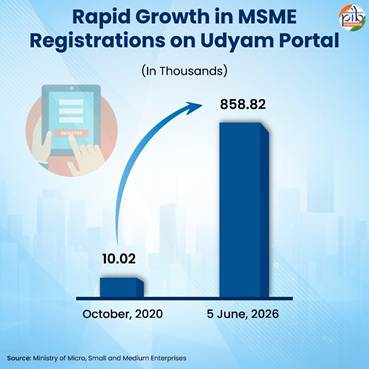
The rapid increase in MSME registrations reflects the value of simplification. Formalisation provides businesses with access to government schemes, institutional credit, procurement opportunities, and legal protections that support long-term growth.
These reforms illustrate a crucial principle: economic development is often accelerated not through grand interventions but through the elimination of everyday administrative obstacles.
Land, Property, and the Foundations of Economic Activity
Land remains one of the most valuable economic assets in any society. Yet property transactions have historically been among the most complicated aspects of doing business in India.
Unclear records, disputes, duplication, and cumbersome registration procedures created uncertainty that affected investment decisions.
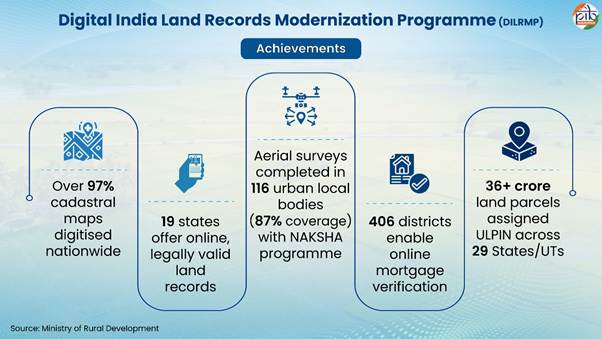
The Digital India Land Records Modernisation Programme represents a significant effort to address these longstanding challenges. By digitising cadastral maps, integrating land databases, and introducing Unique Land Parcel Identification Numbers, the programme seeks to create a more transparent and reliable land administration system.
The impact extends beyond property ownership. Clear land records improve credit access by enabling banks to verify collateral more efficiently. They reduce disputes, facilitate investments, and strengthen confidence in property markets.
Similarly, the National Generic Document Registration System is creating greater uniformity and transparency in property registration processes across states.
These reforms may appear technical, but their economic significance is substantial. Reliable property systems form the foundation upon which investment and enterprise development depend.
Ending the Era of Endless Approvals
Few issues have historically frustrated businesses more than the process of obtaining permits and licences.
Delays in approvals often translated into delayed investments, cost overruns, and lost opportunities.
Recognising this challenge, policymakers have pursued extensive reforms to streamline approvals across sectors.
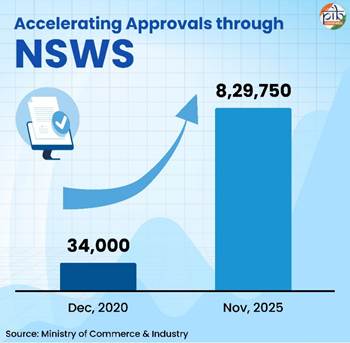
The National Single Window System represents a major step in this direction. By integrating approvals from dozens of central departments and state governments onto a single platform, it reduces complexity and improves transparency.
Similarly, reforms in labour regulations have consolidated multiple registrations and licences into unified systems. The replacement of numerous labour laws with broader labour codes seeks to reduce duplication while maintaining worker protections.
Environmental clearances have also become more technology-driven through platforms such as PARIVESH, which have significantly reduced approval timelines.
These reforms do not eliminate regulation. Rather, they seek to ensure that regulation operates efficiently, predictably, and transparently.
For investors, predictability is often as important as speed. A system that provides clear timelines and digital tracking creates greater confidence than one characterised by uncertainty.
Connecting Markets Through Technology
Ease of doing business does not end when a company is established. Businesses must connect with suppliers, customers, markets, and logistics networks.
India’s recent reforms increasingly recognise this reality.
The Government e-Marketplace has revolutionised public procurement by enabling businesses, particularly MSMEs and startups, to participate in government purchasing through transparent digital mechanisms.
For smaller enterprises that previously struggled to access procurement opportunities, GeM has opened new avenues for growth.
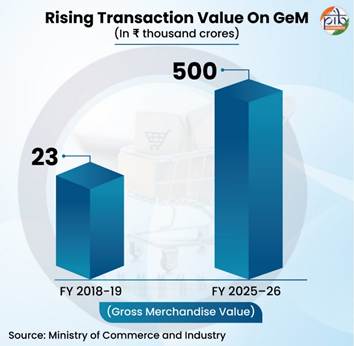
Similarly, the Open Network for Digital Commerce seeks to democratise e-commerce by reducing dependence on closed platforms and creating open digital networks for buyers and sellers.
Meanwhile, logistics reforms such as PM GatiShakti, the National Logistics Portal, and Logistics Data Bank 2.0 are addressing one of India’s longstanding economic challenges: the cost and complexity of moving goods efficiently.
Improved logistics reduces costs, enhances competitiveness, and strengthens supply chains. For exporters and manufacturers, these improvements directly influence profitability and global competitiveness.
Credit as the Lifeblood of Enterprise
Access to finance remains one of the most critical determinants of business success.
Even the most promising enterprise cannot grow without adequate capital.
Historically, small businesses often faced difficulties securing formal credit due to limited collateral, documentation requirements, and risk perceptions among lenders.
Recent reforms have sought to bridge this gap.
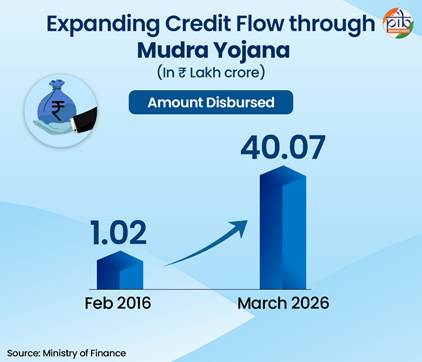
Credit guarantee schemes have encouraged lending by reducing risk for financial institutions. The Pradhan Mantri Mudra Yojana has extended collateral-free loans to millions of entrepreneurs, many of whom entered the formal financial system for the first time.
Particularly noteworthy is the scheme’s inclusivity. Women entrepreneurs, first-time business owners, and members of historically disadvantaged communities account for a significant share of beneficiaries.
Technology is also reshaping credit assessment itself. Digital footprints, data-driven appraisal systems, and automated lending models are reducing dependence on traditional documentation and accelerating decision-making.
These innovations have the potential to transform credit access for small enterprises that have long remained underserved.
Taxation: From Complexity to Integration
Tax reform has been one of the most consequential components of India’s ease-of-doing-business agenda.
Before the introduction of the Goods and Services Tax, businesses navigated a fragmented indirect tax structure involving multiple levies imposed by different authorities.
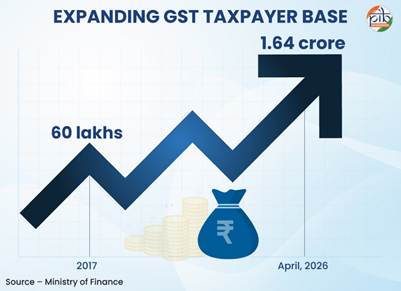
GST sought to create a unified national market by replacing this multiplicity with a more integrated framework.
While implementation challenges emerged during the transition, the long-term impact has been substantial. Businesses benefit from greater standardisation, improved interstate trade, and a digital compliance ecosystem.
The dramatic expansion of the taxpayer base suggests deeper formalisation of economic activity.
Complementary initiatives such as faceless assessments and modernised e-filing systems have further reduced physical interactions and increased transparency.
For businesses, these reforms mean lower compliance costs, faster processing, and greater predictability.
Trade Facilitation in a Global Economy
In an increasingly interconnected world, competitiveness depends not only on domestic efficiency but also on global integration.
India’s trade facilitation reforms recognise this reality.
Digital customs systems, electronic certificates of origin, export promotion initiatives, and integrated trade platforms are reducing transaction costs and simplifying cross-border commerce.
The Districts as Export Hubs initiative is particularly noteworthy because it seeks to decentralise export growth. By helping local producers connect with global markets, the programme expands opportunities beyond traditional export centres.
Such initiatives are crucial for ensuring that the benefits of globalisation reach smaller enterprises and regional economies.
The Power of Digital Public Infrastructure
No discussion of India’s business reforms is complete without acknowledging the role of digital public infrastructure.
Few innovations have transformed commercial activity as profoundly as the Unified Payments Interface.
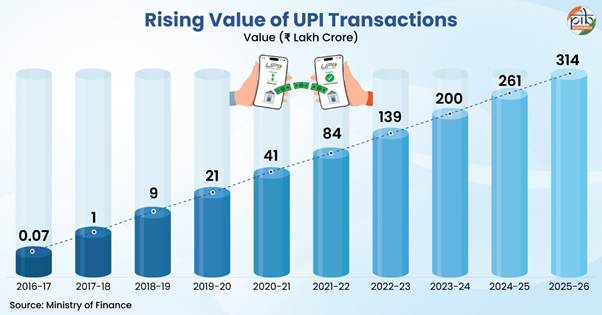
UPI has fundamentally altered how businesses and consumers transact. Instant, low-cost digital payments have improved cash flow management, reduced transaction friction, and expanded financial inclusion.
Its extraordinary scale demonstrates how public digital infrastructure can create economic value at a national level.
Similarly, initiatives such as cKYC and EntityLocker are simplifying verification and document management processes.
These systems reduce administrative burdens while improving trust, security, and efficiency.
What distinguishes India’s digital public infrastructure model is its scale and inclusivity. Rather than serving only large enterprises, these platforms are designed to support businesses of every size.
Toward Trust-Based Governance
Perhaps the most important shift in India’s ease-of-doing-business journey is philosophical rather than technological.
For decades, regulation often operated on an assumption of mistrust. Businesses were required to demonstrate compliance repeatedly, and minor violations could result in criminal penalties.
Recent reforms increasingly emphasise trust-based governance.
The Jan Vishwas Acts, which decriminalised hundreds of provisions across multiple laws, represent a significant step in this direction.
Similarly, large-scale compliance reduction exercises have eliminated thousands of outdated, redundant, or burdensome requirements.
These measures send an important signal: regulation should facilitate compliance rather than create fear.
Trust-based governance does not imply weaker oversight. Rather, it seeks to align enforcement with risk, proportionality, and fairness.
For businesses, this creates a more predictable and supportive operating environment.
The Road Ahead
India’s ease-of-doing-business reforms have achieved significant progress, but the journey remains unfinished.
Implementation gaps continue to exist across regions. Digital access and administrative capacity vary between states and districts. Smaller enterprises may still face challenges navigating regulatory systems despite improvements.
Moreover, ease of doing business must increasingly be linked with ease of growing business. Simplifying entry is important, but businesses also need access to skilled labour, innovation ecosystems, efficient dispute resolution, sustainable infrastructure, and global markets.
Future reforms must focus on deepening institutional capacity, strengthening local governance, and ensuring that digital systems remain accessible and user-friendly.
Equally important is maintaining balance. Economic growth must coexist with environmental protection, labour welfare, consumer rights, and social inclusion.
The objective should not be deregulation for its own sake but smart regulation that protects public interests while enabling enterprise.
A New Chapter in Economic Governance
India’s ease-of-doing-business reforms represent more than a collection of administrative measures. They reflect a broader effort to redefine the relationship between citizens, businesses, and the state.
Through digital governance, regulatory simplification, financial inclusion, logistics modernisation, and trust-based administration, the country is building an economic ecosystem that increasingly rewards entrepreneurship and innovation.
The transformation is not merely visible in rankings, portals, or statistics. It is reflected in the entrepreneur launching a startup from a small town, the MSME accessing credit through digital platforms, the exporter reaching international markets, and the business owner completing procedures online that once required weeks of paperwork.
The real measure of success lies not in how many regulations are removed but in how many opportunities are created.
As India moves toward its aspiration of becoming a developed economy by 2047, ease of doing business will remain a critical pillar of growth. The challenge now is to ensure that the benefits of reform reach every entrepreneur, every district, and every enterprise.
If that objective is achieved, India’s business reforms may ultimately be remembered not simply as administrative improvements but as one of the defining economic transformations of the twenty-first century.
Comments are closed.