

Danish Ashraf Khan
“A society that protects its daughters protects its future, strengthens its humanity, and preserves its moral identity. But when daughters begin to live in fear, society does not collapse loudly or suddenly. It collapses silently, gradually, and from within.”
There are some subjects that are difficult to write about because they do not merely demand words; they demand honesty, courage, and emotional responsibility. This is one such subject. Today, I do not write only as a writer or a teacher. I write as a concerned citizen of Kashmir, as a brother who worries for his sisters, as a son who understands the fears of parents, and as a human being deeply disturbed by the changing moral condition of our society.
For generations, Kashmir was celebrated not only for its breathtaking landscapes but also for its spiritual and moral foundations. Known as Peer Waer — the land of saints and sages — Kashmir carried an identity rooted in dignity, hospitality, wisdom, and compassion. Our culture taught us humility. Our elders taught us that respect for women was not a social formality but a moral obligation. Daughters were seen as blessings, mothers as symbols of sacrifice, and sisters as the honor of families.
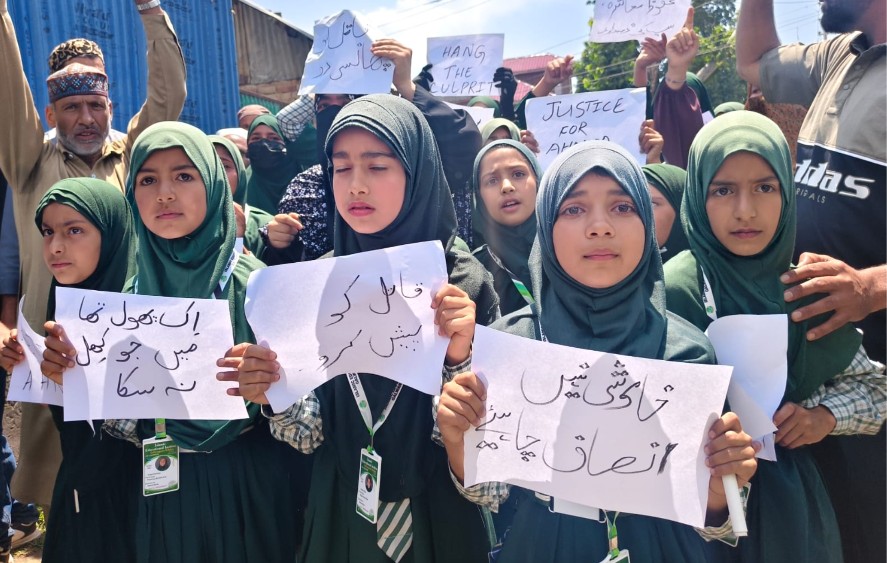
But today, an uncomfortable and painful question echoes across homes, streets, schools, and hearts: Are our daughters truly safe anymore?
This question is not born from imagination. It emerges from fear — a fear that many parents now silently carry every day. Once upon a time, parents proudly dreamed of educating their daughters, sending them to schools, colleges, universities, and workplaces with hope in their hearts. Education represented empowerment, dignity, and a better future. Today, however, many parents experience anxiety the moment their daughters step outside the house. They wait restlessly until they return safely.
This fear does not exist because daughters are weak. It exists because society itself is becoming morally weak.
The tragedy of our times is not only the crimes that occur but also the gradual normalization of insensitivity. Every disturbing incident leaves behind frightened families, emotionally shattered parents, and a society that slowly begins to lose trust in itself. Many people avoid discussing such issues openly because the subject feels painful and uncomfortable. Yet silence is dangerous. Silence protects criminals, strengthens immoral behavior, and isolates victims in fear.
A society that stops speaking about its moral decline eventually becomes a prisoner of it.
In recent years, there has been increasing discussion about substance abuse and addiction. Campaigns against drugs and narcotics are necessary and welcome. Government initiatives like the Nasha Mukti Bharat Abhiyan seek to protect young generations from physical addiction and destructive substances. Such efforts are important because drug addiction destroys families, health, and social stability.
However, there is another addiction growing silently within society — an addiction far more dangerous because it attacks the moral soul of human beings. It is the addiction of violence, vulgarity, disrespect, aggression, and dehumanized thinking.
A society does not collapse only because of drugs or crime statistics. It collapses when human beings stop respecting one another.
Today, many people consume poisonous content through social media platforms, digital spaces, and unhealthy entertainment without realizing how deeply it shapes their thinking. Constant exposure to vulgarity, objectification, online harassment, and aggressive behavior slowly destroys emotional sensitivity. When morality weakens, empathy disappears. And when empathy disappears, women no longer feel safe in public spaces.
This is one of the gravest dangers confronting modern society.
The problem before us is therefore not merely legal; it is deeply social, moral, and psychological. The issue is not only about what people consume physically but also about what they allow to grow inside their minds. A person who cannot respect women, who cannot understand dignity, who cannot control violent or abusive behavior, is already morally damaged regardless of education, status, or wealth.
This moral crisis is visible in the everyday fears experienced by ordinary families.
Today, countless parents worry when their daughters travel alone. They worry when they leave for tuition classes, colleges, workplaces, or examinations. They worry while their daughters commute through markets or use public transport. Imagine the emotional exhaustion of parents who spend every day praying not for success or wealth, but simply for the safe return of their children.
No civilized society should force parents to live with such fear.
A daughter should never become a source of anxiety. She is not a burden to be protected through isolation. She is the heartbeat of a family, the strength of future generations, and the moral foundation of society itself. Homes filled with daughters are homes filled with mercy, warmth, compassion, and emotional strength. When society fails to create safe spaces for women, it does not merely fail women — it fails humanity itself.
This is not the Kashmir our elders dreamed of.
There was a time when social trust formed the backbone of Kashmiri society. Neighbors respected one another. Communities functioned with collective responsibility. Children grew up under the watchful eyes of families and neighborhoods that valued decency and moral discipline. Humanity was visible in markets, villages, schools, and public spaces.
Today, however, many people feel that society is slowly drifting away from those values. Modernity has arrived, technology has expanded, and lifestyles have changed, but moral responsibility has weakened. Progress without ethics becomes dangerous. A society may construct roads, buildings, shopping complexes, and institutions, yet still remain deeply insecure if women cannot move freely without fear.
True development is not measured only through infrastructure or economic growth. The real measure of development lies in whether a girl can walk safely to school, whether a woman feels secure in her workplace, and whether parents can sleep peacefully knowing their daughters are protected by both law and society.
This requires collective responsibility.
Many people expect governments and police alone to solve these problems. Certainly, law enforcement agencies play a critical role. Strict implementation of laws, swift punishment for offenders, effective policing, and accountability are essential for maintaining public safety. In societies where laws are implemented firmly and fairly, criminal behavior decreases because fear of punishment exists.
But laws alone cannot rebuild morality.
No government can replace the role of families, schools, religious institutions, teachers, and communities in shaping character. Moral education begins at home long before it enters classrooms. Children learn respect not from slogans but from daily behavior. Boys especially must be taught from an early age how to treat women with dignity, kindness, and responsibility.
This conversation is important because society often teaches girls how to remain “careful,” while failing to teach boys how to behave honorably.
Real education is not limited to degrees, certificates, or professional success. A highly educated person without humanity remains socially dangerous. Education must produce ethical citizens, not merely skilled workers. Schools and colleges should therefore emphasize moral values, empathy, civic responsibility, and emotional discipline alongside academics.
Teachers too carry enormous responsibility. A teacher influences not only minds but also behavior and attitudes. In classrooms, students must learn that respect for women is not optional, fashionable, or symbolic — it is a fundamental marker of civilization.
Religious institutions also have an important role to play. Kashmir’s spiritual traditions always emphasized compassion, discipline, humility, and respect. Mosques, religious scholars, and community leaders can become powerful voices for moral awareness if they address these issues sincerely and consistently. Religion should never remain confined to rituals alone; it must shape ethical conduct in society.
At the same time, families must rebuild emotional communication with their children. One of the hidden crises of modern life is emotional distance within homes. Parents often provide education, gadgets, and financial support but fail to maintain meaningful conversations with their children. Many young people today are growing up in digital environments without emotional guidance or moral supervision.
Social media, while useful in many ways, has also become a major source of psychological and moral influence. Unfortunately, online platforms are increasingly flooded with abusive language, misogyny, vulgarity, cyberbullying, and toxic behavior. Young minds constantly exposed to such content may slowly become emotionally desensitized.
Technology itself is not the enemy. The danger lies in irresponsible usage.
Society must therefore encourage digital awareness and ethical online behavior. Families should remain emotionally connected with children rather than merely monitoring them mechanically. Young people need guidance, conversation, and moral direction more than surveillance.
Silence from responsible people only strengthens irresponsible voices.
Writers, journalists, artists, teachers, social workers, and intellectuals must also contribute to this conversation. Public awareness is not created through fear alone but through honest dialogue. Literature and journalism have historically played powerful roles in reforming societies, challenging injustice, and awakening public conscience.
Words may not immediately transform society, but they can begin important conversations. They can make people uncomfortable in necessary ways. They can encourage reflection. Sometimes one article, one speech, or one discussion becomes the starting point for broader social awakening.
That is why remaining silent today would be a mistake.
The issue before us is not about restricting women. It is about reforming society.
Whenever incidents of insecurity occur, some people immediately suggest limiting the freedom of girls — restricting education, reducing mobility, or keeping daughters confined within homes. Such thinking is deeply unfair. Why should daughters sacrifice their dreams because of the immoral behavior of others? Why should victims carry the burden of fear while society avoids confronting the real problem?
The solution is not to stop girls from studying, working, traveling, or participating in public life.
The solution is to build a society where they can do all these things safely and confidently.
Every daughter has the right to education, independence, dignity, and opportunity. A healthy society does not imprison women for protection; it protects their freedom through collective morality, social responsibility, and justice.
This transformation cannot happen through speeches alone. It requires action at multiple levels.
Communities must become more vigilant and socially responsible. Educational institutions should organize awareness programs on gender respect, ethics, and mental well-being. Parents should actively engage with their children’s emotional and moral development. Religious leaders should speak openly against harassment, violence, and disrespect toward women. Authorities should ensure swift justice in cases involving crimes against women.
Most importantly, ordinary citizens must stop treating such issues as “someone else’s problem.”
A society becomes safer when people refuse to ignore wrongdoing.
If harassment occurs in public spaces, bystanders should not remain passive observers. If abusive behavior spreads online, people should challenge it rather than normalize it. If young individuals display violent or misogynistic attitudes, families and communities must intervene early rather than dismissing such behavior casually.
Social responsibility begins with everyday actions.
Kashmir today stands at an important moral crossroads. We often discuss political developments, economic concerns, unemployment, tourism, infrastructure, and governance. All these issues matter deeply. But beneath every discussion lies a more fundamental question: What kind of society are we becoming?
Development without humanity creates emptiness.
A society that cannot ensure dignity and safety for women slowly begins to lose its moral identity. Fear inside homes eventually destroys collective peace outside homes. No civilization can truly progress while half of its population lives under anxiety and insecurity.
The future of Kashmir will not be determined only by highways, institutions, or investment projects. Its future will depend upon whether young girls can pursue education without fear, whether women can work with dignity, and whether families can trust society once again.
That trust is precious.
Once society loses moral trust, rebuilding it becomes extremely difficult. Therefore, this is not a time for indifference. It is a time for introspection and collective awakening.
We must ask ourselves difficult questions. What values are we teaching the next generation? What kind of online culture are we normalizing? Are we raising emotionally responsible human beings or merely technologically connected individuals? Are we reacting only after tragedies occur, or are we working to prevent them?
These questions concern every citizen, regardless of social status or profession.
As someone who belongs to this society, I write these words not with hopelessness but with concern and hope together. Concern because the warning signs are visible. Hope because societies can still reform themselves when people decide to act collectively and honestly.
Kashmir has a long tradition of resilience, spirituality, and moral wisdom. The same society that once nurtured compassion and dignity can rediscover those values again. But this requires courage — the courage to acknowledge problems openly instead of hiding them behind silence and denial.
Our daughters deserve more than sympathy after tragedies. They deserve safety before tragedies happen.
Every parent deserves peace of mind when their daughter leaves for school or work. Every young girl deserves the confidence to dream freely without carrying fear in her heart. Every woman deserves respect not because she is someone’s daughter or sister, but because she is a human being with dignity and rights.
Ultimately, the safety of women is not a “women’s issue.” It is a measure of the moral health of society itself.
A society that protects its daughters protects its future. A society that ignores their fears slowly destroys its own humanity.
Today, I write these words with pain in my heart, but also with faith that change is still possible. Faith that humanity can rise above cruelty. Faith that moral values can still be rebuilt. Faith that Kashmir can once again become a place where dignity is stronger than fear and where daughters walk freely with confidence rather than anxiety.
Because when daughters feel safe, families feel peaceful. And when families feel peaceful, society remains stable.
But when daughters begin to live in fear, society does not collapse suddenly — it collapses silently, from within.
Comments are closed.