New Delhi, October 15: Ladakh’s traditional Pashmina, handwoven textiles, shawls and indigenous handicrafts are being showcased at Lakmé Fashion Week in New Delhi, providing a national platform for the region’s rich cultural heritage and traditional craftsmanship.
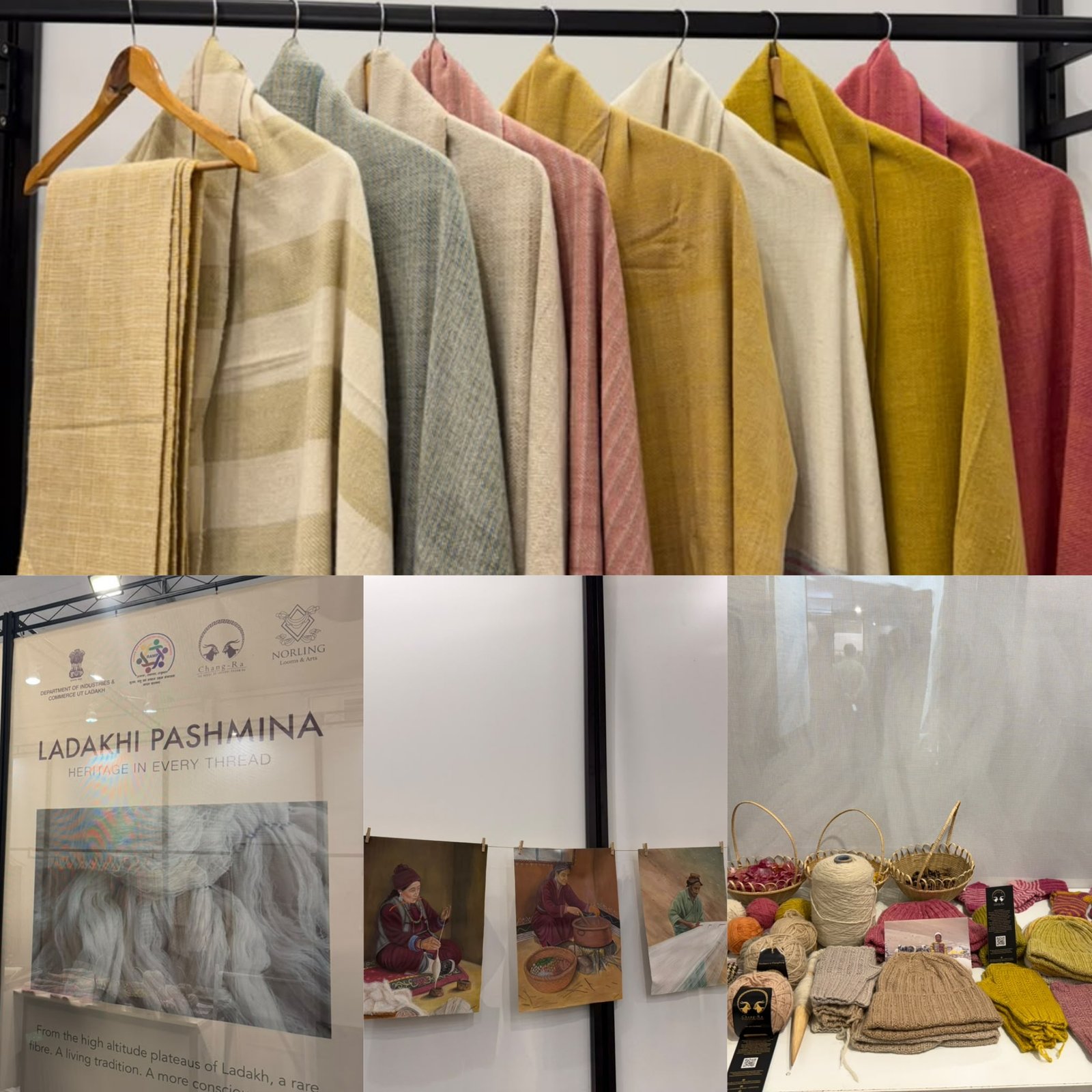
A dedicated stall featuring Pashmina shawls, intricate embroidery, handwoven textiles and other locally crafted products has been set up at The Taj, New Delhi, where the fashion event is being held from October 13 to 18.
The showcase highlights the traditional knowledge and skills of Ladakh’s artisans, weavers, spinners and women entrepreneurs, while tracing the journey of Pashmina from the high-altitude pastures of Changthang to finished products that blend traditional craftsmanship with contemporary design.
Ladakh’s Pashmina tradition is closely linked to the Changthang pastoral community, whose livelihood and cultural heritage are intertwined with the Changra goats that produce the fine fibre. Generations of herders have sustained this tradition despite the region’s harsh climatic conditions.
A key highlight of the event will be a runway presentation by designers from Ladakh on Sunday, October 18. The collections are expected to feature Pashmina creations, traditional embroidery and contemporary interpretations of the region’s indigenous textiles.
The participation aims to connect local craftspeople and enterprises with wider markets and the fashion industry, creating opportunities for artisans, herders, weavers and women-led Self-Help Groups (SHGs).
The initiative also reflects the UT Administration’s efforts to promote Ladakh’s handicrafts and handloom sector, strengthen traditional skills and improve market access for locally made products.
Through the showcase, Ladakh’s traditional craftsmanship is being presented to a wider audience, highlighting the importance of preserving its cultural heritage while creating opportunities for sustainable livelihoods.


Comments are closed.