


Challenges Faced by Young Children in Early Grades and Their Solutions

Danish Ashraf Khan 


When education is delivered with love, patience, practical activities and the right teaching methods, learning becomes a source of happiness rather than a burden. The responsibility of a teacher is not only to teach children but also to build their confidence, curiosity and interest in learning.

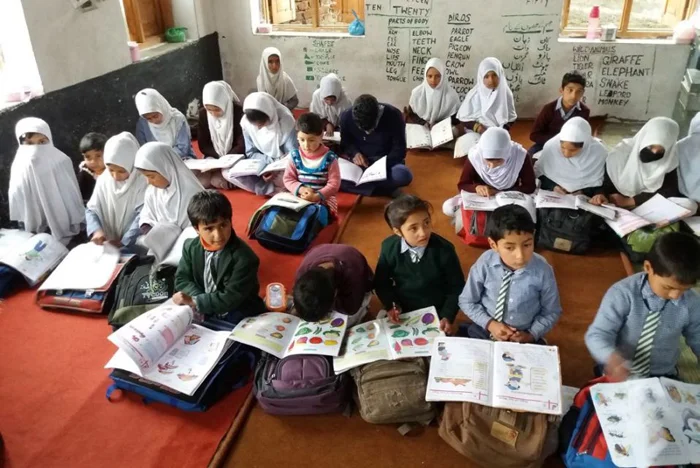
The early years of education play an important role in building a strong foundation for every child. Students in Grades 1 and 2 are still developing mentally, physically and emotionally. At this stage, they need proper guidance, attention and support from their teachers.

However, changing lifestyles, excessive mobile phone use, short attention spans and increasing academic pressure have created new challenges for young learners. Teachers need to understand these difficulties and adopt suitable teaching methods to make learning easier and more enjoyable.

One of the most common challenges is lack of attention and interest in the classroom. Many children are more interested in mobile phones, cartoons and games, which makes it difficult for them to sit quietly and follow instructions for a long time.

Teachers can overcome this problem by using pictures, stories, short videos and classroom activities. Instead of keeping children busy with long lessons, teachers should involve them in small activities and give everyone an opportunity to ask and answer questions.

Another common difficulty is handwriting and holding a pencil correctly. Some children struggle to hold a pencil, write within lines or form letters properly. Their hands may also get tired quickly.

Teachers should focus on activities that improve fine motor skills, such as colouring, cutting, tracing, playing with clay and completing simple worksheets. Children should be given enough time to practise writing without unnecessary pressure.

Reading and recognising letter sounds is another important challenge. Some students can recognise letters but find it difficult to combine their sounds to form words. Teachers can use phonics, flashcards, group reading and simple word games to improve their reading skills. Even asking children to read two or three lines every day can gradually improve their confidence and fluency.

Some children also face difficulties with memory and remembering lessons. They may forget spellings, sentences, poems and basic rules soon after learning them. This does not necessarily mean that they have a weak memory.

 Sometimes, they simply need more practice, repetition and attention. Teachers should revise previous lessons regularly and use pictures, simple examples, quizzes and role-play activities to make learning easier.

Understanding basic mathematical concepts can also be difficult for young learners. Counting, addition, subtraction, recognising shapes and writing numbers require proper practice.

 Instead of depending only on textbooks, teachers should use blocks, sticks, everyday objects and simple classroom games to explain mathematical concepts. Practical activities help children understand numbers more clearly.

Another issue is lack of confidence and fear of speaking. Some children may know the correct answer but hesitate to speak because they are shy or afraid of making mistakes.

Teachers should appreciate even small achievements and encourage children to participate in classroom discussions. Pair work and group activities can help them become more confident. A child should never feel embarrassed for giving a wrong answer because mistakes are also part of learning.

Finally, the home environment and excessive screen time can affect a child’s learning ability. Lack of proper sleep, poor nutrition, limited parental attention and excessive use of mobile phones can negatively affect classroom performance.

 Teachers should maintain good communication with parents through parent-teacher meetings and regular updates. Parents should also be encouraged to provide children with a healthy routine, proper sleep and enough time for screen-free activities.

Children in Grades 1 and 2 are at a very important stage of their educational journey. They do not all learn at the same speed or in the same way. A good teacher understands these differences and provides individual attention whenever necessary.

Teaching is not limited to completing the syllabus; it is also about understanding children, identifying their difficulties and helping them grow.

When education is delivered with love, patience, practical activities and the right teaching methods, learning becomes a source of happiness rather than a burden. The responsibility of a teacher is not only to teach children but also to build their confidence, curiosity and interest in learning.


Author is Teacher, Writer and  Social Activist  from Bathnoor Tral and can be mailed at khandanishashraf506@gmail.com 

Comments are closed.