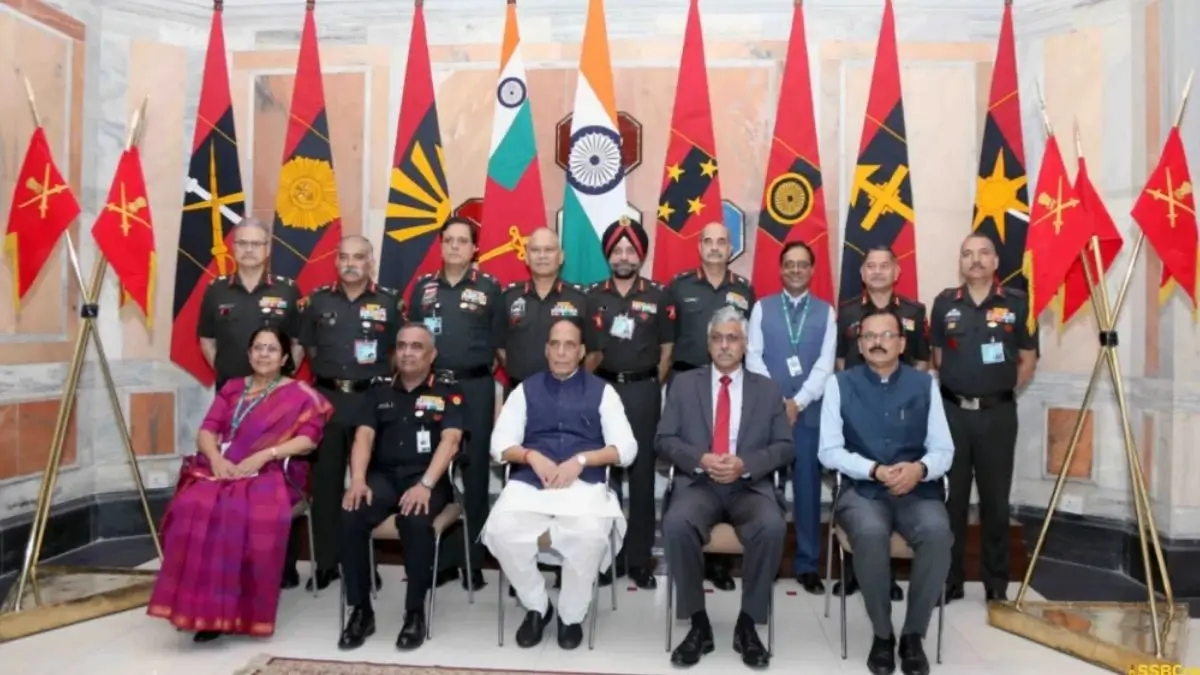
New Delhi, Oct 21: The Army Commanders’ Conference began in New Delhi on Wednesday, bringing together the Indian Army’s senior leadership to review the evolving security environment, operational preparedness and plans for future capability development.
An official told Kashmir Convener, the biannual conference, being held from October 21 to 23 under the chairmanship of Chief of the Army Staff General Upendra Dwivedi, will focus on emerging security challenges, technological advancements and initiatives to prepare the Army for future conflicts.
Defence Minister Rajnath Singh is scheduled to address the conference and release the Land Warfare Doctrine, which is intended to provide a framework for preparing the Army to respond to the changing nature of warfare and emerging operational challenges.
He said the Chief of Defence Staff, Chief of the Naval Staff and Secretary in the Ministry of Electronics and Information Technology are also scheduled to deliver talks on contemporary security-related issues.
The conference will also see the unveiling of the Army’s annual United Nations Journal and the felicitation of personnel who have made notable contributions while serving as UN peacekeepers.
The recognition is aimed at acknowledging their professionalism and role in international peacekeeping operations.
In addition, the Army Chief will confer awards for Green Military Stations and Aviation Flight Safety, recognising efforts in environmental sustainability, resource management and aviation safety.
The official further added that the conference serves as a platform for the Army’s senior leadership to review ongoing initiatives, identify priority areas and formulate policy directions aimed at strengthening operational readiness and building a technologically enabled and adaptable force.
Notably, The discussions come amid an evolving security environment, with the Army seeking to align its operational capabilities and institutional preparedness with the demands of future warfare.


Comments are closed.