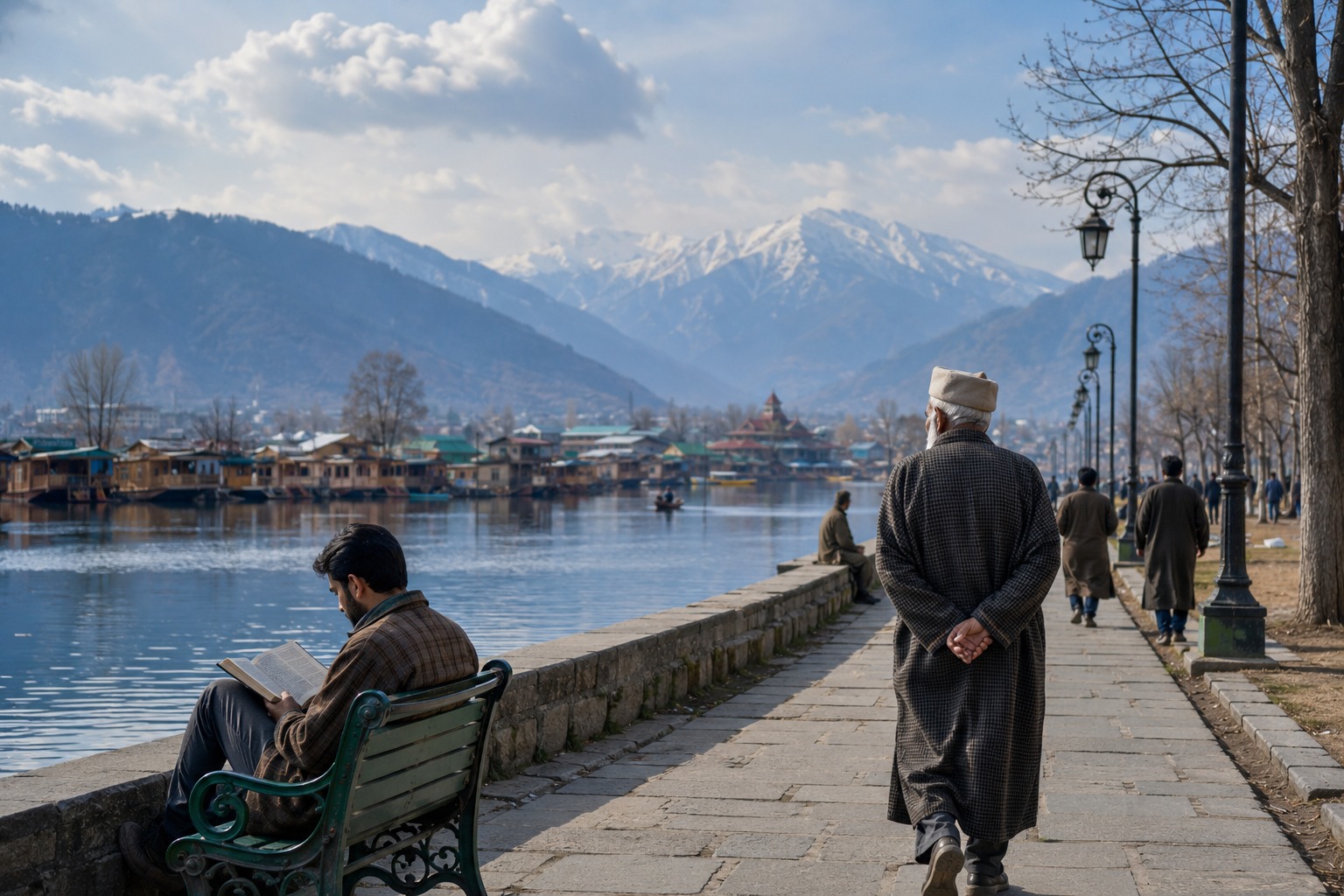


Are We Prisoners of Dominant Discourses? A Reflection on Kashmiri Society.

Shokin


“The greatest freedom is not freedom from society but freedom from the unexamined assumptions that society imposes upon us. Only then can we escape the prestige trap and create lives guided by purpose rather than perception.”

Every society has certain ideas that become so powerful and deeply rooted that they are rarely questioned. These ideas shape people’s aspirations, influence their decisions, and determine how success is measured. They become what philosophers and sociologists call a dominant discourse a set of beliefs so widely accepted that they begin to appear natural and self-evident.

In Kashmiri society, one such dominant discourse revolves around prestige. It is the invisible force that shapes how people choose careers, celebrate marriages, build homes, and evaluate one another. While prestige itself is not a negative pursuit, the problem arises when it becomes the primary lens through which success, respectability, and personal worth are judged.

From an early age, young Kashmiris are introduced to a narrow definition of success. Certain professions occupy a privileged position in the social imagination. Becoming a doctor, bureaucrat, engineer, professor, or government officer is often regarded as the pinnacle of achievement. Families proudly introduce their children through these titles, and communities celebrate these accomplishments as markers of distinction and honour.

There is nothing wrong with respecting these professions. They require dedication, discipline, and sacrifice. The issue emerges when society begins to treat them as the only respectable paths. In such an environment, many other careers are unfairly undervalued. Entrepreneurs, business owners, sales professionals, marketers, startup founders, private-sector managers, and creative professionals often find themselves receiving less recognition despite making meaningful contributions to society.

A young entrepreneur who employs dozens of people may be viewed with less admiration than someone who holds a prestigious government position. A private-sector executive earning a competitive salary may still be asked when they plan to secure a “proper” job. The message, whether spoken or implied, is clear: social status matters more than contribution.

As a consequence, many young people pursue careers not because they align with their interests, talents, or ambitions but because they promise social approval. The fear of disappointing family expectations or attracting social criticism often outweighs personal aspirations. Success becomes less about fulfilment and more about conformity.

The same discourse is evident in the way marriages are celebrated. Marriage is one of the most meaningful events in a person’s life. At its heart, it represents commitment, companionship, and the beginning of a new chapter. Yet in many cases, the wedding ceremony itself becomes a stage upon which social status is displayed.

Families spend enormous sums on venues, decorations, elaborate clothing, photography, catering, and guest lists. Months of preparation and significant financial resources are devoted to creating an event that will impress relatives, neighbours, and acquaintances. The success of a wedding is frequently measured not by the happiness of the couple but by the grandeur of the celebration.

After the festivities end, conversations often revolve around the scale of expenditure, the quality of the arrangements, and the number of guests in attendance. The deeper meaning of marriage is overshadowed by the desire to meet social expectations. What should be a personal milestone sometimes becomes a public competition for prestige.

Perhaps nowhere is this pursuit of status more visible than in housing. Across Kashmir, families invest extraordinary amounts of money in constructing large homes and repeatedly renovating them. Perfectly functional interiors are redesigned, expensive materials are replaced with newer trends, and renovations occur long before necessity demands them.

A house is meant to provide shelter, comfort, and security. Yet it has increasingly become a symbol of social standing. The size of the building, the style of the architecture, the quality of the furnishings, and the sophistication of the interiors are often viewed as reflections of a family’s status. Homes become not merely places to live but statements to be observed and evaluated by others.

There is nothing inherently wrong with wanting a beautiful home. The concern arises when social recognition becomes the primary motivation. Resources that could be invested in education, entrepreneurship, professional development, innovation, or long-term wealth creation are often directed toward maintaining appearances. Visible prosperity is rewarded more readily than productive investment because one attracts immediate admiration while the other remains largely unseen.

What unites these seemingly different phenomena prestigious careers, lavish weddings, and expensive homes is a common desire for validation. Individuals often make choices not solely because they genuinely desire them but because society has taught them that these choices signify success. The result is a culture in which appearances sometimes matter more than substance and perception often outweighs purpose.

The irony is that Kashmir possesses immense talent, creativity, and entrepreneurial potential. Yet a society overly focused on prestige can unintentionally discourage risk-taking, innovation, and independent thinking. When social approval becomes the ultimate goal, individuals become reluctant to pursue unconventional paths, even when those paths align more closely with their abilities and aspirations.

This reflection is not an attack on traditions, respected professions, weddings, or beautiful homes. These are valuable aspects of life and culture. Rather, it is an invitation to ask a simple but important question: Are our choices truly our own, or are they shaped by an inherited discourse that tells us what success should look like?

A mature society is not one that abandons tradition but one that examines it critically. It is a society that respects doctors and bureaucrats while also celebrating entrepreneurs and innovators. It is a society that values meaningful marriages more than extravagant ceremonies and comfortable homes more than endless displays of wealth. Most importantly, it is a society that measures people not by the status symbols they possess but by their character, contribution, and integrity.

The greatest freedom is not freedom from society but freedom from the unexamined assumptions that society imposes upon us. Only when individuals begin to define success on their own terms can they escape the prestige trap and create lives guided by purpose rather than perception.


Author is  student of  Business Administration and can be mailed at  habeelsuhail23@gmail.com

Comments are closed.