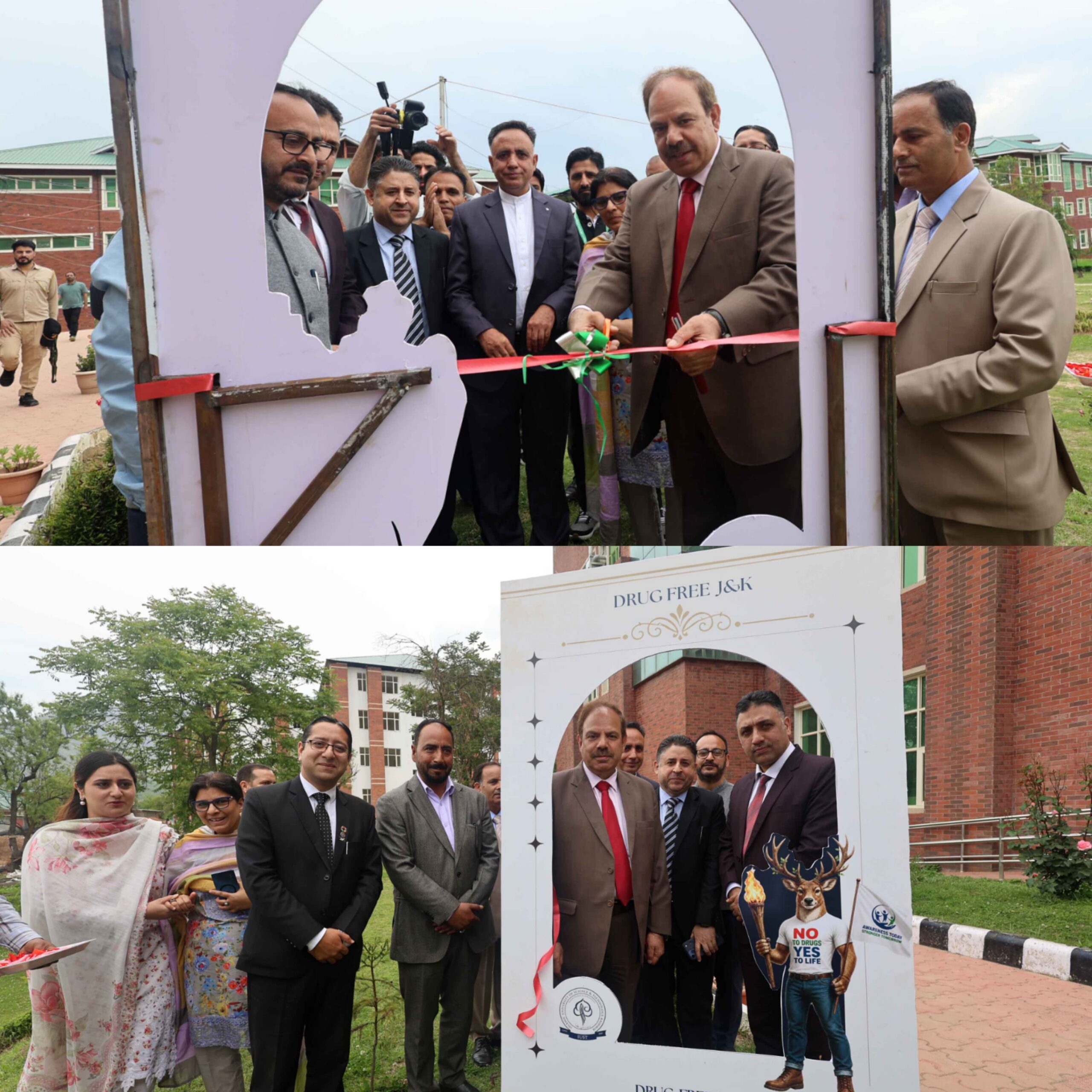
Awantipora, May 04: The Islamic University of Science and Technology (IUST) today inaugurated a two-day workshop titled “Drug-Free Society: Call for Collective Action,” organized by the Centre for Good Governance & Policy Analysis. The workshop brought together policymakers, law enforcement officials, healthcare professionals, academicians, civil society members, and students to deliberate on the growing challenge of substance abuse in Jammu & Kashmir.
The inaugural session was presided over by Vice Chancellor Prof. Shakil A. Romshoo. Dr. Aabid Shalla, Registrar IUST, and Prof. G. N. Itoo, Director, Centre for Good Governance & Policy Analysis, were also present on the occasion. Dr. M. Muzafar Khan delivered the keynote address, while Dr. Abdul Majid presented the special address. Mr. Mushtaq Ahmad Lone, ADC Awantipora, addressed the participants. The workshop witnessed participation from students, scholars, faculty members, university officials, and other key stakeholders.
Speakers highlighted the urgency of addressing substance abuse as a serious social, economic, and public health concern. The initiative aligns with the ongoing Nasha Mukt Abhiyan, a 100-day campaign focused on awareness, prevention, and community engagement. Emphasis was laid on moving beyond awareness towards coordinated, action-oriented interventions involving institutions, governance systems, and communities.
In his address, Vice Chancellor Prof. Romshoo stated, “While institutional mechanisms are vital, the role of society is equally crucial. Rehabilitation must be community-driven, where families and society actively support individuals in overcoming addiction and reintegrating with dignity.”
A documentary screening depicting real-life experiences of addiction highlighted its human and societal impact. Students actively engaged in awareness initiatives were also recognized, reinforcing the pivotal role of youth as catalysts for change.
Two technical sessions were held during the day. The first session, on “Policy Landscape & Systemic Gaps”, examined existing legal frameworks and identified key implementation challenges. The second session, on “Stakeholder Engagement & Civil Society Participation”, emphasized the role of civil society and highlighted the importance of professional parenting and mentorship in guiding youth through vulnerable phases.


Comments are closed.