

S Ahmad
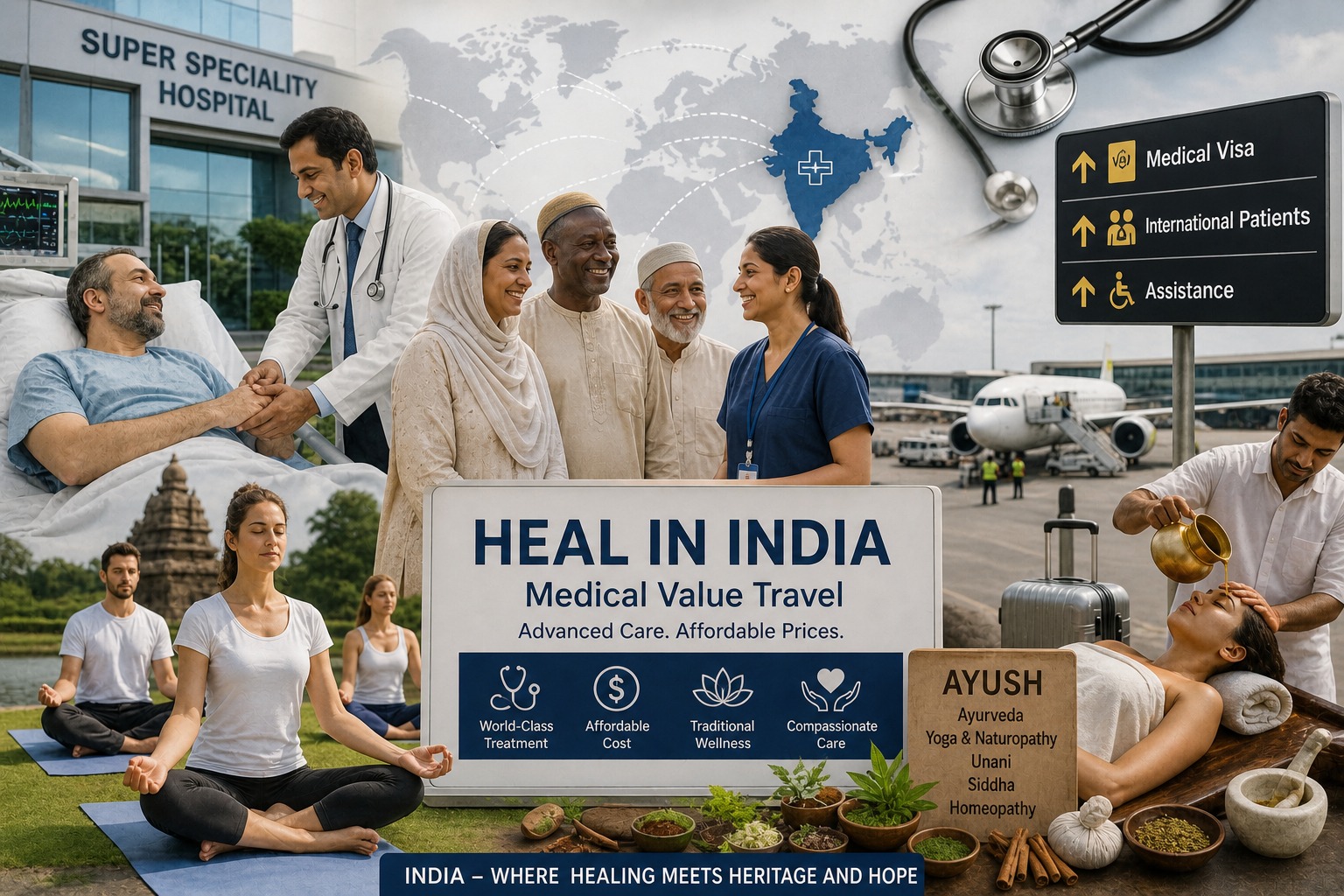
India is emerging as a leading hub for Medical Value Travel (MVT) by integrating advanced medical infrastructure with traditional wellness systems such as AYUSH. Strong policy support, digital facilitation, and initiatives like AYUSH Visa and Regional Medical Hubs are strengthening the ecosystem. Rising global healthcare costs and demand for holistic care are driving international patients to India for affordable, high-quality treatment and preventive wellness solutions.
India is steadily carving out a place for itself as a global hub for healing. What was once a quiet stream of foreign patients seeking affordable treatment has now evolved into a structured, policy-driven sector known as Medical Value Travel (MVT). With a blend of modern medical excellence and centuries-old wellness traditions, the country is positioning itself not merely as a destination for treatment, but as a comprehensive ecosystem for recovery, prevention, and holistic well-being.
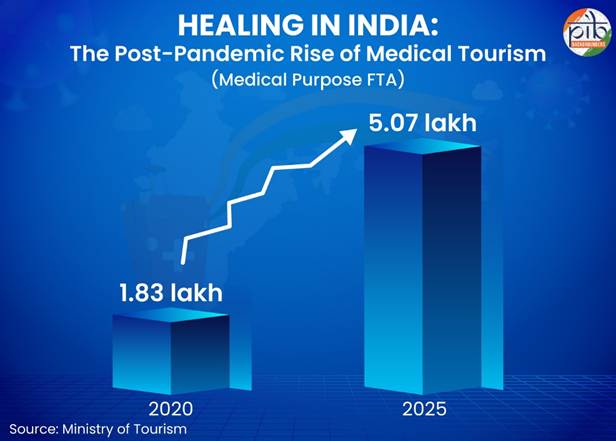
At first glance, the numbers tell a compelling story. The global medical tourism market, valued at over $115 billion in 2022, is projected to surge to nearly $286 billion by 2030. Within this expanding landscape, India’s own medical tourism industry is expected to grow from approximately $8.7 billion in 2025 to $16.2 billion by the end of the decade. More than half a million foreign patients are already travelling to India each year specifically for medical purposes, a figure that continues to rise.
Yet, behind these statistics lies a more complex narrative—one that raises critical questions about access, equity, quality, and the very idea of healthcare as both a public good and a global commodity.
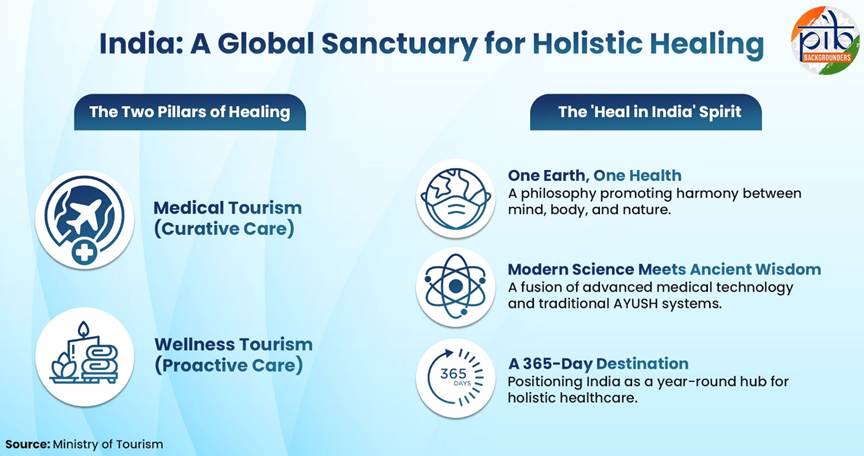
For centuries, India has been regarded as a sanctuary for those seeking healing, balance and recovery. Today, this ancient legacy has evolved into a dynamic Medical Value Travel ecosystem. It combines modern medical science with the timeless wisdom of traditional systems.
Through the flagship “Heal in India” initiative, the Government is positioning the country as a premier destination for integrated and holistic healthcare.
A New Geography of Healing
The rise of medical tourism is not accidental. It is a direct response to global disparities in healthcare systems. In many developed countries, treatment is often prohibitively expensive or delayed by long waiting lists. In contrast, India offers a compelling alternative: high-quality medical care at a fraction of the cost, delivered without prolonged delays.
Patients from countries such as Bangladesh, Iraq, Uzbekistan, and several African nations increasingly view India as a viable destination for complex procedures—ranging from cardiac surgeries and organ transplants to cancer treatment and fertility services. For them, the decision is often not about luxury or convenience, but necessity.
India’s advantage lies in its scale and diversity. With over 69,000 hospitals and more than a million registered doctors, the country possesses one of the largest healthcare infrastructures in the world. English as the primary language of medical education further enhances accessibility for international patients, removing a significant barrier that often complicates cross-border treatment.
Moreover, the presence of globally accredited institutions—certified by bodies such as the National Accreditation Board for Hospitals and international organizations—has strengthened India’s reputation for quality and safety. Cities like Delhi, Mumbai, Chennai, and Hyderabad have emerged as key nodes in this medical tourism network, offering world-class facilities that rival those in developed nations.
The Price Advantage—and Its Implications
Cost remains India’s most powerful selling point. Medical procedures that might cost tens of thousands of dollars in the United States or Europe are often available in India at a fraction of the price, without compromising on quality. This affordability is not merely a competitive advantage; it is the foundation upon which the entire MVT ecosystem is built.
However, this raises an uncomfortable but necessary question: affordable for whom?
While international patients benefit from lower costs, many Indian citizens continue to struggle with access to basic healthcare. The coexistence of high-end private hospitals catering to foreign patients and under-resourced public healthcare systems serving domestic populations highlights a deep structural imbalance.
There is a risk that prioritizing medical tourism could inadvertently widen this gap. Resources—both human and infrastructural—may increasingly gravitate toward profit-generating international services, leaving local communities underserved. If not carefully managed, the success of medical tourism could come at the expense of healthcare equity within the country.
The AYUSH Advantage: Tradition Meets Modernity
What sets India apart from many other medical tourism destinations is its integration of traditional wellness systems under the umbrella of AYUSH—Ayurveda, Yoga, Naturopathy, Unani, Siddha, and Homeopathy. This dual approach, combining curative and preventive care, gives India a unique identity in the global health landscape.
For centuries, India has been associated with healing practices that go beyond physical treatment to address mental and spiritual well-being. Today, this legacy is being reimagined as part of a modern wellness tourism industry.
The introduction of specialized visas for AYUSH treatments, along with growing insurance coverage for such therapies, reflects a deliberate effort by the government to institutionalize and globalize these traditions. Events, international summits, and global collaborations further reinforce India’s positioning as a leader in holistic health.
Yoga, in particular, has emerged as a powerful symbol of India’s soft power. Its global popularity has not only boosted wellness tourism but also strengthened the country’s cultural influence. Tourists are no longer just seeking treatment; they are seeking transformation—an experience that combines medical care with lifestyle change and spiritual renewal.
Yet, the commercialization of traditional practices also carries risks. Standardization, quality control, and scientific validation become critical as these systems enter global markets. Without rigorous oversight, there is a danger of dilution or misrepresentation, which could undermine credibility in the long run.
Policy Push and Institutional Framework
Recognizing the sector’s potential, the government has introduced a range of policy measures aimed at strengthening India’s position in the global MVT market. Initiatives such as the “Heal in India” campaign, the establishment of regional medical hubs, and the expansion of digital platforms for patient facilitation signal a clear strategic intent.
The proposed regional hubs, in particular, represent an ambitious vision. By integrating hospitals, research institutions, and wellness centres within a single ecosystem, these hubs aim to provide end-to-end care—from diagnosis and treatment to rehabilitation and recovery. They are also expected to generate employment and boost local economies.
Digital transformation is another key pillar. From streamlined visa processes to comprehensive online portals that allow patients to plan their entire medical journey, technology is being leveraged to enhance accessibility and convenience. Plans for airport facilitation services further indicate an effort to create a seamless experience for international visitors.
At the institutional level, bodies such as the National Medical & Wellness Tourism Promotion Board are working to coordinate efforts across ministries, states, and private stakeholders. This multi-layered governance framework is essential for maintaining quality, ensuring accountability, and building international trust.
The Economic Promise
Beyond healthcare, medical tourism is emerging as a significant economic driver. The broader travel and tourism sector already contributes over 5 percent to India’s GDP and supports millions of jobs. Medical tourism, as a specialized segment, has the potential to amplify this impact.
Each international patient represents not just revenue for hospitals, but also for airlines, hotels, local transport, and ancillary services. The ripple effect extends across the economy, creating opportunities for both skilled and semi-skilled workers.
In a country where job creation remains a pressing challenge, this sector offers a promising avenue for growth. Training programs for healthcare professionals, paramedical staff, and even tourism guides are being expanded to meet rising demand.
However, economic growth alone cannot be the sole metric of success. The true measure lies in how inclusively this growth is distributed and whether it contributes to strengthening the overall healthcare system.
Challenges Beneath the Surface
Despite its rapid growth, India’s medical tourism sector faces several challenges that cannot be ignored.
First, there is the issue of regulation. While accreditation systems exist, enforcement remains uneven. Ensuring consistent quality across thousands of hospitals and wellness centres is a complex task that requires continuous monitoring and transparency.
Second, ethical concerns around organ transplants, surrogacy, and experimental treatments have occasionally cast a shadow over the industry. Strict adherence to ethical standards is essential to maintain credibility and avoid exploitation.
Third, infrastructure gaps—particularly in smaller cities—limit the sector’s expansion. While metropolitan areas are well-equipped, many regions lack the facilities needed to attract international patients. Bridging this gap will require sustained investment and planning.
Finally, there is the question of sustainability. As the sector grows, so does its environmental footprint. From increased travel to resource-intensive medical procedures, the impact on the environment must be considered. Integrating sustainable practices into healthcare and tourism will be crucial for long-term viability.
A Delicate Balance
India’s emergence as a global healing destination is, in many ways, a reflection of its broader transformation. It showcases the country’s ability to combine tradition with modernity, scale with specialization, and affordability with quality.
But this journey is not without its dilemmas.
Can India continue to attract international patients without compromising access for its own citizens? Can it commercialize its wellness traditions without losing their authenticity? Can it scale its healthcare infrastructure while maintaining quality and ethical standards?
These are not questions that can be answered through policy alone. They require a collective commitment—from government, industry, healthcare professionals, and society at large—to ensure that growth is both responsible and inclusive.
The Road Ahead
The future of medical tourism in India is undeniably bright. Global demand for affordable, high-quality healthcare is only expected to increase, and India is well-positioned to meet this demand. With continued investment in infrastructure, innovation, and human capital, the country can strengthen its leadership in this space.
At the same time, there is an opportunity to redefine what medical tourism means. Instead of focusing solely on treatment, India can position itself as a destination for comprehensive well-being—where healing extends beyond the body to include the mind and spirit.
This vision aligns with global trends toward preventive healthcare and holistic living. It also resonates with India’s own cultural ethos, which has long emphasized balance, harmony, and interconnectedness.
Conclusion: Healing as a National Responsibility
India’s medical tourism boom is more than an economic opportunity; it is a reflection of the country’s evolving identity in a globalized world. It represents the intersection of healthcare, culture, and commerce—a space where lives are transformed, economies are strengthened, and traditions are reimagined.
But with this opportunity comes responsibility.
Healthcare, at its core, is not just a service—it is a fundamental human right. As India continues to welcome patients from around the world, it must ensure that its own citizens are not left behind. The success of medical tourism should not be measured solely by revenue or rankings, but by its ability to contribute to a more equitable and effective healthcare system for all.
In the end, the true test of India’s emergence as a global healing hub will not lie in the number of patients it attracts, but in the quality of care it provides—both to those who come from afar and to those who call it home.
Because healing, in its truest sense, must begin within.
India’s medical and wellness tourism ecosystem is evolving into a globally trusted model of integrated healthcare. It combines modern medical infrastructure with traditional systems such as AYUSH. This enables both curative and preventive care.
Strong government policy, digital facilitation, and international quality standards support this growth. Expanding global outreach is further strengthening India’s position as a comprehensive destination for Medical Value Travel.
As global demand rises, India is poised to play a key role in shaping the future of global healthcare and wellness travel.
Comments are closed.