
Urdu Ka Musafir: A Chronicle of Commitment to Urdu


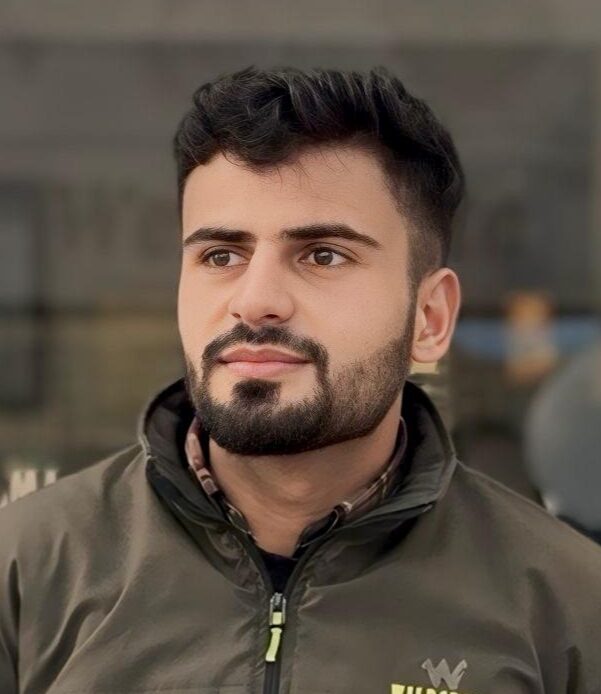
Mohammad Arfat Wani


“One of the most valuable dimensions of this compilation is its preservation of literary correspondence — a fading tradition that once formed the intellectual backbone of Urdu literary discourse.”

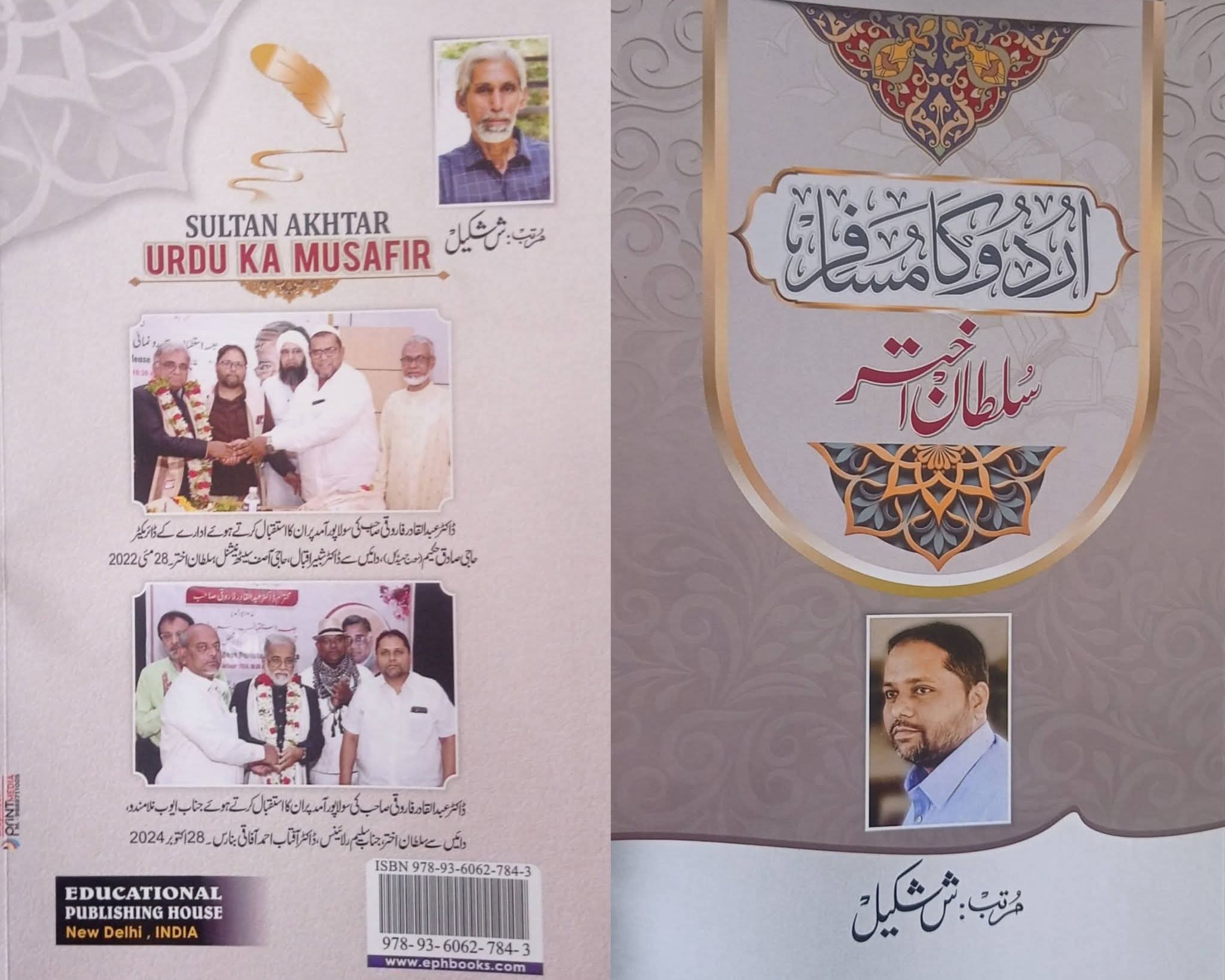
Languages remain alive and continue to grow because of the efforts of sincere people who dedicate their lives to their promotion and development. Such individuals work tirelessly for literature and culture without expecting rewards or recognition. One such personality is Sultan Akhtar, whose literary, journalistic, and social contributions have been beautifully documented in the book Urdu Ka Musafir: Sultan Akhtar, compiled by the noted writer and editor Sheen. Shakeel of Aurangabad.

However, this book contains much more than just a mere biographical information about Sultan Akhtar. It is a chronicle of all the activities performed by him for the sake of the promotion of Urdu. This volume is a compilation of articles, essays, poems, letters, and literary criticism about the person who has been working for the progress of Urdu.

It must be mentioned that the compiler of this book, Sheen. Shakeel deserves gratitude for compiling it in such a thoughtful way. There can be felt a respectful attitude of the author to Sultan Akhtar in it, though the compilation is quite informative. The compiler’s note and acknowledgements are presented at the beginning of the book and help the reader realize what is the purpose of publishing this book and why Sultan Akhtar’s works are significant.

This book is dedicated to a respected person whose name is Dr. Abdul Qadir Farooqi, and who is well known for his international works for promoting Urdu language. This dedication gives additional information about the idea of this book and the significance of the literary links between different countries. At the very beginning of the book, congratulatory poems from various well-known poets and writers are presented.

One of the most interesting and enlightening parts of the book comprises analytical essays as well as appreciations written by famous literary personalities who have discussed numerous aspects of Sultan Akhtar’s literary career. In fact, through the works of different scholars and critics it is revealed that Sultan Akhtar not only writes but he also serves as a literary promoter and organizer.

Contributors to this section include some well-respected literary personalities like Noor-ul-Hasnain, Ghulam Saqib, Rafiq Jafar, M. Mubeen, Dr. Ibrahim Afsar, and Dr. Shabbir Iqbal. Each author discusses different aspects of Sultan Akhtar’s literary personality; for instance, simplicity of style, social significance of his writings, commitment to the cause of truth and effective communication with the readers.

Another interesting aspect of the life and work of Sultan Akhtar discussed throughout the book is that of afsan-chi, which means writer of very short stories. Critics have observed that the writings of Sultan Akhtar in this respect carry simple language and contain social relevance and human values. In fact, it can be said that these writings serve as a mirror for ordinary citizens as they reflect their life and social reality.

The biography gives comprehensive information regarding his personal as well as academic background that is important to analyze the literary path of Sultan Akhtar. He was born on 1 June 1980 in Solapur, Maharashtra. He pursued higher studies and obtained his degrees such as M.A. in Urdu and B.Ed. In terms of profession, he is connected with teaching and journalism. Both of these professions are helping him in contributing towards the growth of intellectuality of the society by stimulating their interest in Urdu language and literature.

Alongside his professional career, Sultan Akhtar is an active participant in literary societies as well. He holds the post of President of Bharatiya Urdu Kaas Foundation, Solapur, where he works consistently for promoting Urdu.

The book goes on to describe Sultan Akhtar’s contributions as an editor and compiler of literary books. He has compiled several literary books in different genres throughout his life. Some notable examples include Aath Aane Ki MithaasAmerica Mein Urdu Ke Alam Bardar: Dr. Abdul Qadir Farooqi, Sikandar Fahmi, Muslim Science Daanon Ki Sainsi Khidmaat, and Nazir Ba Naam Sultan Akhtar. Other important compilations from his work include Naqsh-e-WafaPalkon Par Khwab, Dr. Javed Hussain Paloji, Dr. Abdul Qadir Farooqi: Hayat-o-Jihat, and Sargoshiyan.

Another important contribution of Sultan Akhtar’s work is his association with different literary gatherings and cultural activities. The book describes how Sultan Akhtar organized a number of literary and cultural seminars, conferences, mushairas, release functions of different books, and online literary sessions ever since the foundation of Dr. Abdul Qadir Farooqi was set up in 2011.

These contributions have earned him several honors and awards. They include Maharashtra State Urdu Sahitya Academy Special Award (2025), Waris Urdu Sahafat Award (2023), Urdu Dost Award, Sufi Muhammad Ilyas Chishti Azizi Award, Ideal Teacher Award, and Nishan-e-Imtiaz Urdu Award. This indicates that people have accorded him immense respect for his contributions over the years.

One of the most intriguing parts of the book is the section of letter writing. In today’s world, the practice of literary correspondence is not very popular. However, Sultan Akhtar has succeeded in making this tradition survive by collecting many letters addressed to him. Not only have they contributed to preserving this literary form, but they also help in enriching it further since the letters discuss various aspects related to literature, language, criticism, and current events.

The letters include exchanges with a number of literary luminaries like Saleem Ansari, Qamar Jamali, Rashid Jamal Farooqi, Dr. Mohiuddin Zor Kashmiri, Dr. Ubaidullah Chaudhary, Dr. Tarannum Jahan, Muzaffar Hanafi, Waqar Shahsawar, etc. They can be extremely enlightening to literary critics and scholars who may wish to analyze the literary trends and discourse of their times.

A number of the contributors to the book consider Sultan Akhtar as a real servant of the Urdu language. They appreciate the sincerity, devotion, and selflessness of the author and point out that he has served Urdu for many years without any personal interest. His friends and colleagues know him as a dynamic and dedicated literary person who has worked hard for the cause of the Urdu language.

There is a discussion on his style of writing in the book as well. It is said that he uses simple language which is understandable to everyone. He does not use complicated terms but makes his points crystal clear. This quality has made him quite popular among the people.

In terms of publishing, the book is also remarkable. It has been published by the Educational Publishing House, Delhi. It has a total of 112 pages, and the high quality of printing enhances its aesthetic appeal further. The beautiful cover page designed by Munawwara Uzma has certainly added to its value.

In conclusion, Urdu Ka Musafir: Sultan Akhtar proves to be a highly significant document for Urdu literature documentation. This book is successful in capturing and documenting the life and literary contributions of a dedicated personality who has done much for Urdu language and literature. It is indeed appreciable to note the efforts of the compiler, Sheen. Shakeel, for gathering such a rich set of literary documents and arranging them so well.

It is useful for lovers of the personality described in the book, and for anyone who wishes to know about contemporary Urdu literature. Not only does it pay homage to a single individual, but it also reflects on the ongoing endeavors being made to promote Urdu in modern times. Most importantly, it makes one realize how vital it is for a language to have individuals like Sultan Akhtar who carry forward its legacy for future generations through their passion and dedication.

(Mohammad Arfat Wani is a nursing student from Kuchmulla, Tral. He writes on social issues, culture, and public concerns with the aim of raising awareness and inspiring positive change. He can be mailed at wania6817@gmail.com)

Comments are closed.