


Dr. Rizwan Rumi
Kashmir’s frontier villages are no longer merely the nation’s outermost settlements. They are becoming living examples of how peace, when nurtured, can transform landscapes of uncertainty into destinations of opportunity.
For generations, the names Keran, Tangdhar, Uri and Gurez evoked images of conflict rather than curiosity. These frontier villages, nestled along the Line of Control (LoC), were known for military bunkers, ceasefire violations and stories of displacement. Their breathtaking landscapes remained hidden behind security restrictions, and for many, they existed only in news reports whenever tensions escalated along the border.
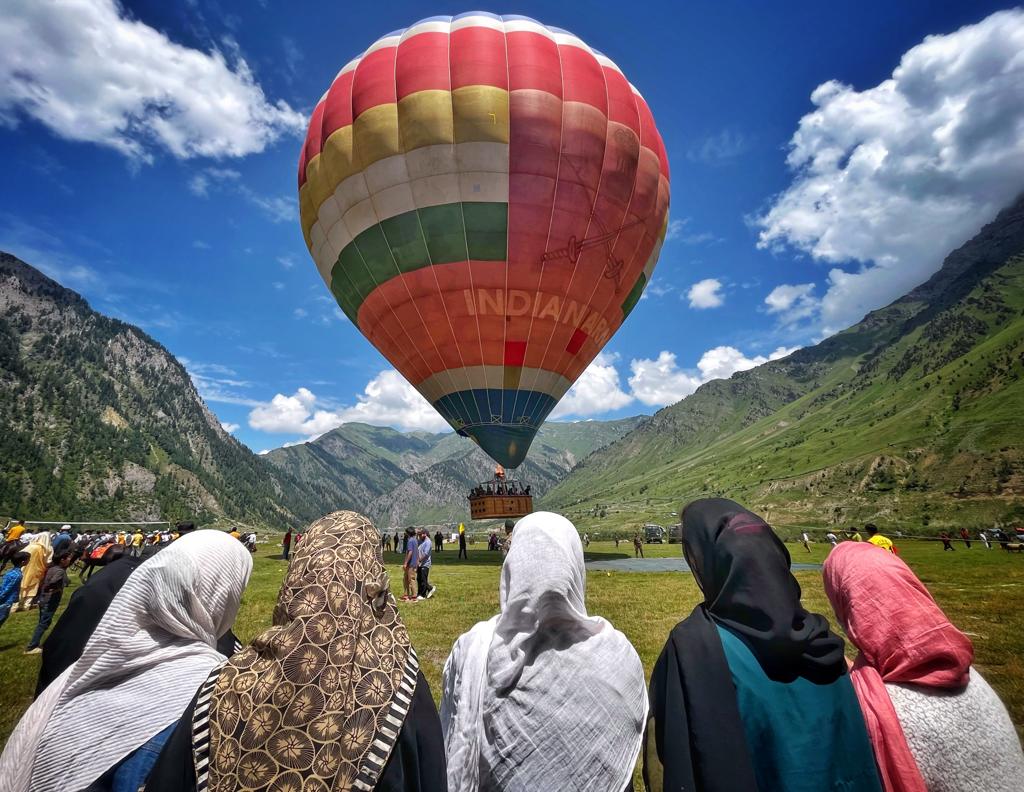
Today, a quiet transformation is unfolding. The very villages that once symbolised uncertainty are emerging among Kashmir’s most sought-after travel destinations. Families, photographers, bikers, trekkers and nature lovers are making their way to these remote settlements—not merely to admire snow-clad mountains and crystal-clear rivers, but to experience something profoundly unique: the feeling of standing at the edge of a nation.
Border tourism has become one of the most compelling chapters in Kashmir’s evolving tourism story. It is not merely about visiting scenic places; it is about witnessing how peace, development and human resilience can redefine landscapes once overshadowed by conflict.
The renewed ceasefire understanding along the Line of Control in February 2021 significantly altered life in many frontier areas. With a marked decline in cross-border shelling, villages that had long lived under the shadow of uncertainty began witnessing a gradual return to normalcy. Improved road connectivity, better telecommunications and government initiatives promoting rural tourism have together opened a new chapter for these remote regions.
The resurgence of tourism in Jammu and Kashmir provides the backdrop for this transformation. Official figures show that the Union Territory welcomed more than 2.35 crore tourists in 2024, the highest ever recorded. While destinations such as Gulmarg, Pahalgam and Sonamarg continue to dominate tourist itineraries, an increasing number of visitors are now seeking experiences beyond the conventional circuit. Border villages have emerged as the newest attractions, offering a blend of breathtaking landscapes, history, culture and national significance.
What attracts people to these distant settlements is not luxury or adventure alone. It is a curiosity.
There is something deeply compelling about standing on the banks of the Kishanganga River in Keran and looking across at homes in Pakistan-administered Kashmir. The mountains are identical. The forests mirror each other. The river flows uninterrupted across political boundaries. Yet history has drawn an invisible line separating communities that once shared language, culture and everyday life.
Unlike many international frontiers marked by towering walls and fences, parts of the LoC pass through rivers, valleys and mountain ridges that appear almost untouched by political divisions. Visitors often describe the experience as surreal. Within a few metres lies another country, visible across flowing water, where everyday life unfolds against the same Himalayan backdrop.
This rare experience has made border tourism one of the fastest-growing travel interests in Kashmir. People no longer visit these villages solely for photographs; they come to understand the geography of the frontier and the lives of those who have called it home for generations.
Keran perhaps best symbolises this remarkable transition. Once difficult to access due to security restrictions, the village has evolved into a thriving rural tourism destination. Traditional wooden homes now welcome visitors as homestays, while local cafés, tea stalls and handicraft outlets have sprung up to cater to growing tourist numbers. Young residents who once looked beyond the valley for employment are now working as trekking guides, photographers, transport operators and hospitality entrepreneurs.
The economic implications are significant. Tourism contributes nearly 7 to 8 percent of Jammu and Kashmir’s Gross State Domestic Product (GSDP) and supports around five lakh direct and indirect livelihoods. Every traveller who spends a night in a village homestay, hires a local guide or purchases locally made products contributes directly to strengthening rural economies that were once dependent primarily on agriculture, seasonal labour or government employment.
Government efforts to promote community-based tourism have further accelerated this transformation. Rural tourism initiatives and homestay schemes have enabled hundreds of families across Jammu and Kashmir to diversify their income while preserving traditional architecture and local culture. In many frontier villages, tourism has become an engine of economic empowerment, allowing young people to remain in their native places rather than migrate elsewhere in search of employment.
Tangdhar presents another compelling example. Once synonymous with cross-border shelling, it is today celebrated for its dramatic mountain landscapes and warm hospitality. The drive across the majestic Sadhna Pass itself has become an attraction, offering spectacular views of snow-covered peaks, alpine meadows and dense forests before visitors descend into the valley.
Nearby Teetwal occupies a unique place in Kashmir’s history. Situated along the Kishanganga River, it has long served as a reminder of families divided by partition and the Line of Control. The revival of the ancient Sharada Temple has added another dimension to its identity, attracting pilgrims, historians and cultural travellers alongside nature enthusiasts.
Uri, too, is gradually shedding its image as merely a strategic frontier town. Rich in history and blessed with remarkable natural beauty, it offers visitors an opportunity to witness landmarks such as the Kaman Post and Aman Setu, symbols of both division and dialogue. These sites remind visitors that borders are not merely barriers; they are places where history, politics and humanity intersect.
Further north, Gurez Valley remains one of Kashmir’s most extraordinary frontiers. Home to the Dard-Shin community and framed by the majestic Habba Khatoon Peak, the valley offers pristine landscapes rarely matched elsewhere in the Himalayas. Its untouched beauty, distinctive culture and strategic location have increasingly drawn travellers searching for authentic experiences beyond commercial tourism.
Yet border tourism is unlike conventional tourism.
People visit these places not only for nature but also to understand life along one of the world’s most sensitive frontiers. They witness army posts overlooking tranquil rivers, hear stories of resilience from local residents and experience communities that have endured decades of uncertainty with remarkable courage. In doing so, they gain a deeper appreciation of both the region’s beauty and its complexities.
However, this growing popularity also presents serious challenges.
The Himalayan ecosystem is exceptionally fragile. Unregulated tourism, plastic waste, indiscriminate construction and increasing pressure on water resources threaten the ecological balance of these pristine valleys. Climate change has already intensified landslides, erratic weather and extreme rainfall across the Himalayas, making sustainable tourism more essential than ever.
Equally important is preserving the cultural identity of frontier communities. The traditional wooden architecture, local cuisine, indigenous customs and distinct dialects of these villages constitute an invaluable heritage. Tourism should strengthen these traditions rather than dilute them through unchecked commercialisation.
Security, too, remains an unavoidable reality. The Line of Control continues to be one of the world’s most sensitive military frontiers. Tourism in these regions must therefore evolve in harmony with legitimate security considerations, ensuring that visitor access and local economic growth complement rather than compromise national security.
If managed wisely, border tourism has the potential to become one of the most transformative models of rural development in Jammu and Kashmir. It creates employment where opportunities were once scarce, encourages infrastructure development, supports local entrepreneurship and integrates remote communities into the broader economy. More importantly, it enables visitors to engage with the lived realities of people residing at the nation’s frontiers.
Standing beside the Kishanganga River in Keran, one cannot help but reflect on the quiet symbolism of the landscape. The river flows freely across political boundaries. The mountains rise with equal grandeur on both sides. Nature recognises neither conflict nor cartography. It simply endures.
Perhaps that is why border tourism resonates so deeply. It allows travellers not only to witness geography but also to contemplate history, resilience and hope. It reminds us that while borders define nations, they need not define the limits of human connection, empathy or aspiration.
The success of Keran, Tangdhar, Teetwal, Uri and Gurez demonstrates that peace carries tangible dividends. Villages once remembered for the sound of shelling are increasingly known for the warmth of their hospitality. Roads that once carried military convoys now welcome travellers seeking understanding rather than headlines. Communities long associated with conflict are finding new confidence through tourism, entrepreneurship and cultural pride.
Kashmir’s frontier villages are no longer merely the nation’s outermost settlements. They are becoming living examples of how peace, when nurtured, can transform landscapes of uncertainty into destinations of opportunity. In the end, the greatest attraction of border tourism is not simply standing at the edge of a country—it is witnessing how resilience, hope and humanity flourish even at the edge of history.
Comments are closed.