
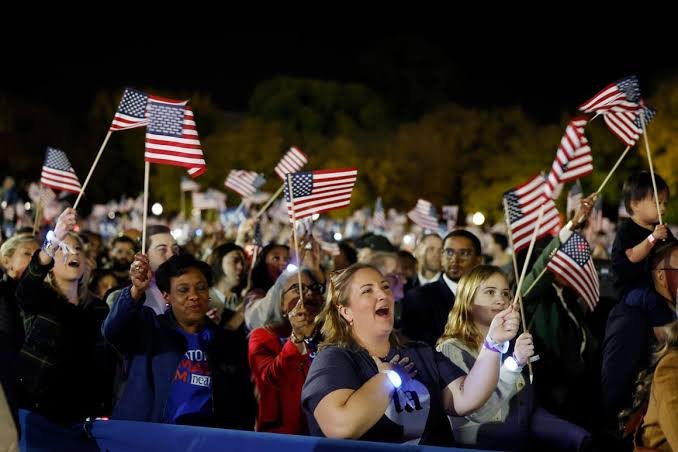

The Ballot Against Hatred and Islamophobia

Firdous Ahmad Najar


No political leader should be allowed to win an election by making another community the enemy. The real test of leadership is not how effectively one can spread fear, but how courageously one can build peace, protect human dignity and ensure justice for all.

When voters reject religious prejudice and reward diversity, democracy becomes a voice for humanity rather than an instrument of hatred.

Elections are not merely contests for political power; they are also occasions when ordinary people get an opportunity to express their conscience, challenge political narratives and hold their leaders accountable. The recent midterm elections in the United States and parliamentary elections in Israel have offered important lessons about the limits of politics built around religious hatred, communal division and fear.

The American midterm elections, held on November 3, 2026, produced a historic breakthrough for Muslim representation. Despite the anti-Muslim rhetoric employed during the election campaign, Muslim candidates secured remarkable victories across the country. According to preliminary figures released by the Council on American-Islamic Relations (CAIR) on November 5, at least 97 Muslim candidates had won elections at federal, state and local levels across 21 states. This was already a record in the organisation’s election tracking.

Perhaps the most historic victory was that of Abdul El-Sayed, who defeated Republican candidate Mike Rogers in Michigan to become the first Muslim ever elected to the United States Senate. His victory was particularly significant because his religious identity and political positions, including his criticism of American military assistance to Israel and its military actions in Gaza, became subjects of political attacks.

Other Muslim candidates who secured victories in Congress included Adam Hamawy from New Jersey, the first Muslim to represent the state in Congress; Darializa Avila Chevalier from New York; and returning representatives Ilhan Omar, Rashida Tlaib, André Carson and Lateefah Simon. Their victories demonstrated that Muslim Americans are increasingly participating in the democratic process and earning public trust.

These achievements become even more significant when viewed against the backdrop of Donald Trump’s election rhetoric. During the campaign, Trump and Republican campaign figures attempted to portray Muslim candidates, particularly El-Sayed, as threats to American security, questioning their loyalties and associating their religious identity with extremism. Yet, voters did not allow religious prejudice to become the sole measure of a candidate’s worth.

The message emerging from these results is profoundly human. A person does not become less deserving of dignity, freedom or protection simply because they belong to a different religion, ethnicity or nationality. The people of Palestine, Iran and other conflict-affected regions are human beings with families, aspirations, children and an equal right to live. Their suffering cannot be justified through political slogans, religious differences or national security arguments. Ordinary people must not be made to pay the price for the decisions of governments and political leaders.

Israel’s October 27 parliamentary elections have offered another important dimension to this discussion. The Arab-led political parties, the Joint List and Ra’am, secured a combined 19 seats in the 120-member Knesset, a historic high. Meanwhile, Netanyahu’s governing bloc secured only 53 seats, falling eight short of the 61 required for a parliamentary majority. These results demonstrated the growing parliamentary significance of Arab political representation and the importance of voices demanding equality, coexistence and political accountability.

Although these results cannot be interpreted as a complete rejection of Netanyahu by the Israeli electorate, they certainly demonstrate that Arab citizens have a substantial democratic voice and that their political participation cannot be ignored. Their representation also offers an opportunity to challenge policies that deepen divisions and perpetuate suffering.

The broader lesson extends far beyond America and Israel. Political leaders across the world often attempt to secure electoral victories by portraying particular religious or ethnic communities as enemies, outsiders or threats to national security. They exploit people’s fears, manufacture divisions and divert public attention from unemployment, inflation, education, healthcare and other pressing concerns. Such politics may generate temporary electoral advantages, but they weaken democratic institutions and undermine the foundations of peaceful coexistence.

Democracy loses its true meaning when elections become competitions in hatred rather than contests of ideas, policies and public service. Leaders must be judged by their achievements, integrity, vision and ability to improve people’s lives, not by their capacity to create enemies or mobilise prejudice.

Ultimately, the ballot is more powerful when it speaks for humanity. The recent elections have reminded political establishments that citizens are not merely followers of political narratives; they are capable of questioning, evaluating and rejecting them. The world needs more of this democratic maturity.

No political leader should be allowed to win an election by making another community the enemy. The real test of leadership is not how effectively one can spread fear, but how courageously one can build peace, protect human dignity and ensure justice for all.


Author hails from Arin Bandipora. He can be mailed at njfirdous090@gmail.com.

Comments are closed.