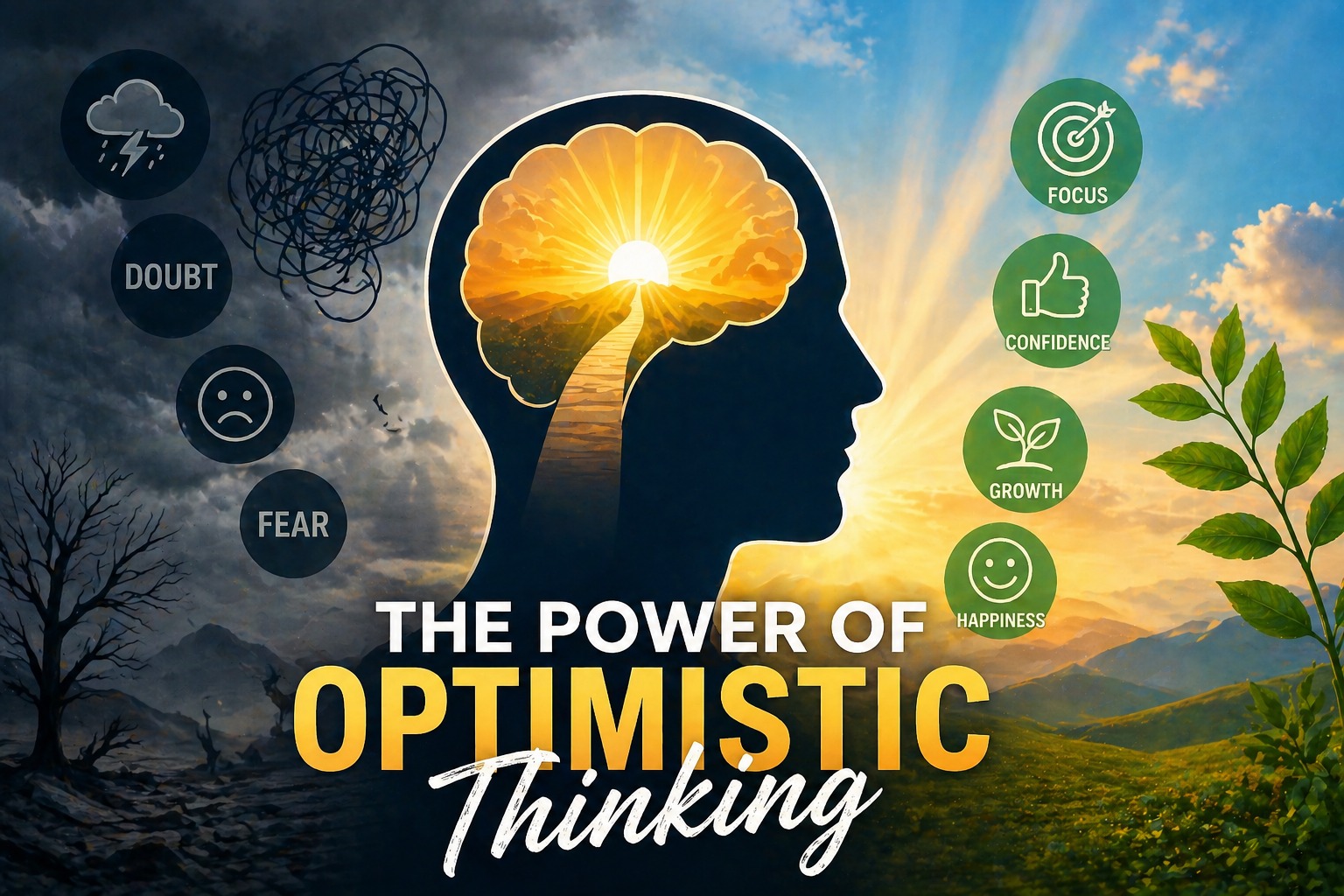

The Power of Optimistic Thinking

Dar Muqeet Gull & Jazaba Ashraf


“In a world filled with uncertainty, optimism does not guarantee success. But it creates the conditions necessary for growth, resilience, and meaningful progress.”

Positive thinking is not merely a comforting idea or a motivational slogan—it is a powerful mental framework that shapes how individuals experience life, respond to challenges, and pursue their goals. At its core, optimism is the ability to look at circumstances with hope, confidence, and resilience. It does not mean ignoring hardships or pretending that difficulties do not exist; rather, it is about facing reality with the belief that solutions are possible and that better outcomes can be achieved through effort and perseverance.

In today’s fast-paced and demanding world, where competition, uncertainty, and pressure are part of everyday life, the importance of positive thinking has grown significantly. People are constantly navigating academic expectations, professional responsibilities, financial concerns, and social pressures. In such an environment, the mind can easily become overwhelmed by doubt, fear, and negativity. This is where optimism becomes essential—not as an escape from reality, but as a tool to remain grounded, focused, and emotionally strong.

The foundation of positive thinking lies in the understanding that thoughts influence emotions, and emotions influence actions. When an individual repeatedly entertains negative thoughts—such as fear of failure, self-doubt, or hopelessness—these thoughts gradually shape their behavior. They may hesitate to take risks, avoid challenges, or give up easily when faced with setbacks. Over time, this mindset can limit personal growth and reduce one’s ability to achieve goals. In contrast, a positive thinker approaches situations with a constructive mindset. Instead of asking “What if I fail?”, they ask “What can I learn?” or “How can I improve?” This shift in thinking may seem small, but it creates a profound difference in outcomes.

Optimistic thinking plays a crucial role in building self-confidence. Confidence does not emerge overnight; it is developed through repeated experiences of trying, learning, and improving. A positive mindset encourages individuals to believe in their abilities, even when success is not immediate. For a student preparing for examinations, this belief can translate into consistent effort and better performance. For a professional, it can mean taking initiative, embracing challenges, and growing within their field. Confidence, supported by optimism, enables individuals to move forward even when the path is uncertain.

Another important aspect of positive thinking is its impact on mental health. In a world where anxiety, stress, and emotional fatigue are increasingly common, the way individuals process their thoughts becomes critically important. Negative thinking often amplifies problems, making them appear larger and more overwhelming than they actually are. It creates a cycle of worry that can be difficult to break. Positive thinking, on the other hand, helps individuals focus on solutions rather than problems. It encourages a balanced perspective—acknowledging difficulties while also recognizing opportunities for growth and improvement. This approach can reduce stress levels, improve emotional stability, and foster a sense of inner peace.

Optimism also strengthens resilience—the ability to recover from setbacks and continue moving forward. Failure is an inevitable part of life, whether in academics, careers, or personal relationships. What distinguishes successful individuals is not the absence of failure, but their response to it. A positive thinker views failure as a temporary setback rather than a permanent defeat. They analyze what went wrong, learn from the experience, and try again with renewed determination. This ability to persist, even in the face of adversity, is one of the most valuable outcomes of an optimistic mindset.

Beyond individual benefits, positive thinking also influences relationships and social interactions. People who approach life with optimism tend to communicate more effectively, handle conflicts with maturity, and inspire those around them. Their attitude creates an environment of encouragement and trust, which strengthens personal and professional relationships. In contrast, constant negativity can strain relationships, create misunderstandings, and reduce cooperation.

It is important, however, to recognize that positive thinking is not about unrealistic expectations or blind optimism. Life presents real challenges, and not every situation has an immediate or easy solution. Optimism must be grounded in realism. It should encourage effort, adaptability, and patience, rather than passive hope. True positive thinking is about maintaining a constructive outlook while taking practical steps toward improvement.

Developing this mindset is a gradual process that requires conscious effort. It involves becoming aware of negative thought patterns and replacing them with more balanced and constructive ones. Simple practices—such as focusing on achievements, setting realistic goals, maintaining gratitude, and surrounding oneself with supportive people—can contribute to building a positive outlook over time. With consistency, optimism becomes a habit rather than a forced response.

In conclusion, the power of optimistic thinking lies in its ability to transform not just outcomes, but the entire approach to life. It builds confidence, enhances mental well-being, strengthens resilience, and improves relationships. More importantly, it empowers individuals to face challenges with courage and determination. In a world filled with uncertainties, optimism does not guarantee success—but it significantly increases the likelihood of growth, progress, and fulfillment. By cultivating a positive mindset, individuals can create a life that is not only more successful, but also more meaningful and balanced.

Comments are closed.