Come Back When There Is Pain

(This story shows how serious diseases not only affect the patient but slowly destroy the entire family emotionally and financially.)


Usuf Mir


“Modern medicine may prolong treatment, but it cannot always heal the silent emotional collapse that fatal diseases leave behind within families.”


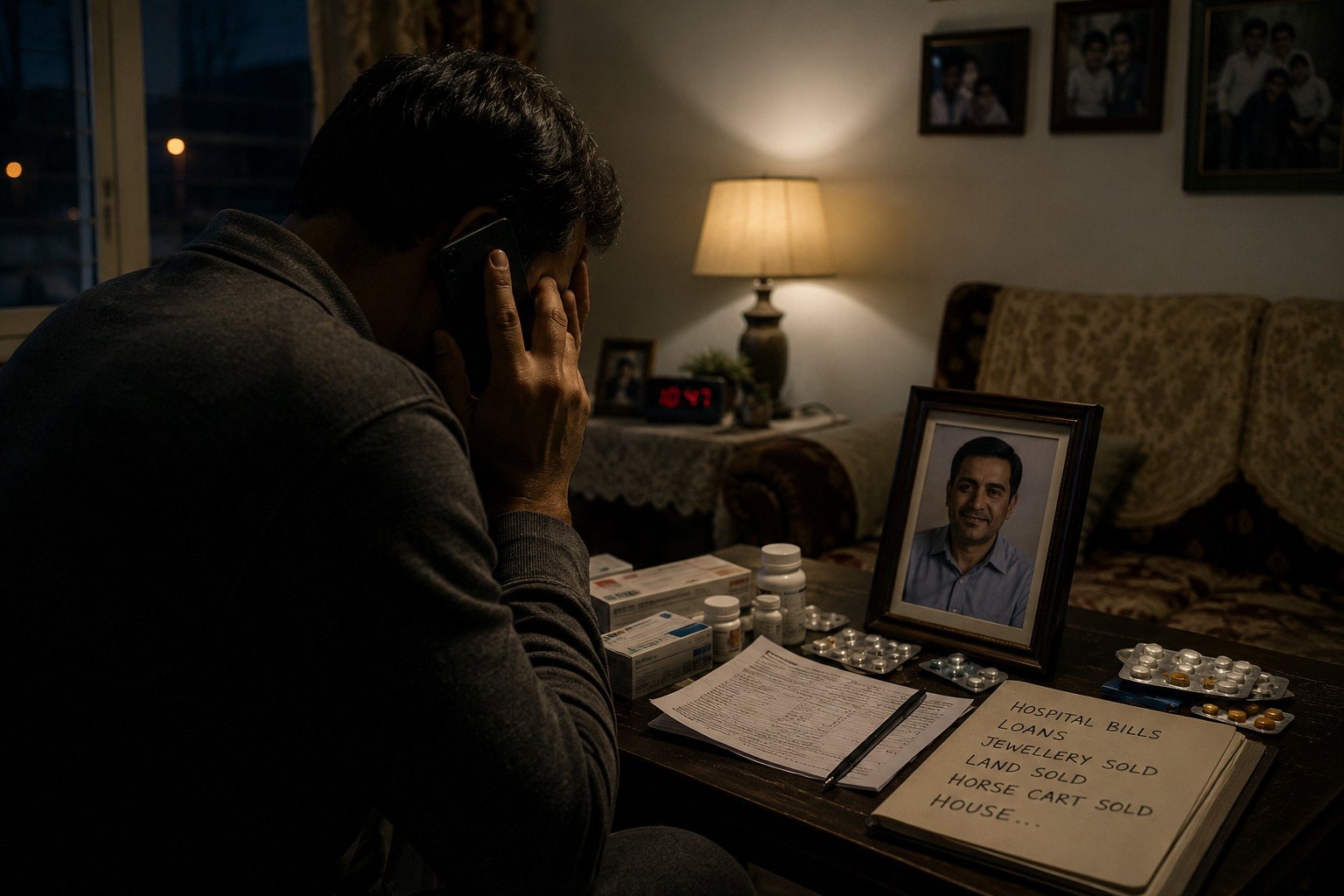
It was April 10, a Saturday evening. Aslam called his childhood friend Sahil and apologized for not attending the last rites of his younger brother, Asghar, who had passed away a few days earlier due to stomach cancer. He explained the genuine reason for his absence and offered his condolences in the best words he could.

“Assalamu Alaikum…”

A tired voice answered from the other side.

“Wa Alaikum Assalam…”

For a few moments, Aslam remained silent before speaking softly.

“I was deeply saddened to hear about Asghar’s death. May God forgive his shortcomings and grant him peace.”

Silence spread across both ends of the call — the kind of silence in which grief is felt more through breathing than through words.

After a while, Sahil spoke.

“It has been a month, Aslam… but the house still feels trapped in that same day. Sometimes my mother still opens the door of his room very slowly… as if he might still be inside.”

Aslam lowered his eyes.

“Did his illness worsen suddenly?”

Sahil took a deep breath.

“No… perhaps the disease had started long before. We simply failed to understand it. Or perhaps no one allowed us to understand it.”

Slowly, he began narrating the whole story.

A radiologist from a well-known city hospital used to visit their town occasionally. He performed an ultrasound of Asghar and prepared the report carelessly because of the heavy rush of patients. He did not even bother to mention the proper measurements in the findings. The report looked less like a medical report and more like a second-grade student’s essay.

Sahil gave a bitter smile.

“Today I sometimes feel the disease won that very day… the day the first report was written carelessly.”

Later, Asghar was taken to a local surgeon. The surgeon advised surgery, but his tone was casual. Since Asghar was not feeling any pain and the ultrasound report was unclear, the matter was not taken seriously.

“Come back when there is pain,” the surgeon had said.

Sahil paused for a moment.

“Those words still echo in my mind. It’s strange, Aslam… there was no pain, but the disease kept growing silently inside him.”

Then one day, everything changed.

They shifted Asghar to one of the country’s most reputed hospitals, where his surgery was finally performed. For some time, it felt as though the danger had passed. Hope slowly returned to the house. Asghar started walking again. Their mother finally breathed in relief. The children started laughing again.

But the relief did not last long.

About a year and a half later, the disease returned — this time far more mercilessly.

Within two months, the pain intensified. His body weakened day by day. Prescriptions increased. Hospital visits became endless.

And then one day, Asghar quietly departed from this world.

Sahil’s voice broke as tears rolled down his cheeks.

“Aslam, you won’t believe it… Ruhee, his six-year-old daughter, kept saying, ‘Don’t lose heart. Abu is here… he is only hiding and playing with us.’”

Silence once again took over the phone call.

Aslam looked toward the ceiling with moist eyes before speaking softly.

“Some time ago, I was listening to an oncologist’s interview on my phone. He said something unusual.”

“What was it?” Sahil asked.

Aslam replied slowly:

“‘No treatment is also a form of treatment.’”

Sahil remained silent for a moment.

“What does that mean?”

“It means that sometimes, when a disease reaches its final stage, saving a patient from endless painful procedures, expensive medicines, and false hope can itself become a form of treatment.”

Aslam paused before continuing.

“That doctor mentioned a man who drove a horse-cart for a living. His wife had cancer. First her jewelry was sold, then their land. Later even the horse and cart — the only source of their livelihood — were sold. In the end, even their small house was gone.”

Sahil listened quietly.

“The doctor said that sometimes he already knew a patient would probably not survive, yet the family continued clinging to hope. They searched for life in every new medicine.”

Aslam’s voice trembled.

“The woman eventually died… but after that, the man never truly lived either. He merely continued breathing.”

A muffled sob was heard from the other side of the phone.

After a while, Sahil spoke.

“Human beings are strange, Aslam… They have reached the skies, yet they still lose against a disease growing silently inside their own bodies.”

Aslam looked into the darkness outside the window.

“Perhaps more terrifying than the disease itself is that helplessness… when a man sells everything to save someone he loves, and still cannot save them.”

The night had grown deeper.

Both friends remained silent.

Perhaps they were not crying over Asghar’s death alone… but over that silent moment when the doctor had said:

“Come back when there is pain.”

Writer can be mailed at yousufmir555@gmail.com

Comments are closed.