



Dr. Mehnaz Manzoor & Syed Anaiyat Bukharie
“The transition toward subsidized public transport has placed pressure on existing private operators, many of whom depend on daily earnings for survival. Ignoring this segment risks creating economic imbalance and weakening the broader transport ecosystem.”
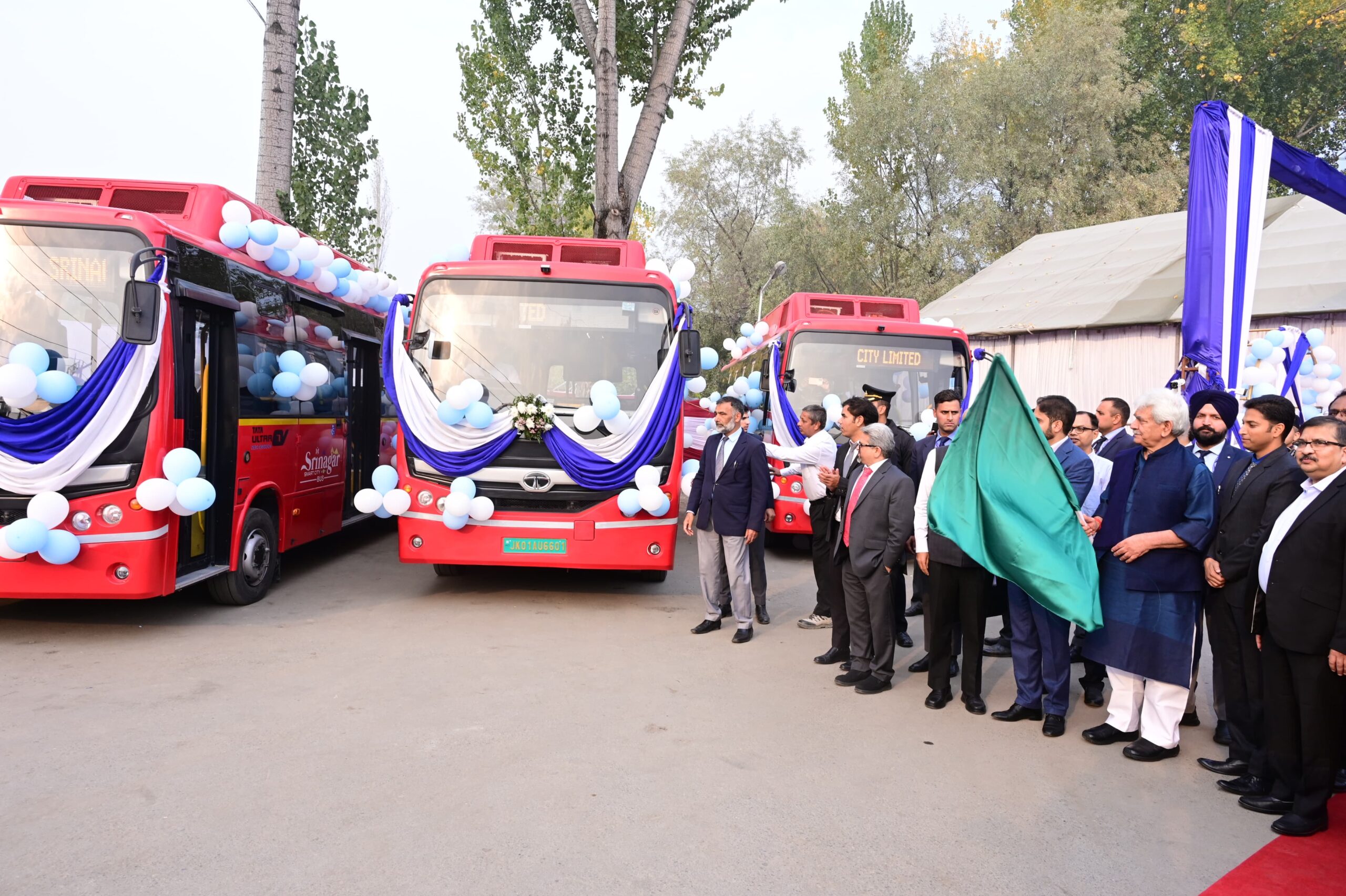
In Kashmir Valley, a bus is no longer just a means of transport—it is fast becoming a symbol of social transformation. The launch of the Smart City Bus service in Srinagar, particularly its provision of free rides for women, marks a significant shift in how public mobility is imagined and experienced. As the service expands to other districts, it brings with it both undeniable promise and a set of pressing questions that cannot be ignored.
For decades, women in Kashmir have navigated a transport system that was often expensive, unreliable, and at times unsafe. Daily commuting required negotiation—with cost, with time, and often with social expectations. The Smart City Bus initiative has altered that equation in a tangible way. A woman in Sopore can now travel to work without financial burden. A student in Anantnag can attend college without depending on family arrangements or worrying about transport expenses. In this sense, the initiative is not merely about connectivity; it is about access, autonomy, and dignity.
Yet its significance extends beyond economics. It represents a subtle but powerful cultural shift. In many traditional settings, including Kashmir, a woman’s mobility has historically been tied to necessity—travel justified by work, education, or family obligations. The idea of movement for personal choice has often remained limited. By removing the cost barrier, the Smart City Bus quietly disrupts this framework. When travel becomes free, justification becomes unnecessary. A woman can step out not because she must, but because she can. This transition—from conditional mobility to unconditional freedom—is perhaps the most profound impact of the initiative.
However, the ground reality presents a more complex picture. At bus stops across Srinagar, the overwhelming popularity of the service is visible in the form of overcrowded buses. What appears to be success also signals strain. When a large segment of commuters travels free of cost while others must pay, patterns inevitably shift. Many male commuters, excluded from the benefit, are increasingly turning to private transport options such as shared cabs and minibuses to avoid congestion. This has led to an unintended division in the commuting ecosystem—women occupying the public, state-supported system, and men gravitating toward private alternatives.
If left unaddressed, this divide could solidify into a structural imbalance, affecting both public transport efficiency and social cohesion. Public mobility systems function best when they are inclusive, balanced, and sustainable. A system that inadvertently separates users along gender or economic lines risks undermining its own long-term effectiveness.
At the same time, the initiative has sparked social debate. Some conservative viewpoints question whether easier access to mobility might encourage “unnecessary” movement. Yet such concerns overlook a fundamental principle: the right to move freely is not conditional. Mobility is central to citizenship. It enables participation in education, employment, and public life, but it also supports something less tangible yet equally important—personal freedom.
For many women in Kashmir, safe and accessible transport is not simply a convenience; it is a gateway to visibility in public spaces. In that sense, the Smart City Bus is not just a policy intervention—it is an enabling force that allows women to claim their place in society more confidently.
Still, every transformative policy must confront the question of sustainability. The current model, where a significant portion of ridership generates no direct revenue, raises legitimate financial concerns. Operational costs—fuel, maintenance, staff, and fleet expansion—continue to rise. Without a parallel revenue framework, the system risks becoming financially strained over time. Kashmir has witnessed ambitious initiatives lose momentum due to funding challenges; this project cannot afford a similar fate.
Equally important is the impact on existing transport operators. Private bus owners, tempo drivers, and small-scale transport providers have long formed the backbone of Kashmir’s mobility network. Many of these operators rely on daily earnings to sustain their families. The sudden shift toward a subsidized public system has reduced their passenger base, placing them in a vulnerable position. Ignoring this segment could create economic distress and resistance to reform.
A more balanced approach is necessary. Introducing nominal fares for general commuters, exploring advertising and public-private partnerships, and integrating private operators into the system through route contracts could help create a sustainable model. Extending targeted benefits—such as subsidized or free passes for students and economically weaker sections—would ensure that the initiative remains inclusive without compromising financial viability.
The Smart City Bus is more than a transport service. It is a statement about the kind of society Kashmir aspires to become—one where mobility is not a privilege, but a right. In a region where women’s presence in public spaces has historically been negotiated rather than assumed, that statement carries immense weight.
But vision alone is not enough. For this initiative to endure, it must evolve from a symbolic success into a structurally sound system. That requires policy refinement, financial planning, and inclusive thinking.
The direction is right. The intent is commendable.
The challenge now is to ensure that this newfound freedom does not remain temporary, but becomes a lasting feature of everyday life in Kashmir.
Comments are closed.