

M. Shokin
“Conflict creates distance. It allows emotions to intensify, misunderstandings to deepen, and silence to grow heavier with time. Yet beneath these tensions often remains an enduring connection waiting to be rediscovered.”
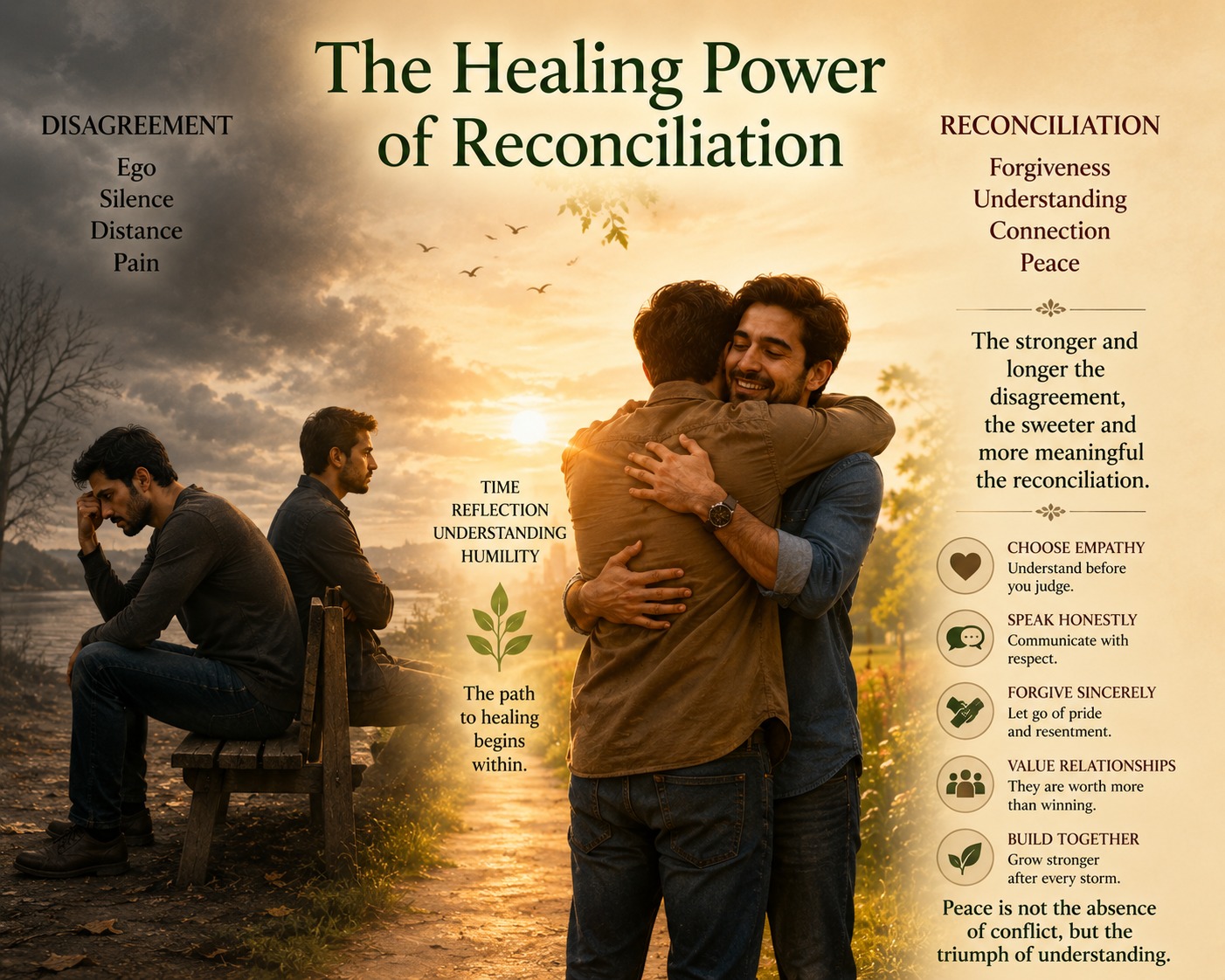
Human relationships are rarely free from conflict. Whether between friends, family members, spouses, or even nations, disagreements are an inevitable part of life. Differences in opinions, expectations, and experiences often create tensions that can strain even the strongest bonds. Yet there is a profound truth that many overlook: the deeper and longer the disagreement, the sweeter and more meaningful the reconciliation that follows.
Conflict creates distance. It allows emotions to intensify, misunderstandings to deepen, and silence to grow heavier with time. During periods of disagreement, individuals often become entrenched in their own perspectives, convinced of the righteousness of their position. Pride, hurt, and stubbornness can transform a minor dispute into a prolonged separation. As days turn into weeks or even years, the emotional gap widens. Yet beneath these tensions often remains an enduring connection waiting to be rediscovered.
Reconciliation is not merely the end of an argument; it is the restoration of understanding. It requires courage to acknowledge mistakes, humility to seek forgiveness, and wisdom to place relationships above personal ego. These qualities are not always easy to embrace. In a world that often celebrates winning and being right, reconciliation asks us to value harmony over victory. When people choose peace over hostility, they experience something far greater than the absence of conflict—they experience renewal.
The sweetness of reconciliation lies in contrast. Just as water tastes sweeter after a long walk through the desert, peace feels more precious after a period of turmoil. The pain of separation often teaches individuals the true value of a relationship. What was once taken for granted becomes deeply cherished. The presence of a loved one, a trusted friend, or a respected colleague gains a significance that may have been overlooked before conflict intervened.
History, literature, and everyday life offer countless examples of this reality. Some of the strongest friendships have survived fierce disagreements. Some of the deepest bonds between family members have emerged stronger after periods of estrangement. Even romantic relationships often discover a new depth after overcoming misunderstanding and hurt. In many cases, reconciliation does not simply restore a relationship to its former state; it strengthens it. Having witnessed the fragility of their bond, both sides become more aware of its value and more committed to preserving it.
However, reconciliation is not automatic. Time alone does not heal every wound. Genuine rapprochement requires sincerity and effort. Superficial peace that merely avoids uncomfortable conversations rarely lasts. Lasting reconciliation demands honest communication, mutual respect, and a willingness to address the causes of conflict rather than ignore them. It also requires the ability to move forward without carrying resentment into the future. Only then can peace become a source of lasting strength.
Perhaps this is why the affection that follows reconciliation often feels so powerful. It is a bond tested by adversity, refined by forgiveness, and strengthened by understanding. It is no longer the simple affection that existed before difficulties arose. Instead, it is a mature connection shaped by experience and sustained by mutual appreciation. Such relationships possess a resilience that can withstand future challenges because they have already endured hardship and emerged stronger.
In a world increasingly marked by division, polarization, and misunderstanding, reconciliation remains one of humanity’s greatest virtues. It reminds us that relationships are often more valuable than victories and that compassion is stronger than pride. Reconciliation teaches us that conflict, while painful, does not have to be permanent. It offers the possibility of healing, growth, and renewed trust.
The stronger and longer the disagreement, the more meaningful the embrace of reconciliation becomes. It represents not only the end of conflict but also the triumph of understanding over misunderstanding, forgiveness over resentment, and human connection over separation. In that triumph lies a sweetness unlike any other—a sweetness that reminds us of what truly matters in life.
Comments are closed.