Srinagar, Jun 01: A shift in tourist footfall from traditional overcrowded hotspots like Gulmarg and Pahalgam to remote hamlets in north Kashmir is redefining the region’s tourism landscape.
The new destinations on everyone’s lips are not hotels or houseboats. They are entire landscapes that remained, until recently, invisible to the tourist gaze.
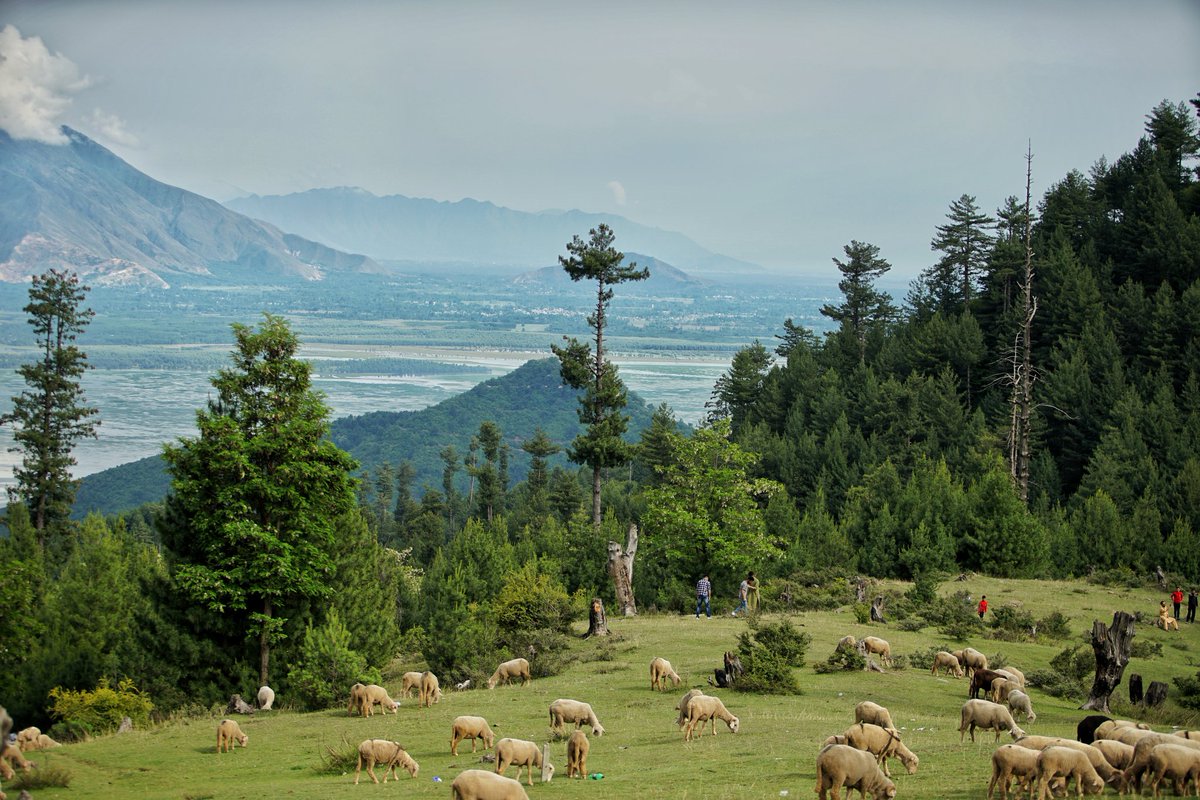
From Sopore’s Watlab to the upper stretches of Khadlu Manglu (Rampur Rajpor), Nigli, Bangladesh, Surender, Autwatoo, Walur Lake, Walur Vintage, Kiterduj, Munddej, Namlan Waterfall, Shrunzfall, Drung, Gowhas, Reshwari, Pujkabar, Naganari, and Chandigam—a string of once-overlooked hamlets are now booming with both local and domestic tourists. What is changing is not just where people sleep, but why they travel.
“Don’t you just want to escape a crowded place and relax in the woods? You can do that now,” says Sameer Ahmad, a regular visitor to these parts. “You stay with local families, eat their food, live their life. It’s not tourism. It’s a conversation. No one comes here for a lobby. They come for the view you cannot buy.”
Take Manglu in Sopore. Known locally for its panoramic views, it is now quietly reinventing itself as a getaway for those seeking silence. After the government revoked restrictions and allowed tourist movement earlier this year, the footfall has shifted from the usual overcrowded circuits to these forested ridges.
“Previously, tourists would come, click photos, and leave. Now they sleep here, wake up to the mist, and leave with stories,” said Shabir Ahmad, a local guide. “It’s not just income. It’s pride. We are showing our real Kashmir—the one without the noise.”
A senior tourism official, speaking on condition of anonymity, admitted the shift has caught even the department by surprise. “Earlier, everyone rushed to Pahalgam, Sonamarg, Gulmarg. Now the footfall is trickling into villages. It boosts eco-tourism, spreads regional growth, and gives visitors a completely different experience—local traditions, untouched landscapes, real hospitality.”
Fayaz Ahmed, another resident, pointed out that the surrounding areas offer trekking, nature trails, and waterfall spots that no brochure has yet ruined. “Visitors can hike for hours without seeing another tourist. That is luxury now. We are not competing with Gulmarg. We are offering what Gulmarg lost—quiet.”
The numbers confirm the tectonic shift. As per official data accessed by Kashmir Convener, Kupwara district saw just 40,000 tourists in 2020–21. By 2022–23, that number had jumped to 3.75 lakh. During 2023–24, 2.50 lakh tourists have already visited. In January 2025 alone, over 30,000 tourists had visited Teetwal. These are not day-trippers. These are travellers seeking what the famous locations can no longer offer: solitude.
The bigger story, however, is not just economic—it is geographical. Tourism in Kashmir is finally decentralising. From border areas like Kupwara’s Tangdar, Keran, Machil, and Bandipora’s Gurez sector, to the waterfalls and meadows of less-heard names like Namlan and Shrunzfall, a new map of Kashmir is being written—one that does not begin and end with Pahalgam.
In 2022, authorities in north Kashmir’s Kupwara district inaugurated an online portal for e-permission, making it easier for non-resident tourists to visit border areas. Tourists from across the country started arriving within a month. The move proved a game-changer for destinations like Macchil, Teetwal, Keran, and Tangdar.
However, the Pahalgam terror attack hit border tourism badly, with restrictions returning. Residents of different border areas have since urged Lieutenant Governor Manoj Sinha and Chief Minister Omar Abdullah to reopen the restricted locations, arguing that these hidden gems hold immense tourism potential and support the livelihoods of many families. Since 2025, blooming businesses have been affected, and dreams shattered for those who had invested in hosting visitors from across the globe.
Notably, Chief Minister Omar Abdullah in the recently held Legislative Assembly said the government is planning to develop Karnah as a border tourism destination, citing its vast potential for adventure and nature-based activities. “Karnah offers immense scope for trekking, hiking, and eco-tourism experiences, which can be harnessed to boost tourism and the local economy,” he said, adding that the government is working on tapping unexplored potential to promote sustainable tourism.
Minister Satish Sharma, addressing the Jammu Kashmir Business Conclave 2026, emphasized that focused interventions have led to the expansion of tourism beyond traditional destinations, encouraging visitors to explore emerging tourist circuits, rural tourism destinations, and adventure tourism opportunities.
For now, the quiet mutiny continues. In the forests of north Kashmir, where the only crowd is of pines and the only sound is of waterfalls no guidebook has yet named, a different Kashmir is opening its doors—not as a destination, but as an escape from the destinations you already know.
The Jammu and Kashmir administration how’ver earlier this year announced the reopening of 14 tourist destinations across the Kashmir and Jammu divisions following a comprehensive security review.
Among the reopenings are Yousmarg, Doodhpathri in Budgam, Dandipora Park in Kokernag, Peer Ki Gali, Dubjan and Padpawan in Shopian, Astanpora, Tulip Garden in Srinagar, Thajwas Glacier, Hung Park in Ganderbal, and Wullar/Watlab in Baramulla.
In the Jammu Division, Devi Pindi in Reasi, Mahu Mangat in Ramban, and Mughal Maidan in Kishtwar will reopen immediately. Meanwhile, Gurez, Athwatoo, and Bangus in Kashmir, and Ramkund in Ramban in Jammu, also reopened as snow clearance operations are completed.


Comments are closed.