



Dar Muqeet Gull & Simran Irshad
“Pollution, once seen as a distant concern, has now become a daily reality—affecting the air we breathe, the water we drink, and the land we depend on, while climate change visibly alters the course of our lives.”
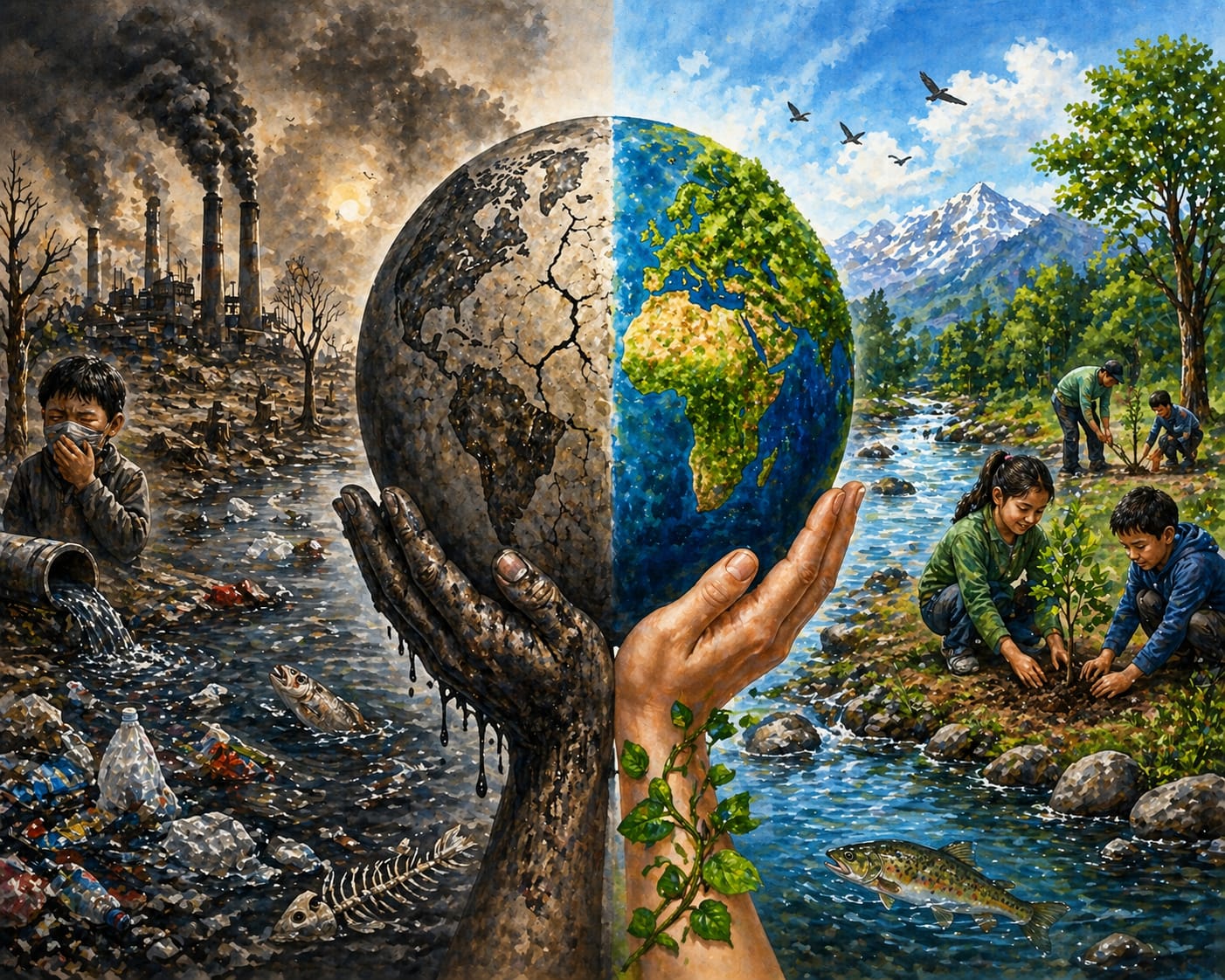
The environment around us is undergoing rapid and alarming changes. Pollution, once seen as a distant concern, has now become a daily reality, affecting the air we breathe, the water we drink, and the land we depend on. One of the most serious consequences of this environmental degradation is climate change—a crisis that is no longer abstract but visibly altering our lives.
Across regions, including Kashmir Valley, weather patterns have become increasingly unpredictable. Winters witness unusual rainfall, while summers grow more intense with each passing year. These are not random occurrences; they are clear signals that the delicate balance of nature is being disrupted.
The impact of environmental degradation extends far beyond human discomfort. It is a crisis affecting all living beings. Increasing pollution has contributed to a rise in diseases among humans, while animals—especially aquatic life—are suffering silently. Rivers, lakes, and oceans that once supported diverse ecosystems are now contaminated with waste and chemicals, threatening countless species with extinction.
What makes this situation more concerning is the normalization of pollution. Today, it is difficult to find any part of the planet untouched by environmental damage. The purity that once defined natural resources is rapidly fading.
There was a time when our ancestors drank directly from rivers without hesitation. Today, even touching river water raises concerns. This transformation reflects not just environmental decline but a shift in human responsibility.
Water bodies that once symbolized life are now burdened with plastic, sewage, and industrial waste. Even tap water, which should be safe and accessible, is often treated with suspicion. This stark contrast between past and present underscores how deeply human actions have altered the environment.
While some may attribute these changes to fate or natural cycles, the reality is undeniable—human activity lies at the center of this crisis. Careless disposal of waste, overuse of plastic, and unchecked industrialization have significantly contributed to pollution.
Another critical issue is deforestation. Trees are essential for maintaining ecological balance, yet they are being cut down at an alarming rate. The consequences are severe:
-
Increased atmospheric dryness
-
Accelerated melting of glaciers
-
Rising frequency of natural disasters such as floods and landslides
The simple principle is often ignored: if one tree is cut, another must be planted. Without this balance, the environment cannot sustain itself.
Nature operates as an interconnected system where every species plays a role. The disappearance of even a single species can disrupt this balance, leading to unforeseen consequences. When ecosystems are disturbed, the effects ripple across food chains, habitats, and ultimately human survival.
Unfortunately, modern lifestyles often prioritize comfort and convenience over sustainability. In doing so, we overlook the long-term consequences of our actions on the planet and future generations.
If current trends continue, the challenges ahead will be far more severe. Future generations may face:
-
Acute water scarcity
-
Highly polluted air
-
Loss of biodiversity
-
Increased health risks
These are not distant possibilities—they are emerging realities. The urgency to act has never been greater.
Protecting the environment requires collective effort and conscious choices. Some essential steps include:
-
Reducing pollution through proper waste management
-
Planting more trees and preventing unnecessary deforestation
-
Conserving water and avoiding wastage
-
Promoting awareness about environmental protection
-
Using eco-friendly alternatives and minimizing plastic consumption
Comments are closed.