Srinagar, Aug 13: With incidents of human-wild animal conflict on the rise across the Union Territory, the Jammu and Kashmir administration has operationalised a network of over 50 rescue control rooms, equipped with specialised gear and rapid response teams, to address emergencies involving leopards, bears, snakes, and other wildlife.
Official documents accessed by Kashmir Convener reveal that the control rooms are spread across 10 districts, under seven wildlife divisions, covering both the Jammu region and the Kashmir Valley. The infrastructure is part of a concerted effort to minimise response time and ensure public safety in areas where human habitation increasingly overlaps with wildlife corridors.
The Wildlife Division Rajouri-Poonch has established seven control rooms, while the Chenab Division Kishtwar runs nine across Ramban, Doda, and Reasi. The Wildlife Division South operates seven centres in Anantnag and Kulgam, and the Wildlife Division North has a network of ten in Baramulla, Kupwara, and Bandipora. The Wetlands Division and Central Division have set up additional facilities in and around Srinagar, taking the total count to over 50.
Each control room is strategically located, with geo-coordinates and contact numbers made publicly available to ensure residents can quickly alert authorities.
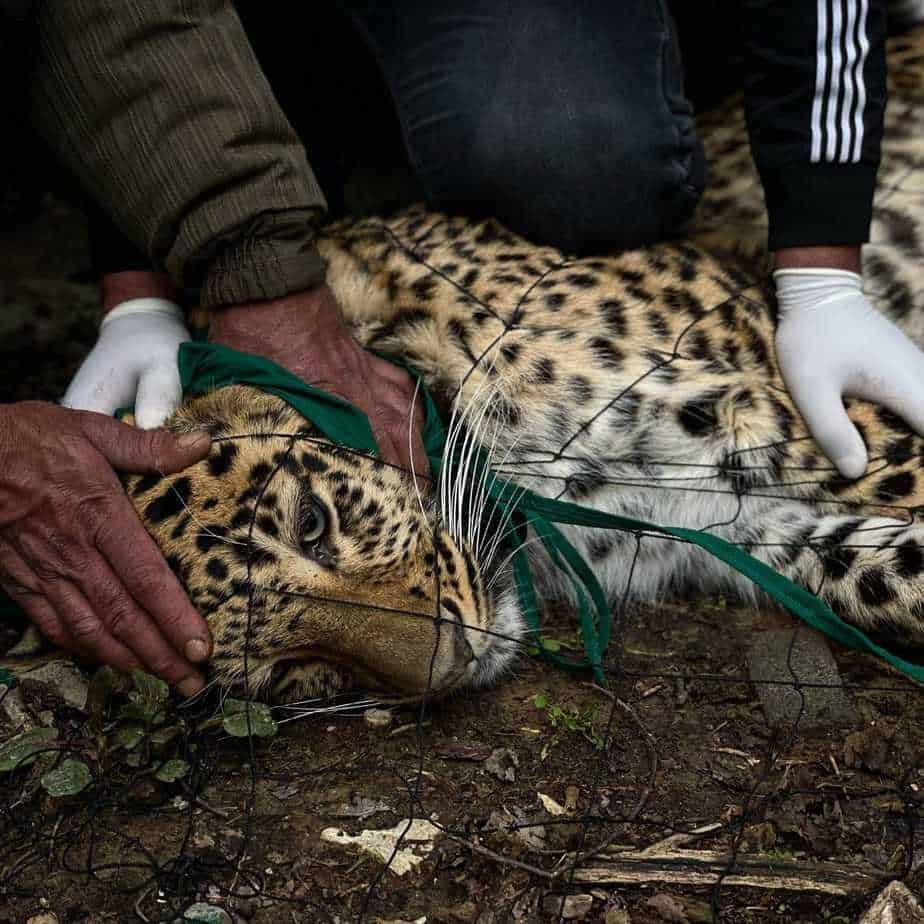
The control rooms are equipped with a range of specialised tools, including tranquillising guns, net guns, snake-catching sticks, protective gear such as helmets and gloves, and cages of various sizes. Some facilities also have night-vision binoculars, camera traps, GPS devices, searchlights, and surveillance drones.
The rescue teams comprise wildlife guards, block officers, foresters, and need-based casual labourers. The document lists over 100 personnel, many of whom have undergone training in humane animal handling and tranquillisation.
To facilitate mobility, most control rooms have been provided with rescue vehicles, including Tata Yodha vans, Bolero load carriers, mini trucks, and motorcycles. However, the documents also highlight several operational challenges. A control room in Shopian reportedly has no functional rescue vehicle, while some equipment at other centres, including cages and tranquillising guns, are damaged and in need of immediate repair.
The Wildlife Division South’s document notes that “most cages are damaged and need immediate repair” at one location, while another control room in the same division has a non-functional rescue van.
In recent years, encounters between humans and wild animals have become a growing concern in J&K, with leopards and bears frequently venturing into human settlements in search of food. The situation has led to loss of life, injuries, and significant damage to property in both urban and rural areas.
Official data shows that 32 people have been killed and 269 injured in such incidents over the past two years. Leopards and bears frequently stray into human settlements, particularly in districts like Anantnag, Pulwama, Baramulla, and Rajouri, leading to loss of life, injuries, and damage to property and livestock.
Wildlife experts have expressed concern over the operational gaps. “A control room without a functional vehicle or proper equipment is of little use during an emergency. When a leopard or bear enters a village, every minute counts. If the nearest control room doesn’t have a vehicle or the equipment is damaged, the response gets delayed, and the situation can escalate,” a Srinagar-based wildlife conservationist told The Kashmir Convener on condition of anonymity.
A senior official in the Wildlife Department told Kashmir Convener that the government is aware of the gaps. “We are conducting regular audits of all control rooms. Equipment and vehicles will be upgraded on a priority basis. We are also working on filling the vacancies and providing training to the staff,” the official said, requesting anonymity.
Forest Minister Javed Ahmad Rana has acknowledged the need to strengthen the wildlife response mechanism. Recently, he flagged off a fleet of 10 specialised Wildlife Rescue Vehicles to augment the network. “Protecting J&K’s natural heritage is not only a moral and environmental imperative but also essential for securing a sustainable and resilient future,” he had said during a review of the Wildlife Division Shopian.
Meanwhile, despite the shortcomings, the administration has made geo-locations and contact numbers of most control rooms publicly available. Residents have been advised to use these to report wildlife emergencies and avoid confrontations with wild animals while awaiting rescue teams.


Comments are closed.