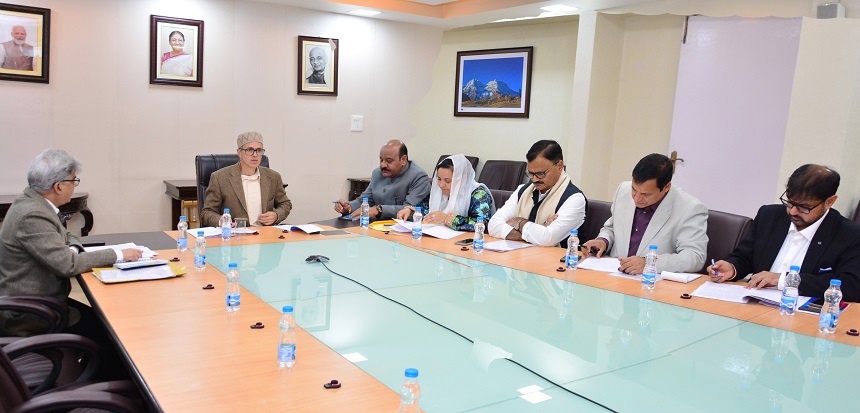
SRINAGAR, MAY 14: The Council of Ministers, chaired by Chief Minister Omar Abdullah, on Thursday approved the upgradation of Sub-District Hospital (SDH) Hazratbal in Srinagar by relaxing buffer zone restrictions under the Srinagar Master Plan–2035, paving the way for long-pending expansion of the healthcare facility.
The decision was taken during the 6th meeting of the Council of Ministers and is aimed at strengthening healthcare infrastructure and improving patient care in the Hazratbal area. According to the official statement, the hospital upgradation had remained stalled for several years due to regulatory constraints linked to buffer zone provisions, which had delayed infrastructure development despite public demand.
With the Cabinet’s approval, the hospital is expected to undergo expansion of its existing infrastructure and introduction of additional medical services. These include facilities such as a blood bank, operation theatres, and specialised treatment units. The upgrade is intended to reduce patient referrals to other hospitals and improve access to healthcare services for residents of Hazratbal and adjoining localities.
Officials said the relaxation of buffer zone norms was granted specifically to enable execution of the project under the Srinagar Master Plan–2035 framework, which governs land use and urban development in the city. The government stated that the decision was taken in response to public hardship caused by limited medical infrastructure and space constraints at the existing facility.
The statement added that the move is expected to improve healthcare delivery and ease pressure on tertiary hospitals in Srinagar by strengthening secondary-level care services at the SDH level.
In a parallel decision during the same meeting, the Council of Ministers also approved the establishment of an 800 TPD Integrated Solid Waste Management (ISWM) project at Achan in Srinagar at an estimated cost of ₹361 crore. The project is intended to enhance scientific waste management capacity in the city through improved systems for collection, segregation, treatment, and disposal of municipal solid waste.
Officials said the ISWM facility is designed to address rising waste generation due to urban expansion and population growth in Srinagar. The project is expected to improve sanitation standards and reduce environmental pressure by introducing structured waste processing mechanisms.
Both decisions were taken in the 6th meeting of the Council of Ministers, which focused on urban infrastructure, healthcare services, and environmental management in Jammu and Kashmir.


Comments are closed.