

Jhelum Is Calling: What Are We Leaving Behind for Our Future?

BHAT AFREEN

Bhat Afreen 


The Jhelum has given us beauty, water, memories and a connection to our land. The least we can give it in return is respect. Because a river is not a place for our waste, and clean water is not a privilege—it is a responsibility we owe to ourselves, to nature and to the generations that are yet to come.

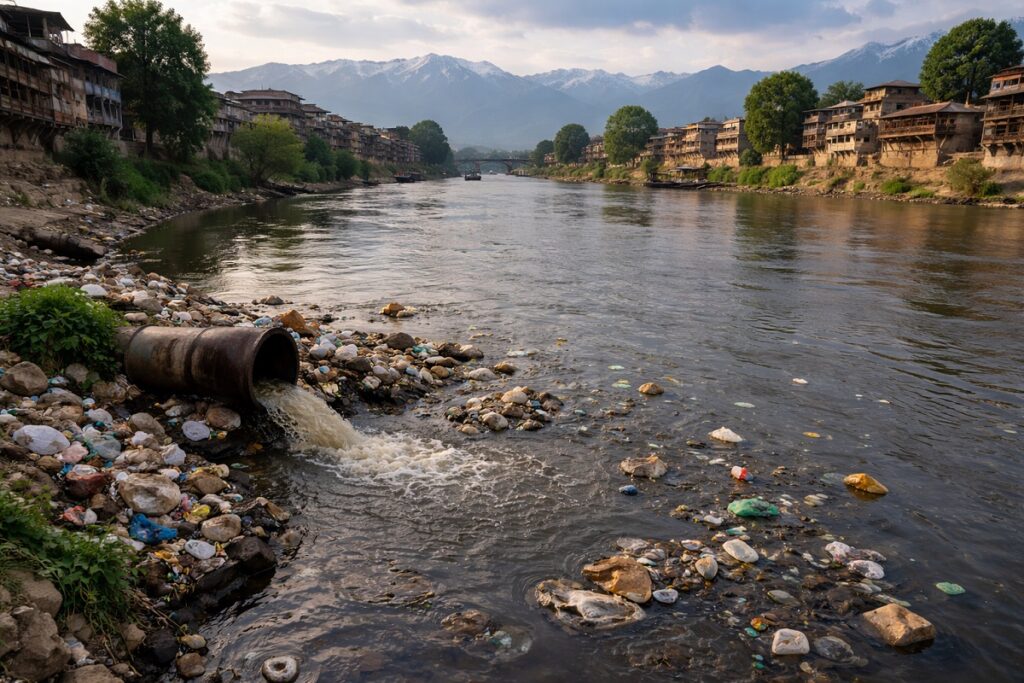
I sat on the banks of the Jhelum, and for a few moments I simply watched the water flowing in front of me. The Jhelum has always been something we Kashmiris feel proud of. We have grown up hearing about it, seeing it, crossing its bridges and watching it quietly flow through our cities and villages. But today, instead of only seeing its beauty, I noticed something that disturbed me deeply—the garbage lying around its banks and the waste that has found its way into the river.

Plastic bottles, wrappers and other rubbish were scattered around a place that should have been clean and peaceful. I kept looking at it and thinking, how did we allow this to happen? How can we stand beside a river that has been a part of Kashmir for generations and still treat it like a dustbin? Perhaps the most painful part is that many of us do not even notice it anymore. We see a person throwing a bottle into the water and continue walking.

Someone throws a wrapper on the riverbank and nobody says anything. Another person leaves a plastic bag behind because it is easier than finding a proper place to dispose of it. Each action looks small when we look at it separately, but together these small actions are slowly creating a much bigger problem. We often tell ourselves that one bottle or one packet cannot make a difference, but imagine thousands of people thinking the same way every single day. That one bottle becomes thousands of bottles, that one wrapper becomes piles of waste, and eventually the river pays the price for our collective carelessness.

The Jhelum is not just water flowing through Kashmir. It is connected to our history, our environment, our livelihoods and our memories. It has seen generations come and go, and yet we are treating it as though it has no value. We proudly call Kashmir a land of natural beauty, but what happens to that beauty when our rivers become polluted and our water bodies become dumping grounds?

A photograph of a beautiful Kashmir may attract tourists, but photographs cannot hide pollution forever. Nature needs protection, not just appreciation. We cannot simply admire our rivers when they look beautiful and ignore them when they need our care. Water is one of the most basic necessities of human life, yet we behave as though clean water is something that will always be available to us. It will not.

Rivers can be polluted, ecosystems can be damaged and natural resources can be destroyed. Once serious damage is done, restoring a water body can take years, enormous resources and constant effort. The consequences of water pollution are also much bigger than what we can see on the surface.

Waste can harm aquatic life, damage ecosystems, affect biodiversity and contribute to the deterioration of the environment around the river. Pollution can also create risks for communities that depend on healthy water systems. The frightening thing about environmental damage is that we do not always see the consequences immediately.

Sometimes the damage begins quietly and becomes visible only when it has already reached a serious stage. This is why protecting the Jhelum cannot be postponed until tomorrow. Tomorrow is exactly what we should be protecting today. I strongly believe that people who deliberately throw garbage into rivers and other water bodies should face meaningful fines. There should be a clear message that public spaces and natural resources are not places where we can dispose of our unwanted waste.

If someone can be fined for breaking other public rules, why should deliberately polluting a river be treated as though it is nothing? But fines alone are not the answer. We cannot expect people to manage waste properly if proper waste-management facilities are not available. There should be enough dustbins near public areas, regular collection of waste, proper segregation facilities and systems for recycling wherever possible.

Riverbanks should also be monitored, especially in places where illegal dumping happens frequently. Authorities should not wait for a riverbank to become covered with waste before taking action. Prevention is always better than cleaning up a problem after it becomes enormous. At the same time, citizens cannot put all the responsibility on the government.

 Even if there are a hundred dustbins around us, they are useless if we choose to throw our garbage on the ground or into the river. We have to change the way we think about public places. We often behave differently inside our homes because we consider them our own, but the street, the riverbank, the park and the public road are also part of the space we all share. Keeping them clean should not require someone to constantly tell us what to do. It should come from basic civic sense.

We should stop asking, “Who will clean this?” and start asking, “Why am I making it dirty?” This change may sound simple, but it can make a huge difference. Parents can teach children from an early age that throwing waste into a river is wrong. Schools and colleges can organise awareness programmes and river-cleaning activities, not simply for photographs or certificates but to create genuine environmental responsibility among young people. Local communities can also play an important role by keeping an eye on their surroundings and reporting repeated dumping.

Businesses located near rivers should have proper waste-management responsibilities as well, because commercial waste can become a major source of pollution if it is not handled correctly. Most importantly, environmental rules need to be implemented rather than remaining words on paper. A rule has little meaning if nobody fears its consequences.

There should be strict action against repeated or deliberate pollution, while also ensuring that people have reasonable and accessible alternatives for disposing of their waste. But beyond laws, fines and government programmes, I think we need something even more important—respect for nature. We need to understand that the river is not separate from our lives. When we pollute the river, we are not polluting something that belongs to nobody.

We are damaging something that belongs to all of us. The Jhelum cannot speak. It cannot stand up and tell us to stop throwing plastic into its water. It cannot ask us why we have become so careless. It simply continues to flow, silently carrying the consequences of our actions. Perhaps that is why I felt so uncomfortable sitting beside it today. I was not just looking at garbage; I was looking at a reflection of our attitude towards the environment.

We have inherited these rivers from previous generations, but we do not own them in the true sense. We are only temporary caretakers. One day, we will leave, and another generation will take our place. The real question is what condition we will leave behind.

Will our children and grandchildren be able to sit beside a clean Jhelum and enjoy its beauty, or will they look at polluted water and wonder why we did nothing when we still had the chance? We often talk about giving our future generation better education, better technology, better roads and better opportunities, and all of that matters. But what is the meaning of progress if we leave them polluted water and a damaged environment?

Development should not mean destroying the natural resources that make our lives possible. We need economic growth, but we also need environmental responsibility. We need cleaner cities, but we also need cleaner rivers. We need strict laws, but we also need responsible citizens. These things have to go together. Sitting beside the Jhelum today made me realise that protecting our rivers does not always require some extraordinary act.

Sometimes it begins with something as simple as refusing to throw a bottle into the water, picking up a piece of plastic instead of walking past it, telling someone politely not to litter, using a dustbin, reducing unnecessary plastic and teaching the same values to the next generation. Small actions may look insignificant, but so does a single drop of water until thousands of drops come together to form a river.

The Jhelum has been flowing through Kashmir long before many of us were born, and hopefully it will continue to flow long after we are gone. The question is whether it will continue to flow as a healthy and beautiful river or whether our carelessness will leave behind a polluted waterway for those who come after us. We still have a choice. We can continue blaming each other, or we can accept our responsibility. We can wait for someone else to clean our rivers, or we can become part of the solution. We can treat fines and environmental rules as unnecessary restrictions, or we can understand that they exist to protect something that cannot protect itself.

The Jhelum has given us beauty, water, memories and a connection to our land. The least we can give it in return is respect. Because a river is not a place for our waste, and clean water is not a privilege—it is a responsibility we owe to ourselves, to nature and to the generations that are yet to come.


Author can be reached at bhatafreen860@gmail.com

Comments are closed.