

India’s Nuclear Future: Powering Growth, Trust and Viksit Bharat

S Ahmad


India’s nuclear energy programme is built on the principle of safety first. Guided by stringent regulatory oversight, multiple layers of protection and comprehensive emergency preparedness, it safeguards people and the environment while providing reliable low-carbon electricity. Beyond power generation, atomic energy supports healthcare, agriculture, food preservation, industry, scientific research and clean hydrogen production. Through the SHANTI Act, 2025, the Nuclear Energy Mission for Viksit Bharat and indigenous technologies, India is expanding nuclear energy as a safe, sustainable and future-ready pillar of national development. 

As India pursues 100 GW of nuclear capacity by 2047, the challenge is not merely to build more reactors but to build a nuclear ecosystem founded on safety, transparency, technological self-reliance and public confidence.

Every country’s development story is shaped by the energy choices it makes. Energy determines how industries grow, how cities function, how hospitals operate, how farmers access technology and how confidently an economy can plan for the future. For a country as large and ambitious as India, the question is not simply how to produce more electricity. It is how to produce enough reliable electricity while balancing energy security, environmental responsibility, technological independence and the needs of a rapidly expanding economy.

That is where nuclear energy assumes an increasingly important role.

India’s nuclear journey is not new. It stretches back decades, to the country’s decision to build indigenous scientific and technological capabilities in the atomic energy sector. The Tarapur Atomic Power Station began operations in 1969, marking an important milestone in that journey. Since then, nuclear energy has gradually evolved from a strategic scientific enterprise into an important component of India’s electricity mix.

Today, India’s nuclear programme is entering a new phase.

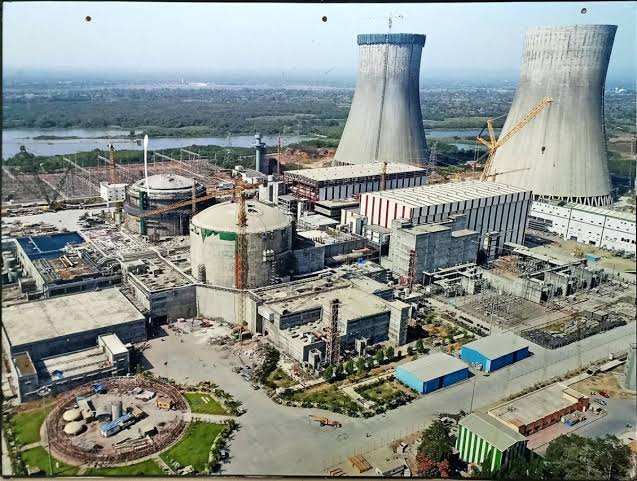
The country operates 24 nuclear power reactors across seven sites with a combined installed capacity of 8.78 GW. Nine more reactors are under construction, while preparations are progressing for another ten units. The long-term objective is far more ambitious: under the Nuclear Energy Mission for Viksit Bharat, India aims to reach 100 GW of nuclear power capacity by 2047.

That target is not merely an electricity-generation target. It represents a larger ambition—to build an energy system capable of supporting a developed India while reducing dependence on fossil fuels and strengthening technological self-reliance.

But ambition alone will not be enough.

The future of India’s nuclear programme will ultimately depend on three things: capacity, safety and public trust. If any one of these is neglected, the programme’s long-term success will be compromised.

Why nuclear matters in India’s energy transition

India’s energy challenge is unusually complex.

The country needs more electricity every year to support manufacturing, digital infrastructure, transport, urbanisation and household consumption. At the same time, India has committed itself to a cleaner development pathway and has set a net-zero emissions target for 2070.

Renewable energy will clearly remain central to that transition. Solar and wind power have expanded rapidly and will continue to form a major part of India’s future electricity system.

But renewable energy also presents a fundamental challenge: the sun does not shine continuously and the wind does not blow constantly. Electricity demand, meanwhile, does not wait for favourable weather.

This is where nuclear power has an important role to play.

Nuclear reactors can generate electricity continuously and provide dependable baseload power without the direct combustion of coal, oil or gas. That reliability becomes increasingly valuable as India’s electricity demand rises and renewable sources account for a larger share of generation.

The choice, therefore, should not be framed as nuclear versus renewables.

It should be nuclear and renewables working together.

A modern electricity system needs a portfolio of technologies. Solar can produce abundant daytime power; wind can add generation when conditions are favourable; storage can provide flexibility; hydropower can support balancing; and nuclear can provide dependable low-carbon electricity around the clock.

The objective should be a resilient energy system rather than allegiance to any single technology.

The carbon performance of nuclear power is also significant. According to the figures provided, in FY 2025–26, one gigawatt of nuclear capacity avoided around 5.4 million tonnes of CO₂ equivalent emissions, compared with approximately 2.7 million tonnes for hydropower, 1.6 million tonnes for wind and 0.9 million tonnes for solar.

Since 1969, India’s nuclear programme is estimated to have avoided 851 million tonnes of CO₂ equivalent emissions.

These figures underline an important point: decarbonisation is not only about installing renewable capacity. It is about replacing high-emission electricity generation with reliable low-carbon alternatives.

Nuclear power is much more than electricity

One of the least appreciated aspects of India’s atomic energy programme is the breadth of its civilian applications.

When people hear the word “nuclear”, the conversation often immediately turns towards reactors, radiation and electricity. But nuclear science has quietly entered many areas of everyday life.

In healthcare, radiation and radioisotopes are used for diagnosis, treatment and research. Institutions associated with India’s atomic research ecosystem—including BARC, IGCAR, Tata Memorial Centre, TIFR and HRI—have contributed to the development of radiopharmaceuticals, medical imaging and cancer treatment technologies.

Cancer care is perhaps the most visible example.

During FY 2024–25, the Tata Memorial Centre registered around 1.3 lakh patients and screened approximately five lakh women for oral, breast and cervical cancers. Indigenous radiation technologies also helped sterilise 1.53 crore medical devices.

Behind those numbers is a larger story: nuclear science is not confined to power stations. It can directly contribute to saving lives.

The same principle applies to agriculture.

Radiation-induced mutagenesis, combined with conventional breeding, can help scientists develop crop varieties with desirable characteristics such as higher yield, early maturity and tolerance to drought, heat, salinity and disease.

BARC has developed 70 crop varieties, including TBM-9 banana and RTS-43 sorghum, released in 2025. Collaboration with agricultural institutions such as ICAR and universities can help move these technologies from laboratories to fields.

This matters particularly for a country facing the dual challenge of feeding a large population while adapting agriculture to a changing climate.

The farmer also has a stake in nuclear technology

The connection between nuclear science and food security may initially appear surprising.

Radiation technology can be used to extend the shelf life of fruits, vegetables, fish, grains and spices. By slowing deterioration and reducing microbial contamination and spoilage, irradiation can reduce post-harvest losses.

For farmers, this is not an abstract scientific achievement.

A longer shelf life can mean more time to sell produce and fewer losses between harvest and market.

The technology has also helped make sea-route exports of mangoes more feasible by extending their shelf life. Similar applications involving onions and potatoes can reduce spoilage and protect agricultural incomes.

In 2025, the government signed 17 MoUs aimed at expanding food irradiation infrastructure, while six gamma radiation processing facilities were commissioned, taking the country’s operational facilities to 40.

Such developments demonstrate how the nuclear ecosystem can contribute to areas far removed from conventional power generation.

From rare earths to semiconductors

The strategic importance of nuclear science is becoming even more evident as India seeks greater technological self-reliance.

Critical minerals and rare earth elements are indispensable to modern industries, including electronics, renewable energy, defence and advanced manufacturing.

Nuclear analytical techniques can support mineral exploration, characterisation and processing. India’s development of its first Certified Reference Material for Rare Earth Elements—Ferrocarbonatite (FC), BARC B1401—is an example of the scientific infrastructure needed for reliable mineral analysis and process control.

The semiconductor revolution presents another opportunity.

India’s first electronics-grade Boron-11 enrichment facility, established at Talcher, has produced material of 99.8 per cent purity for semiconductor applications. Such capabilities may appear highly specialised, but they have strategic implications in an economy increasingly dependent on advanced electronics.

The lesson is important: technological sovereignty is built not by producing only the final product, but by developing capabilities across the underlying scientific and material ecosystem.

Nuclear energy and the hydrogen economy

The energy transition is also creating new questions about hydrogen.

Green hydrogen is widely seen as an important energy carrier for sectors that are difficult to electrify directly. Yet producing hydrogen at scale requires substantial energy.

Nuclear power can potentially contribute both reliable electricity and high-temperature process heat.

In 2026, India inaugurated a hydrogen production facility at Kalpakkam using nuclear process heat. The development points towards a future in which nuclear energy may support not only electricity generation but also emerging clean-energy industries.

This broader role is crucial.

India’s nuclear programme should not be viewed simply through the number of reactors connected to the grid. Its real value may increasingly lie in the wider ecosystem of science, materials, medicine, agriculture, hydrogen, water technologies and advanced manufacturing that grows around it.

But safety must remain non-negotiable

The more ambitious India’s nuclear programme becomes, the more seriously it must take the question of safety.

Nuclear energy carries a unique psychological burden. An ordinary industrial accident and a nuclear accident are not perceived in the same way. Public concern about radiation, contamination and long-term consequences is understandable.

That concern should never be dismissed as ignorance.

The appropriate response is not propaganda. It is evidence, regulation, transparency and continuous improvement.

Indian nuclear facilities follow the internationally recognised Defence in Depth philosophy, which relies on multiple independent layers of protection. Safety begins at the design and construction stage and continues through quality control, testing, monitoring, maintenance and emergency preparedness.

Reactors incorporate multiple physical barriers designed to prevent radioactive material from escaping into the environment. These include fuel pellets, fuel cladding, reactor pressure boundaries and reinforced containment structures.

Independent systems provide reactor shutdown, cooling and emergency power capabilities.

Plants are also designed to withstand external hazards such as earthquakes, floods, cyclones and tsunamis.

No technology can honestly be described as possessing zero risk. The more credible statement is that nuclear safety is built around identifying risks, creating multiple barriers against them and preparing for unlikely failures.

That distinction matters.

Radiation is a subject where trust matters

Radiation is another area where public communication must be handled carefully.

India applies the As Low as Reasonably Achievable (ALARA) principle to minimise occupational exposure. The Atomic Energy Regulatory Board prescribes occupational dose limits, while dedicated Health Physics Units monitor radiation levels, worker exposure, plant systems and environmental releases.

For the general public, the annual radiation dose limit associated with regulated exposure is 1 millisievert.

Environmental Survey Laboratories continuously monitor air, water, soil, vegetation and food around nuclear facilities.

These systems are important, but regulation is only one part of public confidence.

People also need information they can understand.

A community living near a nuclear facility should not have to depend entirely on technical documents to understand what is being monitored, what the safety limits mean and what emergency procedures exist.

Transparency should therefore be considered a component of nuclear safety itself.

Trust cannot be demanded. It has to be earned repeatedly.

The Fukushima lesson

The 2011 Fukushima accident remains a defining event in the global nuclear debate.

Whatever the differences between Fukushima and Indian reactor sites, the broader lesson is universal: safety standards cannot remain static.

Following the Fukushima accident, India’s nuclear power plants underwent comprehensive safety reviews. Short- and medium-term safety enhancements were implemented, while longer-term upgrades have continued.

This illustrates a principle that should govern India’s nuclear expansion: every major accident anywhere in the world must become a lesson everywhere else.

A mature nuclear programme does not respond to accidents by claiming that they could never happen. It responds by asking what could be learned, what assumptions should be revisited and what additional barriers can be introduced.

That culture of learning is indispensable as India builds newer and larger reactors.

Managing radioactive waste

Radioactive waste is another issue that deserves serious public discussion.

The answer cannot be to pretend that the problem does not exist.

Radioactive waste must be managed, contained, monitored and disposed of according to its characteristics.

India follows a regulatory framework governing radioactive waste management, with AERB oversight and environmental monitoring. Liquid waste is treated and discharged only after meeting prescribed standards, while solid waste is processed and disposed of through engineered systems appropriate to its radioactivity.

India’s indigenous vitrification technology is particularly important for high-level radioactive waste. Developed by BARC, vitrification converts high-level waste into stable glass blocks for long-term management.

The objective is not simply to make waste disappear. It is to isolate it safely and manage it responsibly over the required timescales.

This is precisely why public discussion around nuclear energy should be based on science rather than slogans—either alarmist or promotional.

Preparing for the unlikely

The strongest safety system is one that prepares for events it hopes will never occur.

India has established a multi-level nuclear emergency preparedness framework involving the national, state, district and plant levels.

Nuclear power stations maintain mandatory on-site and off-site emergency plans approved by the regulator. Regular mock drills involve plant authorities, district administrations, disaster-management agencies, police and emergency responders.

Medical preparedness is also built into the system through specialised training and Radiation Emergency Medical Networks.

Emergency Planning Zones provide an additional layer for coordinated response, while environmental laboratories maintain continuous surveillance.

Such preparation is not an admission of failure.

It is an acknowledgement of responsibility.

Airlines conduct emergency drills even though passengers do not expect a crash. Hospitals maintain emergency protocols even though most procedures go normally. Nuclear facilities must follow the same logic, but with even greater rigour.

The SHANTI Act and the next phase

India’s nuclear ambitions will require an institutional framework capable of supporting expansion while maintaining strong safety standards.

The SHANTI Act, 2025, represents an important component of that evolving framework, alongside the Nuclear Energy Mission for Viksit Bharat and the government’s push towards indigenous Small Modular Reactors.

The Union Budget 2025–26 allocated ₹20,000 crore for indigenous SMR development.

Small Modular Reactors have attracted global interest because of their potential flexibility, modular construction and applications beyond traditional large-scale nuclear plants. But technological enthusiasm must again be accompanied by regulatory maturity.

New reactor designs should be subjected to rigorous safety assessment, independent oversight and transparent evaluation.

The same principle should apply to private-sector participation, localisation of supply chains and expansion of nuclear infrastructure.

Speed matters, but safety matters more.

Public confidence will determine the future

India can build reactors through engineering and finance. It cannot build public confidence through either.

That confidence has to be cultivated through openness.

Communities near nuclear facilities should have access to understandable information. Environmental monitoring should be credible and communicated transparently. Emergency exercises should involve local stakeholders. Independent scientific voices should have space in public discussions.

Nuclear energy should not become an issue where the public is expected merely to trust official assurances.

In a democracy, citizens have the right to ask questions.

The answer should be better information, not dismissal.

This becomes especially important as India considers a significant expansion of nuclear capacity.

A 100 GW ambition must be about more than megawatts

The target of 100 GW by 2047 is ambitious. But India’s success should ultimately be measured by more than installed capacity.

A successful nuclear programme will be one that creates indigenous technology, strengthens manufacturing, develops skilled human resources, advances medical science, supports agriculture, contributes to critical-mineral security, enables new clean-energy industries and maintains an exemplary safety culture.

It will also be a programme that works alongside renewables rather than competing ideologically with them.

India does not have the luxury of choosing between energy security and climate responsibility. It needs both.

Nor can it afford to choose between technological ambition and safety. It needs both.

The country’s development journey has already demonstrated that scientific institutions can create capabilities that once appeared beyond reach. The next stage will require that same confidence, combined with humility about risk and a willingness to learn continuously.

Nuclear energy can become an important pillar of India’s development—but only if the programme remains firmly anchored in science, safety and public interest.

The story that began with Tarapur in 1969 is therefore entering a new chapter.

The ambition is no longer simply to generate electricity from the atom. It is to use nuclear science across an expanding range of human needs while building a cleaner, more secure and technologically self-reliant economy.

That is a formidable opportunity.

But it is also a formidable responsibility.

As India moves towards Viksit Bharat 2047, nuclear energy can help power factories, hospitals, laboratories and cities. It can support the hydrogen economy, strengthen agriculture, reduce carbon emissions and contribute to strategic technological capabilities.

Yet the ultimate measure of the programme will remain simple: whether it can deliver these benefits while protecting people and the environment and maintaining the trust of the society it is intended to serve.

India’s nuclear future, therefore, should not be defined merely by how many reactors it builds.

It should be defined by how safely it operates them, how transparently it governs them, how intelligently it innovates around them and how widely their benefits reach.

The atom can be a powerful instrument of national progress.

The real achievement will be ensuring that its power is matched by responsibility.


The article is based on the inputs and background information provided by the Press Information Bureau (PIB). Author is Writer, Policy Commentator. He can be mailed at kcprmijk@gmail.com

Comments are closed.