

India’s Ethanol Push: Is India Moving Too Fast on Ethanol Fuels?

Shahzad Saleem


“India deserves credit for building one of the world’s most ambitious ethanol programmes. But energy transitions cannot be judged by blending targets alone. If consumers face lower mileage, higher maintenance costs, limited fuel choices, and no visible savings at the pump, public trust may erode. The real test of success is not how quickly India reaches E85, but whether the journey remains economically sensible, environmentally sustainable, and beneficial for ordinary citizens.”

India’s ethanol-blending programme has emerged as one of the country’s most ambitious energy-transition initiatives. Presented as a solution to multiple challenges—reducing dependence on imported crude oil, supporting farmers, improving energy security, and lowering carbon emissions—the programme has been celebrated as a major policy success. Having achieved nationwide E20 petrol ahead of schedule, India is now preparing for the next phase of its biofuel journey with the introduction of E85 fuel and a new generation of flex-fuel vehicles.

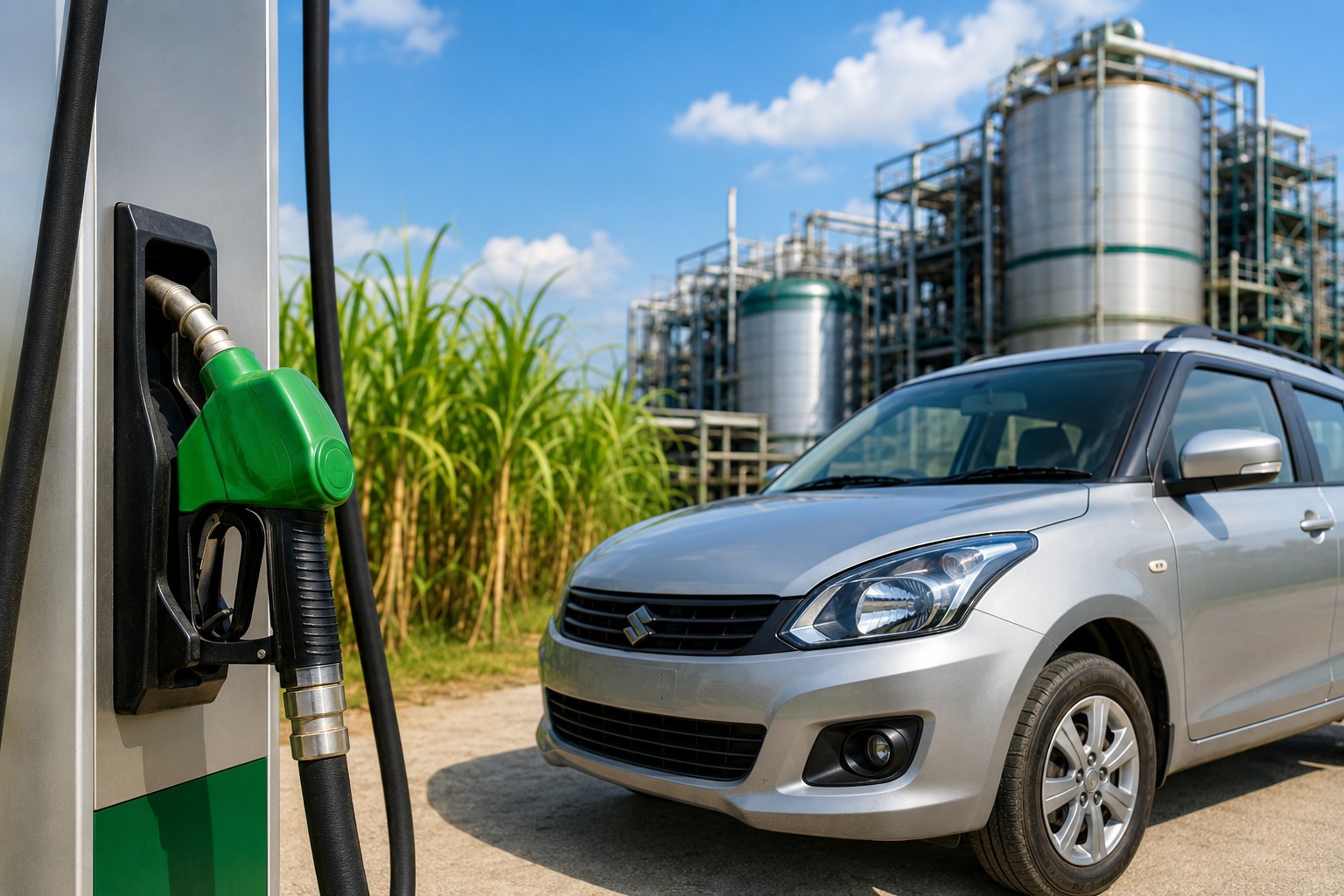
The unveiling of the WagonR Flex Fuel by Maruti Suzuki in New Delhi on June 4, 2026, in the presence of Union Ministers Nitin Gadkari and Hardeep Singh Puri, symbolised this transition. Designed to operate on ethanol blends ranging from E20 to E100, the vehicle reflects the government’s long-term vision of a diversified and domestically sourced fuel economy. Hero MotoCorp and other manufacturers have also entered the flex-fuel space, indicating strong industry support for the policy direction.

Yet behind the celebratory announcements lies a growing concern that deserves serious public discussion. While the transition to higher ethanol blends may offer strategic advantages for the nation, millions of consumers are beginning to question whether they are bearing a disproportionate share of the costs.

India’s ethanol story began with an ambitious objective. Under the National Policy on Biofuels announced in 2018, the country targeted 20 percent ethanol blending by 2030. The goal was later advanced to 2025 and ultimately achieved ahead of schedule. This rapid progress has undoubtedly demonstrated the government’s administrative capacity and the industry’s adaptability. Ethanol blending has helped reduce crude oil imports, saved foreign exchange, and created an additional market for agricultural products such as sugarcane, maize, and damaged food grains.

For policymakers, the programme represents a rare example of a target achieved before deadline. For consumers, however, the experience has been more complicated.

One of the most immediate concerns is the gradual disappearance of fuel choice. In many parts of India, E20 has effectively become the default petrol. Consumers owning older vehicles often have little or no access to lower ethanol blends. This is significant because millions of cars, motorcycles, and scooters currently on Indian roads were manufactured long before ethanol-compatible engines became standard.

Automobile manufacturers themselves have acknowledged that prolonged exposure to higher ethanol blends can affect older vehicles. Ethanol’s tendency to absorb moisture can accelerate corrosion in certain fuel-system components. Rubber seals, fuel lines, metallic parts, and gaskets in older vehicles may deteriorate more rapidly. While catastrophic failures are uncommon, the prospect of increased maintenance costs remains a legitimate concern for vehicle owners who never anticipated such changes when purchasing their vehicles.

Fuel efficiency presents another challenge. Ethanol contains less energy per litre than conventional petrol. Consequently, vehicles running on E20 generally deliver lower mileage compared to those operating on pure petrol. Even a modest reduction in fuel economy can significantly affect household budgets when multiplied across millions of daily commuters.

This issue becomes particularly important because lower fuel costs were among the public benefits frequently associated with ethanol adoption. Several years ago, policymakers suggested that ethanol-based fuels could eventually make transportation substantially cheaper. Many consumers expected that reduced dependence on imported oil would translate into noticeable savings at fuel stations.

That expectation has yet to materialise.

Despite the expansion of ethanol blending, fuel prices remain high by historical standards. While ethanol may have reduced the country’s import bill, the average consumer has seen little direct financial benefit. For many vehicle owners, the transition has meant accepting lower mileage without receiving corresponding reductions in fuel prices.

This disconnect between policy achievements and consumer experience is perhaps the programme’s most significant challenge.

The government’s ethanol roadmap is now moving toward E85 fuel, with phased introduction expected through selected fuel stations. Flex-fuel vehicles are being marketed as the future of mobility, capable of operating on a wide range of ethanol-petrol mixtures. However, the enthusiasm surrounding flex-fuel technology raises an important question: Is India building vehicles faster than it is building the infrastructure required to support them?

At present, E85 availability remains extremely limited. Consumers considering flex-fuel vehicles may wonder whether adequate fuel supply networks will exist in their regions. Without widespread availability, the practical benefits of owning such vehicles remain uncertain.

Infrastructure development has historically lagged behind policy announcements in several sectors. To avoid similar challenges, ethanol expansion must proceed in parallel with investment in storage, transportation, distribution, and retail fuel infrastructure.

Beyond consumer concerns, there are important environmental questions that deserve greater scrutiny.

Ethanol is often promoted as a cleaner alternative to fossil fuels, but its environmental footprint depends significantly on how it is produced. Large-scale ethanol production requires substantial quantities of agricultural feedstock and water. Crops such as sugarcane, maize, and rice consume significant natural resources, particularly in regions already facing water stress.

In states where groundwater depletion has become a serious concern, expanding ethanol production could create new environmental pressures. Critics argue that diverting food crops and water resources toward fuel production may produce unintended consequences for agriculture, food security, and ecosystem sustainability.

The broader question is not whether ethanol should be part of India’s energy future—it almost certainly should be. Rather, the question is how much reliance should be placed on ethanol and whether alternative pathways such as electric mobility, green hydrogen, compressed biogas, and advanced biofuels should receive equal attention.

The success of any energy transition ultimately depends on public confidence. Consumers are far more likely to embrace change when they perceive tangible benefits. If fuel efficiency declines, maintenance costs increase, and fuel prices remain unchanged, public enthusiasm may weaken regardless of the policy’s strategic merits.

A successful transition therefore requires more than ambitious targets and technological innovation. It requires transparency, accountability, and responsiveness to consumer concerns.

Policymakers must ensure that citizens have access to clear information about vehicle compatibility, expected fuel economy changes, maintenance implications, and long-term cost benefits. Consumers should not be forced into transitions without adequate alternatives or informed choices.

India deserves credit for achieving one of the world’s most ambitious ethanol-blending programmes. The initiative reflects serious efforts to strengthen energy security, reduce import dependence, and support rural economies. These achievements should not be underestimated.

However, policy success cannot be measured solely by blending percentages or production volumes. The ultimate measure of success is whether the transition delivers balanced benefits to all stakeholders—farmers, industry, government, the environment, and consumers alike.

As India moves toward E85 fuel and flex-fuel vehicles, the focus must shift from achieving targets to ensuring outcomes. Cleaner energy and greater self-reliance are worthy goals. But lasting success will depend on whether the transition remains economically sensible, environmentally sustainable, and consumer-friendly.

After all, the future of energy cannot be built on policy ambition alone. It must also be built on public trust.


Author can be reached at ishahzaad@gmail.com

Comments are closed.