



Dar Muqeet Gull & Simran Irshad
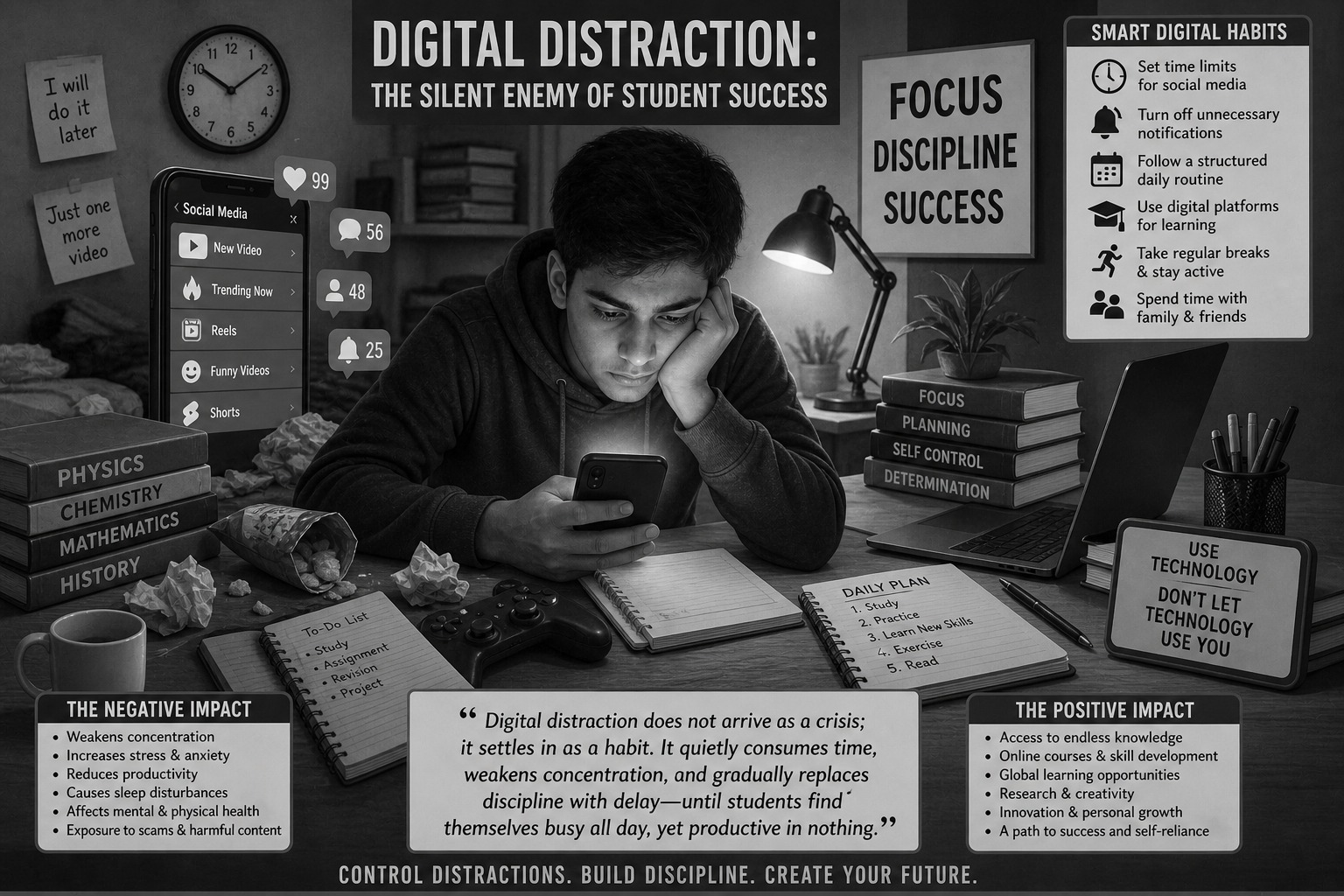
“Digital distraction does not arrive as a crisis; it settles in as a habit. It quietly consumes time, weakens concentration, and gradually replaces discipline with delay—until students find themselves busy all day, yet productive in nothing.”
In the modern age, the internet stands as one of humanity’s greatest inventions. It has connected the world, reduced distances, and placed vast knowledge at our fingertips. Yet behind this powerful tool lies a growing concern—its misuse, especially among students, is quietly eroding focus, discipline, and overall well-being.
Today, many students begin their day not with books or goals, but with mobile phones. Instead of planning their studies, they check notifications, scroll through social media, and watch short videos. What starts as a few minutes often stretches into hours. This constant distraction weakens concentration and fosters a habit of postponing important tasks. Gradually, productivity declines as the mind slips into the comfort of “I will do it later.”
A major reason for this issue lies in the design of modern digital platforms. Social media apps are engineered to maximize engagement. Endless scrolling, instant notifications, likes, and comments trigger curiosity and excitement, making it difficult to disconnect. The idea of watching “just one more video” becomes a never-ending loop, consuming time that could otherwise be used for learning and personal growth.
The consequences extend beyond academics. Excessive screen time affects mental and physical health. It can lead to stress, anxiety, reduced attention span, and sleep disturbances. Alarmingly, even young children are now exposed to smartphones at an early age. While technology can support education, uncontrolled usage can hinder cognitive development, weaken social skills, and contribute to eye strain and physical inactivity.
Furthermore, the internet is not always a safe space. Online fraud, scams, and misleading information are on the rise. Many users fall victim due to a lack of awareness, making responsible digital behavior more important than ever.
Despite these challenges, the internet itself is not the enemy. In fact, it remains one of the most powerful tools for learning and success—if used wisely. Students today have access to online courses, educational videos, research platforms, and global knowledge that previous generations could only imagine. The key lies in self-control and purposeful usage.
To overcome digital distraction, students can adopt simple yet effective habits:
-
Set specific time limits for social media use
-
Turn off unnecessary notifications during study hours
-
Follow a structured daily routine with clear goals
-
Use digital platforms primarily for learning and skill development
-
Take regular breaks and engage in physical activities
-
Spend more time in real-life interactions and hobbies
Parents and teachers also play a crucial role. Rather than imposing strict restrictions, they should guide students toward balanced and responsible use of technology. Awareness, discipline, and open communication are essential in helping young minds navigate the digital world.
In conclusion, the internet can either shape our future or slowly diminish our potential—it all depends on how we use it. Success demands focus, discipline, and determination. By controlling digital distractions, students can unlock their true potential and turn their aspirations into reality.
The time has come to stop being controlled by screens—and start taking control of our lives.
Comments are closed.