The demand for a fair and transitional approach to the Teacher Eligibility Test (TET) requirement for teachers appointed in Jammu and Kashmir before 31 October 2019 deserves serious consideration by the Government of Jammu and Kashmir, the Legislative Assembly and the Union Government.
At the heart of the matter is a question of fairness. Many teachers who entered government service before 31 October 2019 were recruited under the rules and eligibility conditions applicable in the erstwhile State of Jammu and Kashmir. TET was not prescribed as a mandatory condition of their appointment.
Many of these teachers have now spent 10, 15, 20 years or more in government schools. They have taught children in remote villages, difficult and mountainous areas and places where working conditions are often far from easy. Over the years, they have gained classroom experience, undergone departmental training and continued to serve through several changes in the education system.
That history deserves to be considered when a qualification requirement, introduced under a subsequent legal framework, is applied to those who were already in service.
The Central Question
The question is straightforward: Can a qualification that was not required when a teacher was appointed subsequently become a condition with serious consequences for that teacher’s career and service?
There is no simple yes-or-no answer.
Governments have the authority to improve professional standards, and TET serves an important purpose in maintaining minimum standards for teachers. But when a new requirement is applied to people already in service, particularly those who were appointed lawfully under an earlier set of rules, the manner of transition becomes important.
A teacher recruited under the rules applicable in 2005 or 2010, for instance, was not entering the profession on the same terms as someone being recruited today. That distinction matters.
Jammu and Kashmir’s Distinctive Transition
Jammu and Kashmir underwent a major legal and administrative transition in 2019. With the reorganisation of the erstwhile State and the application of central laws, the framework governing several areas of public administration, including education, changed substantially.
The Right of Children to Free and Compulsory Education Act, 2009 and the associated teacher-qualification framework became applicable to Jammu and Kashmir in this period. This brought the Union Territory within a national framework of minimum qualifications for teachers.
The change created difficult questions for those who had already entered government service under the earlier J&K system.
The Rehbar-e-Taleem (ReT) scheme is one important example of that earlier framework. Teachers associated with the scheme were recruited under rules that existed in Jammu and Kashmir before the present qualification regime came into force.
That historical context cannot simply be ignored.
At the same time, it would be legally difficult to argue that every teacher appointed before 31 October 2019 is automatically entitled to a permanent exemption from TET. Recent Supreme Court decisions have reaffirmed the importance of TET as a minimum qualification under the RTE framework for teachers falling within its scope.
The more defensible argument, therefore, is for a fair transitional arrangement for eligible pre-2019 teachers, rather than a blanket claim that existing law already exempts all of them.
What the Supreme Court Has Said
The Supreme Court’s decision in State of Maharashtra v. Anjuman Ishaat-E-Taleem Trust has brought the question of TET for in-service teachers into sharper focus.
The Court upheld TET as part of the minimum qualification framework and held that, in the circumstances covered by the judgment, the requirement could apply to teachers already in service. While dealing with review petitions, the Court retained that position but extended the period available for compliance to three years, up to 31 August 2028.
That extension is significant. It shows that while minimum qualifications remain important, their implementation can take account of the practical realities faced by teachers who have already spent years in service.
The Supreme Court’s judgment in Union Territory of Jammu and Kashmir v. Saba Wani is particularly relevant to Jammu and Kashmir. The case involved issues arising from the earlier ReT recruitment framework and the subsequent requirement of minimum qualifications under the NCTE/RTE regime. While providing relief to a specific category of candidates, the Court retained the requirement that the prescribed qualifications, including TET, be acquired within the stipulated period.
These judgments do not establish a general exemption for every pre-2019 teacher. But they do demonstrate that transitional arrangements can coexist with the objective of maintaining professional standards. That distinction is important for Jammu and Kashmir.
Can the J&K Legislative Assembly Intervene?
The Legislative Assembly cannot, through a resolution, simply override a requirement contained in central legislation or disregard a binding judgment of the Supreme Court. Any resolution seeking TET relief should therefore be carefully framed. It should urge the Union Government and the competent authorities to examine whether a suitable legal or legislative arrangement can be made for teachers appointed under the earlier J&K framework.
The Assembly could urge the Union Government to consider:
· a one-time transitional exemption from TET for eligible teachers appointed under the pre-2019 J&K recruitment framework;
· protection of existing service and promotional interests, wherever legally permissible;
· an appropriate legislative amendment or statutory transitional provision for similarly placed teachers;
· clarification of how the present TET requirement applies to different categories of teachers appointed before 31 October 2019;
· regular conduct of TET examinations so that teachers who are required to qualify are given adequate opportunities; and
· professional training, competency assessment and other capacity-building measures wherever these can legally form part of a transitional arrangement.
Such a resolution would not amount to rejecting TET. It would ask whether the transition from the old J&K system to the present framework can be handled with due regard to those who were already in service.
Legitimate Expectation and the Question of Fairness
There is also a broader principle of legitimate expectation that deserves attention, although it needs to be applied carefully.
A teacher appointed after meeting all the qualifications prescribed by the Government at the time could reasonably expect that the conditions governing that appointment would not later be changed in a manner that completely disregards the circumstances of those already employed.
This does not mean that service conditions can never change. Governments can, in the public interest, introduce new standards and qualifications. Nor does legitimate expectation automatically create a permanent right to remain governed by the rules that existed on the date of appointment.
But where a new requirement can affect the continuation or promotion of long-serving employees, the manner in which it is introduced matters.
Consider a teacher who has spent two decades in a government school. That teacher is not similarly placed in every respect to a young person applying for a teaching post today.
The latter is seeking entry into the profession under the current rules. The former has already spent years teaching children, often in difficult circumstances, and has built up substantial professional experience. That difference should have a place in public policy.
Quality Education and Teachers’ Experience
There is also a danger in framing this as a choice between teachers’ interests and the quality of education. There should be no such choice. Children deserve qualified and competent teachers. Professional standards are an important part of achieving that objective. At the same time, years of classroom experience have value.
A teacher learns things in a classroom that cannot always be captured by an examination — how to handle a difficult class, how to understand a child’s learning difficulties, how to work with parents and communities, and how to teach in conditions that may be very different from those in an urban school.
None of this makes TET unnecessary. But it does suggest that a long-serving teacher should not necessarily be approached in exactly the same manner as a new entrant to the profession.
A sensible transitional policy could combine professional development with competency assessment and, where legally required, reasonable opportunities to qualify TET.
The aim should be to raise professional standards without disregarding the experience of those who have already spent years delivering education in government schools.
The Way Forward
The way forward is neither confrontation nor abandonment of TET. It is a fair, legally sustainable and Jammu-and-Kashmir-specific transitional policy.
The Government of India, the J&K Government, the School Education Department, teachers’ representatives and legal experts should examine the matter carefully and work towards a solution that respects both the statutory requirement of professional standards and the circumstances of teachers appointed under the earlier J&K framework.
Any transitional arrangement could take into account:
· the recruitment rules applicable at the time of appointment;
· the date and nature of appointment;
· whether and when the RTE/NCTE qualification framework became applicable to the particular category of teacher;
· the years of service already rendered;
· professional experience and departmental training;
· existing service and promotional interests, wherever legally permissible;
· the age and remaining period of service; and
· the need to maintain the quality standards prescribed for school education.
The J&K Legislative Assembly can play an important role by passing a resolution urging the Union Government to examine the matter and explore an appropriate legal or legislative solution for eligible pre-2019 teachers.
For these teachers, the question is not whether standards should be maintained. It is whether fairness, professional experience and the circumstances of a significant legal transition can be accommodated while maintaining those standards.
That is a question worthy of legislative consideration and one that deserves a considered response.
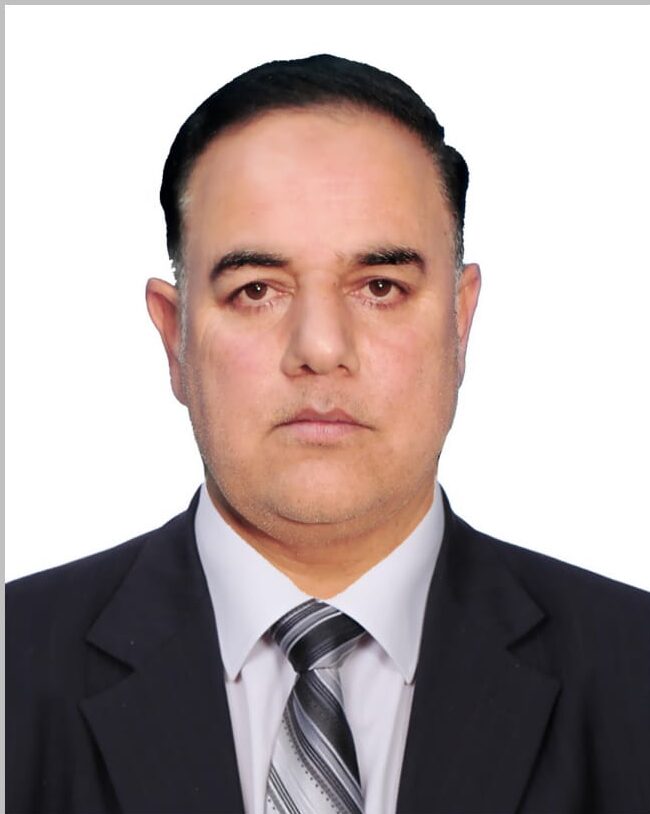
The author is a Teacher with the School Education Department, Government of Jammu & Kashmir. And can be reached out at naseermalla689@gmail.com



Comments are closed.