

Building India into a Global Hub for Sports Goods

S Ahmad


The Khelo India Sports Goods Manufacturing Scheme offers India an opportunity to connect sporting ambitions with industrial growth, but its success will depend on technology, quality, MSME participation and access to global markets.

India’s sporting ambitions are increasingly extending beyond stadiums, training centres and international competitions. As the country invests in grassroots participation, athlete development and sports infrastructure, another opportunity is emerging: the creation of a globally competitive sports goods manufacturing industry.

The equipment used by athletes, from cricket bats and protective gear to training accessories and advanced sporting materials, represents an important economic sector that can generate employment, encourage innovation and strengthen domestic manufacturing. Yet, converting India’s existing manufacturing capabilities into a substantial global presence will require more than producing greater quantities of equipment. It will demand sustained investment in technology, research, product quality, skilled labour and international market access.


The Union Cabinet’s approval of the Khelo India Sports Goods Manufacturing Scheme on October 28, 2026, marks an important step towards this objective. With an outlay of ₹1,856.67 crore for the financial years 2026–27 to 2033–34, the scheme seeks to strengthen the entire manufacturing ecosystem, from infrastructure and investment to innovation, certification, skills and exports. Its proposed Sports Goods Manufacturing Zones, investment incentives, support for international certification, research centres and assistance for start-ups reflect an attempt to treat sports manufacturing as an integrated industrial opportunity rather than an isolated segment of the economy.


The larger significance of this initiative lies in the connection it seeks to establish between India’s growing sporting ecosystem and its manufacturing potential. A country aspiring to become a leading sporting nation must be able to develop athletes, build infrastructure and ensure access to reliable equipment. At the same time, it can create economic opportunities by manufacturing that equipment domestically and supplying it to international markets.


The challenge is to translate this ambition into measurable industrial progress.


An Industry Built on Local Enterprise

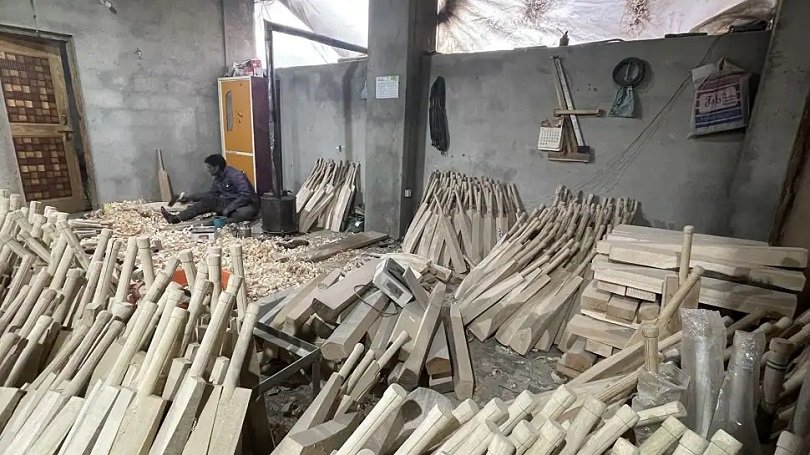
India does not begin this journey from scratch. Its sports goods manufacturing industry has established centres, experienced workers and a wide network of small businesses. Jalandhar in Punjab and Meerut in Uttar Pradesh are among the country’s principal manufacturing clusters, while Ludhiana has capabilities in bicycles and Delhi and Mumbai serve segments such as sports accessories and apparel.

According to the supplied government material, Jalandhar and Meerut together account for more than 250 exporting units, over 1,000 domestic-market units, more than 4,000 micro enterprises and nearly 20,000 household units. These figures illustrate the extensive network of businesses and workers supporting the industry.

The participation of small and micro enterprises is particularly important. They account for nearly 90 per cent of production, making sports manufacturing a significant source of local economic activity and entrepreneurial opportunity. The industry’s future will therefore depend not only on attracting large investors but also on strengthening the capabilities of businesses that already produce sports goods.

These enterprises bring practical manufacturing knowledge, established supplier relationships and familiarity with particular products. However, many small producers may find it difficult to invest independently in advanced machinery, product testing, research and internationally recognised certification. Limited access to modern facilities can constrain their ability to improve quality, diversify products and compete for larger orders.

The proposed scheme recognises several of these constraints by combining support for new manufacturing investment with assistance for existing clusters and shared infrastructure. This approach is important because industrial development should not become a choice between attracting large companies and protecting smaller producers.

Large manufacturers can bring capital, technology, production systems and access to international distribution networks. Smaller enterprises can contribute specialised skills, flexibility and established local production capabilities. If these strengths are connected through effective supplier relationships, the resulting ecosystem can be more competitive than one dominated by either category alone.

The policy challenge is to ensure that smaller businesses become participants in the expansion rather than spectators to it.

The Opportunity in a Growing Global Market

The economic case for strengthening sports goods manufacturing rests partly on the scale of the international market. The supplied material estimates the global sports equipment market at approximately US$140 billion in 2024 and projects that it could reach around US$283 billion by 2036.

India’s existing capabilities provide a foundation for seeking a larger share of this demand. Indian manufacturers already produce cricket bats, protective equipment, inflatable balls, gym equipment and athletic training products. India-based brands and manufacturers together account for an estimated 75 to 80 per cent of the global cricket bat market, while India’s share of the cricket helmet market is estimated at 30 to 35 per cent.

These strengths demonstrate that Indian production can achieve a substantial presence in selected categories. They also suggest that the country has opportunities to expand into other product segments by drawing on its experience in materials such as rubber, polymers, composites, wood and metals.

However, success in one product category does not automatically translate into competitiveness across the wider sports equipment industry. Different products require different manufacturing processes, performance standards and levels of technological sophistication. Moving into higher-value segments will require research, testing, specialised skills and a stronger understanding of international demand.

The gap between India’s existing exports and the potential market is considerable. The government material places India’s sports equipment exports at approximately US$275 million, compared with global equipment exports of around US$52 billion in 2024. It estimates that Indian sports equipment exports could reach approximately US$8.1 billion by 2036, potentially generating around 54 lakh additional direct and indirect jobs.

These are projections, not guaranteed outcomes. Achieving them will depend on whether Indian manufacturers can improve productivity, maintain consistent quality, develop competitive products and build lasting relationships with overseas buyers.

The opportunity is nevertheless significant. A larger export-oriented industry could support employment across manufacturing, logistics, design, packaging, testing and related services. It could also help domestic businesses acquire new capabilities and reduce their dependence on a narrow range of products or markets.

The objective should not simply be to manufacture more goods. It should be to manufacture better goods, create greater domestic value and compete successfully in a wider range of international markets.

Manufacturing Zones and the Importance of Industrial Clusters

One of the scheme’s central interventions is the development of integrated Sports Goods Manufacturing Zones. These zones are intended to bring manufacturers, suppliers, testing facilities, design and prototyping centres, and ancillary enterprises into a common industrial ecosystem. The material indicates that there may be four such zones, each covering more than 300 acres.

The proposed zones are to be developed through convergence with the Bharat Audyogik Vikas Yojna, or BHAVYA, and industrial parks associated with the National Industrial Corridor Development Corporation.

The logic behind this approach is straightforward. Manufacturing becomes more efficient when businesses can access suppliers, infrastructure, technical services and supporting facilities without having to build every component independently. Shared facilities can reduce costs, while proximity between manufacturers and research institutions can improve collaboration.

For sports goods producers, access to testing and prototyping facilities can be especially valuable. A manufacturer developing protective equipment or performance-oriented products needs ways to assess whether designs meet the required specifications. Shared facilities can make such capabilities more accessible to businesses that cannot justify the expense of maintaining them independently.

The proposed zones could also encourage the development of specialised supplier networks. Producers working with rubber, polymers, metals, wood and composite materials may be able to serve multiple manufacturers, improving economies of scale and creating opportunities for related industries.

Yet, establishing industrial zones is only the beginning. Their effectiveness will depend on reliable electricity, water, transport, warehousing, affordable industrial space and access to skilled workers. Businesses must also have clear information about land allocation, infrastructure availability and the conditions attached to incentives.

Industrial parks should not become isolated real-estate projects with manufacturing activity developing more slowly than planned. Their performance must be measured by the businesses they attract, the production they generate, the employment they create and the supplier relationships they establish.

Existing clusters also deserve attention. The proposed support for common facilities and shared infrastructure, with cost-sharing arrangements involving states, could help established producers modernise without relocating from the areas where their skills and business networks have developed.

A balanced strategy would strengthen existing clusters while developing new manufacturing capacity where it offers clear advantages.

Investment Incentives Must Create Lasting Capacity

The scheme allocates a combined ₹1,130 crore to two components intended to attract investment and expand production.

Under Anchor Investment Support, eligible anchor investors making investments of at least ₹100 crore are to receive capital expenditure support equivalent to 20 per cent. The objective is to encourage leading domestic and international manufacturers, brands and retail chains to establish production facilities within the proposed manufacturing zones.

Turnover Linked Support will offer incentives of up to 15 per cent to manufacturers investing ₹10 crore or more, encouraging production growth and capacity expansion.

These interventions are designed to address two related requirements: attracting investment that can strengthen the manufacturing ecosystem and encouraging businesses to increase production.

Large investors can play an important role in bringing technology, production expertise and international market connections into India. Their presence may also create opportunities for domestic suppliers to enter larger supply chains.

However, the quality of investment matters as much as its quantity. A factory’s establishment does not automatically guarantee sustained production, meaningful technology transfer or opportunities for local businesses. The wider benefits will depend on the extent to which investment generates domestic value addition, develops local suppliers and creates stable employment.

Incentives should therefore be administered transparently, with clear eligibility conditions and effective monitoring. Performance should be assessed through outcomes such as productive capacity, actual manufacturing activity, employment, technology adoption and the development of domestic supplier networks.

Turnover-linked support also needs to encourage genuine expansion in productive capacity rather than simply reward higher sales without corresponding improvements in competitiveness.

The aim should be to use public money to help create a stronger industrial base that can remain viable after the incentive period ends. Businesses must ultimately be able to compete through productivity, product quality and market demand, not depend indefinitely on government assistance.

MSMEs Must Remain Central to the Strategy

If large investors can provide scale, micro, small and medium enterprises will remain essential to the industry’s breadth and resilience.

The fact that small and micro enterprises account for nearly 90 per cent of production makes their participation a central concern. They provide livelihoods to workers, sustain specialised production capabilities and form an important part of the country’s manufacturing network.

However, smaller producers often face a difficult combination of constraints. They may have limited access to credit, outdated machinery, insufficient technical support and high costs associated with testing and certification. These challenges can prevent them from fulfilling larger orders even when they possess the necessary production skills.

The proposed upgrading of existing clusters and development of shared facilities could help address some of these difficulties. But support must be accessible to the enterprises that need it most.

Common testing facilities, modern equipment, technical training and shared design resources can reduce the cost of upgrading. Financial institutions and relevant government agencies can also help viable businesses understand financing options and plan investments in productivity.

Another priority is integration into larger supply chains. Small manufacturers should have opportunities to supply components, specialised products and intermediate goods to larger companies operating within the proposed zones. Such relationships could give them access to more predictable demand and encourage improvements in quality and production standards.

This requires more than locating businesses near one another. Manufacturers need opportunities to identify suppliers, understand procurement requirements and develop commercially viable partnerships.

The success of the scheme should therefore be judged partly by whether it expands the capabilities of existing enterprises. If the industry grows while smaller producers remain technologically stagnant or lose market access, the wider economic benefits will be limited.

Industrial development must generate opportunities across the manufacturing network, not merely increase the number of large factories.

Quality and Certification: The Gateway to Global Markets

International competitiveness depends on more than production capacity. Sports equipment must meet the performance, durability and safety requirements applicable to its intended use. Manufacturers seeking access to international markets need to demonstrate that their products comply with relevant standards.

For Indian producers, certification can be a significant expense, particularly when specialised testing and documentation are required. The scheme allocates ₹105 crore to help manufacturers obtain and renew certifications from International Sports Federations. The proposed support covers 70 per cent of first-time certification costs and 50 per cent of renewal costs.

This intervention could help manufacturers overcome a barrier that might otherwise discourage them from pursuing higher-value markets.

Certification is not simply an administrative formality. It can strengthen confidence among buyers, distributors and sporting organisations. It can also encourage manufacturers to improve production processes, materials and quality-control systems.

However, financial assistance must be accompanied by technical guidance. Businesses need to understand the relevant requirements, prepare documentation, conduct appropriate testing and maintain quality after certification has been obtained.

A certificate alone cannot guarantee a strong export business. Manufacturers must also offer competitive pricing, dependable delivery, consistent product quality and responsive customer service.

The broader objective should be to make quality assurance a routine part of manufacturing rather than an occasional requirement triggered by an export opportunity.

If Indian businesses develop strong internal testing and quality-control practices, they will be better placed to serve domestic consumers as well as international markets.

Research, Innovation and the Role of Start-ups

The next stage of sports manufacturing will increasingly depend on the ability to develop new products and improve existing ones. Advances in materials, protective equipment and manufacturing technologies can create opportunities for businesses willing to invest in research and experimentation.

The scheme proposes Centres of Excellence in premier educational and research institutions to support work in sports equipment, material sciences, protective gear and advanced manufacturing technologies. Research collaboration is also expected to be encouraged through the Anusandhan National Research Foundation.

This creates an opportunity to connect India’s academic capabilities with the practical needs of manufacturers.

Research institutions can help investigate new materials, improve product performance and develop manufacturing processes. Industry partnerships can help ensure that research responds to commercial requirements and that promising ideas can be tested under real production conditions.

The scheme also provides for grants of up to ₹20 lakh for eligible Department for Promotion of Industry and Internal Trade-registered sports start-ups. This support is intended to assist the development, testing, validation and commercialisation of new technologies, processes and products.

Start-ups can contribute by addressing specialised problems that larger manufacturers may not prioritise. Their work could include new materials, improved protective equipment, more efficient manufacturing processes or products designed for particular sporting needs.

But research funding is only one part of the innovation process. Promising ideas need access to testing facilities, manufacturing partners, customers and further investment. A product that performs well in a laboratory may still require substantial refinement before it becomes commercially viable.

Stronger links between universities, start-ups, established manufacturers and sporting institutions could help bridge this gap. Athletes and coaches can provide practical feedback, while manufacturers can assess whether a design can be produced consistently and at a competitive cost.

The goal should be to create a system in which innovation moves from research to testing, production and market adoption.

Skills and Employment Beyond the Factory Floor

The expansion of sports manufacturing could generate employment across a range of activities, from production and machinery operation to design, quality assurance, logistics and marketing.

The scheme’s emphasis on industry-aligned skill development is therefore important. Training initiatives are to be implemented in collaboration with the Ministry of Skill Development and Entrepreneurship and relevant industry stakeholders.

Training must reflect the actual requirements of manufacturers. As production processes become more sophisticated, workers may need new competencies in machinery operation, material handling, testing, quality management and digital production systems.

At the same time, established craft and manufacturing skills should not be overlooked. India’s existing clusters possess experience that can support the development of higher-value products. Modernisation should build on this knowledge while helping workers adapt to changing technologies.

Industry participation in training can improve the connection between education and employment. Manufacturers can identify skill gaps, provide practical exposure and help institutions design courses that reflect workplace requirements.

Employment outcomes should also be evaluated in terms of job stability, wages, working conditions and opportunities for advancement. The objective should be to create productive and sustainable employment rather than focus exclusively on the number of people trained.

A competitive manufacturing ecosystem requires workers who are equipped to meet international standards and businesses that can offer them opportunities to apply their skills.

Turning Sporting Ambitions into Industrial Demand

India’s investment in sports development offers an additional opportunity for the manufacturing sector. The Khelo India programme supports grassroots participation, talent identification, training, competitions and infrastructure. Fit India promotes an active lifestyle, while Khelo Bharat Niti 2025 recognises sport as a potential driver of economic activity, entrepreneurship and investment.

The manufacturing scheme complements these initiatives by focusing on the equipment and production capabilities needed to support sporting participation.

The supplied material records that, as of July 2026, 349 Khelo India sports infrastructure projects had been approved with an investment of ₹3,176 crore. It also lists 1,067 Khelo India Centres, 267 supported academies and 2,745 Khelo India Athletes receiving support that includes coaching, equipment, medical care and a monthly allowance.

These investments illustrate the wider development of India’s sporting ecosystem. Greater participation and more extensive infrastructure can create demand for sports goods, while domestic manufacturing can help supply the equipment required by athletes and institutions.

Major sporting events over the coming decade may provide further opportunities. The Los Angeles Olympics in 2028, the Commonwealth Games scheduled for Ahmedabad in 2030, the Brisbane Olympics in 2032 and India’s planned bid for the 2036 Olympic Games create a broader context for investment in sports-related capabilities.

However, manufacturers should not base long-term business plans solely on the expectation of demand associated with major events. Event-related orders may be temporary, competitive and subject to strict procurement requirements.

A more durable strategy would use such opportunities to establish supplier relationships, demonstrate product quality and develop capabilities that remain commercially useful after an event concludes.

Domestic demand must also be considered. A stronger sporting culture can support a market for equipment across schools, training centres, clubs and individual consumers. Manufacturers that understand these different segments may be better positioned to develop products suited to varied needs and budgets.

The relationship between sporting development and manufacturing should therefore be mutually reinforcing. Sports participation can support demand, while a competitive domestic industry can contribute to the availability of quality equipment.

Exports, Branding and the Final Test of Competitiveness

The scheme proposes an India Sports Expo, a Brand India campaign and wider market-development initiatives drawing on the Export Promotion Mission.

These measures can help Indian manufacturers connect with overseas buyers and improve the visibility of their products. The Export Promotion Mission, with an outlay of ₹25,060 crore for 2025–26 to 2030–31, provides a wider framework for export finance, quality compliance, logistics and market access, particularly for MSMEs and first-time exporters.

The challenge is to convert visibility into commercial relationships.

Participation in exhibitions and buyer-seller meetings can introduce manufacturers to potential customers, but lasting export growth requires dependable supply, competitive prices and the capacity to meet buyers’ specifications. Businesses must also understand the regulatory and commercial requirements of their target markets.

India’s existing concentration of sports equipment exports in the United Kingdom, the United States and Australia provides established connections, according to the government material. Expanding into additional markets could create opportunities to diversify demand and reduce dependence on a limited group of destinations.

Branding can help communicate the quality and reliability of Indian products, but its credibility must rest on actual performance. International buyers are unlikely to maintain long-term relationships with suppliers whose quality or delivery is inconsistent.

Export promotion should therefore be closely connected with product development, certification, manufacturing efficiency and customer service. These elements reinforce one another. Better quality can strengthen reputation, stronger reputation can support market access, and larger markets can create incentives for further investment.

The scheme’s success will ultimately depend on whether these interventions work together as a coherent industrial strategy.

Building a Competitive Industry for the Long Term

The Khelo India Sports Goods Manufacturing Scheme offers an opportunity to connect sports development with manufacturing growth, innovation and employment. Its proposed investment support, manufacturing zones, cluster upgrading, certification assistance and research initiatives address several of the constraints that can limit the industry’s expansion.

Yet, policy announcements are only the starting point. Implementation will determine whether the scheme creates productive capacity, strengthens existing enterprises and improves India’s position in international markets.

Progress should be assessed through measurable outcomes: investment translated into active manufacturing, greater domestic value addition, improved product quality, export growth, innovation reaching commercial markets and sustainable employment. The participation of micro and small enterprises should remain an important part of this assessment.

The scheme also needs effective coordination between the Union government, state governments, industrial development agencies, research institutions, financial institutions and manufacturers. Each has a role in building the infrastructure and capabilities required for long-term competitiveness.

India has existing strengths in selected sports goods, established manufacturing clusters and a broad network of small enterprises. The global market offers opportunities, while the country’s sporting ambitions create a domestic foundation for growth. The task is to connect these advantages through investment, technology, quality and market development.

The real measure of success will not be the number of industrial zones announced or the amount of financial assistance allocated. It will be whether Indian manufacturers can consistently produce high-quality equipment, compete on international terms, develop innovative products and create opportunities for workers and enterprises across the country.

A globally competitive sports goods industry would contribute more than export earnings. It could strengthen local manufacturing, deepen technological capabilities and create a closer relationship between sporting excellence and industrial development.

India’s ambition to become a leading sporting nation will be strengthened when the country can support its athletes while also designing and manufacturing equipment that earns the confidence of customers around the world. The Khelo India Sports Goods Manufacturing Scheme provides a framework for pursuing that ambition. Its lasting contribution will depend on turning that framework into competitive factories, capable enterprises, skilled workers and products that can stand their ground in the global marketplace.


The article is based on the inputs and background information provided by the Press Information Bureau (PIB). Author is Writer, Policy Commentator. He can be mailed at kcprmijk@gmail.com

Comments are closed.