
How Iran Became a Shi’a-Dominated Society
The Political, Religious, and Cultural Making of a Confessional Identity


Sajid Ilahi
“Iran’s Shi’a character is not an accident of geography or a lingering trace of pre-Islamic Persian sensibility; it is the product of a specific, often brutal, political project undertaken by the Safavid dynasty beginning in 1501.”
It is easy, looking at the map of the modern Middle East, to assume that Iran’s Shi’a identity is somehow primordial — that the land of Zoroaster and the old Persian empires simply drifted, by some natural affinity, into the Shi’a fold. The truth is considerably more interesting, and considerably more contingent. For most of the first nine centuries of Islamic history, Iran was overwhelmingly Sunni, home to towering figures of Sunni jurisprudence and theology — al-Ghazali, al-Bukhari’s intellectual milieu, and the great Nizamiyya seminaries of Nishapur and Baghdad were as much Persian as they were Arab achievements. The Iran that emerges after the sixteenth century, by contrast, is a confessional state whose clerical hierarchy, ritual calendar, and popular piety are organized around Twelver Shi’ism (Ithna Ashari) in a way found nowhere else at that scale. Understanding how this happened requires resisting the temptation to read the outcome backward into the origins. Iran’s Shi’a character is not an accident of geography or a lingering trace of pre-Islamic Persian sensibility, as some romantic historiography likes to suggest; it is the product of a specific, often brutal, political project undertaken by the Safavid dynasty beginning in 1501, layered onto centuries of scattered but real Shi’a currents that had existed in the Iranian plateau long before the Safavids ever appeared.
Pre-Safavid Iran: A Sunni Majority with Shi’a Undercurrents
Before dismissing the pre-modern period as irrelevant, it is worth being precise about what did exist. Shi’ism in Iran did not begin with Shah Isma’il I; it had deep, if geographically uneven, roots. Cities such as Qom and Kashan had housed significant Shi’a populations since at least the eighth century, largely because of migration by Arab Shi’a families fleeing Umayyad and early Abbasid persecution. Qom in particular became something of a refuge and, later, a center of Twelver scholarship, producing hadith compilers and jurists whose work fed into the broader Shi’a tradition centuries before Safavid rule. The Buyid dynasty (945–1055), a Persian Shi’a dynasty that controlled Baghdad and much of western Iran, offers a useful counterexample: it demonstrates that Shi’a political power in the Iranian world was not unprecedented, yet the Buyids never attempted — and arguably never could have attempted — a wholesale confessional transformation of the population they ruled. They governed a majority-Sunni society through pragmatic accommodation, patronizing Shi’a scholarship and Ashura commemorations in Baghdad while leaving the Sunni caliphate nominally intact and the broader population’s religious affiliation largely untouched.
Alongside this scattered Twelver presence, Iran was also a significant center of Sufi orders, and this detail matters more than it might first appear, because the Safavid movement itself began not as a Shi’a political project but as a Sunni Sufi tariqa. The Safaviyya order, founded by Shaykh Safi al-Din Ardabili in the early fourteenth century in Ardabil, was initially a Sunni mystical brotherhood of a fairly conventional type, drawing disciples from across Anatolia, Azerbaijan, and northwestern Iran. Its gradual radicalization — first toward a more militant, messianic form of Sufism, and eventually toward an extreme, almost ghulat-inflected Shi’ism that venerated the order’s leaders as semi-divine — is one of the more startling transformations in Islamic history, and it is this transformed order, rather than any settled theological consensus, that would eventually reshape Iran.
The Safavid Turn: Isma’il I and the Qizilbash
The pivotal moment arrives with Shah Isma’il I, who in 1501 conquered Tabriz at the head of the Qizilbash — Turkic tribal warriors named for their distinctive red headgear, who had become fanatically devoted to the Safavid order and to Isma’il personally, whom many regarded as a divine or quasi-divine figure descended from the Twelfth Imam’s line. This is worth dwelling on, because the religious character of the early Safavid movement was not the sober, jurisprudential Twelver Shi’ism that would later characterize the Iranian clerical establishment; it was something closer to a militant, messianic folk religion, heavily inflected with ghuluww (extremist veneration of Ali and his descendants) and popular Sufi practice. Isma’il’s own poetry, composed under the pen name Khata’i, contains lines in which he all but claims divinity, describing himself as the reincarnation of Ali and the manifestation of God. This was scandalous even by the standards of contemporary Shi’a orthodoxy, and it is a useful reminder that the ideology which first brought Shi’ism to state power in Iran bore only a loose resemblance to the Shi’ism that would later be systematized as official doctrine.
Upon capturing Tabriz, Isma’il declared Twelver Shi’ism the official religion of his newly proclaimed state and, according to several chroniclers, ordered the ritual cursing of the first three Rashidun caliphs — Abu Bakr, Umar, and Uthman — to be pronounced publicly in mosques, a practice that functioned less as theology than as a loyalty test and a deliberate act of confessional boundary-drawing. This was, from the outset, a political act as much as a religious one. Isma’il needed an ideology that would distinguish his emerging Safavid state sharply from its two great Sunni neighbors, the Ottoman Empire to the west and the Uzbek Shaybanids to the northeast, both of whom he was locked in near-constant conflict with. Shi’ism served this purpose admirably: it gave the Safavid state a confessional identity that could not be absorbed into either rival power’s religious framework, and it gave the Qizilbash tribal confederation a unifying ideology that transcended tribal loyalty.
From Conquest to Conversion: The Long Process of Confessionalization
Declaring Shi’ism the state religion and actually making the population Shi’a were two very different undertakings, and it is here that the real historical labor occurred. At the time of Isma’il’s conquest, the population of the Iranian plateau was still predominantly Sunni, following the Shafi’i and Hanafi schools in different regions. Converting an entire society’s confessional identity is not accomplished by royal decree alone; it required, over roughly two centuries, a sustained and often coercive campaign involving several interlocking mechanisms.
Importing a Clerical Class
Because Iran itself possessed relatively few trained Twelver jurists capable of anchoring a state religious establishment, the Safavids actively recruited Arab Shi’a ulama from the established centers of Twelver learning — principally Jabal Amil in what is now southern Lebanon, and to a lesser extent Bahrain and Iraq. Scholars such as al-Karaki, who arrived from Jabal Amil and rose to extraordinary influence under Shah Tahmasp I, brought with them the jurisprudential apparatus, the legal texts, and crucially the institutional model of clerical authority that Iran’s indigenous religious landscape had not yet developed at scale. These transplanted scholars gradually displaced the more heterodox, ghulat-influenced religiosity of the early Qizilbash movement with a more textually disciplined, legally grounded Twelver orthodoxy — a process the historian Said Amir Arjomand has described as the transformation from a ‘revolutionary’ or messianic Shi’ism to a hierocratic, jurist-centered one.
Coercion and Incentive
The conversion process was not simply persuasive; it was backed, particularly in the early decades, by pressure that ranged from social and fiscal disincentive to outright violence against those who resisted, especially against Sunni ulama who refused to accommodate the new order. Sunni religious endowments were reassigned, Sunni scholars were driven out or marginalized, and in some documented instances, populations resistant to conversion faced significant coercion. At the same time, incentive structures mattered as much as coercion: state patronage flowed toward Shi’a institutions, madrasas, and shrines, making religious and even mundane economic advancement progressively easier for those who identified with the new order and correspondingly harder for those who did not.
Building a Ritual and Devotional Infrastructure
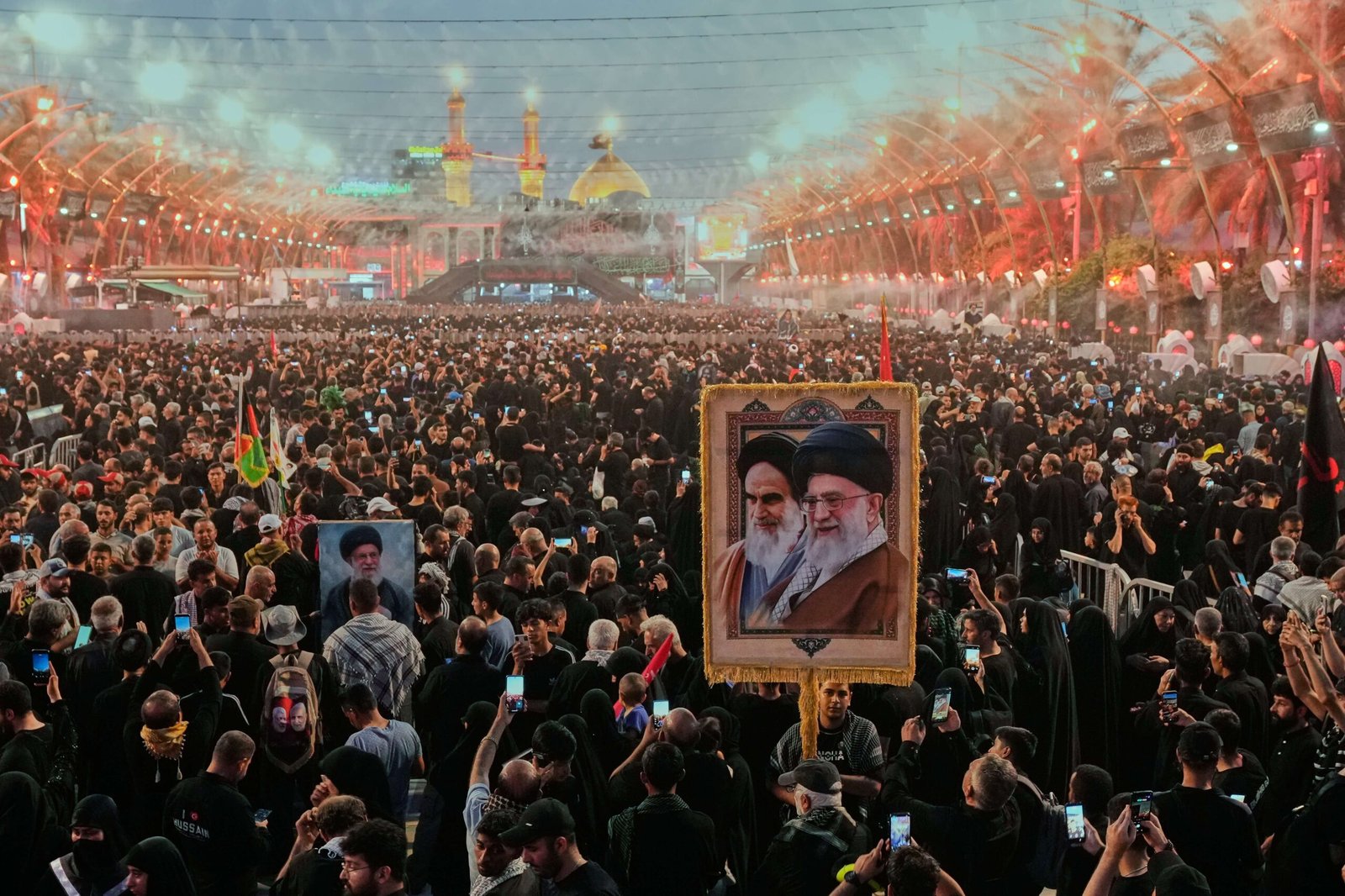
Perhaps the most consequential and lasting mechanism was the deliberate construction of a Shi’a devotional culture embedded in daily and annual life. The Safavids invested heavily in shrine cities — expanding and lavishly endowing the shrines at Mashhad (housing Imam Reza) and Qom (housing Fatima Masumeh) — and promoted Muharram commemorations of Ashura, the mourning rituals for Husayn ibn Ali’s martyrdom at Karbala, as central public events. Ta’ziyeh, the passion-play reenactment of Karbala, and rowzeh-khani, the ritualized recitation of the Karbala narrative, became woven into popular culture in a way that outlasted any specific political dynasty. This is arguably the single most important reason the Safavid project succeeded where earlier Shi’a political experiments, such as the Buyids, did not: ritual and emotional attachment proved more durable than doctrinal instruction, and by the time a population’s grandchildren were born into a world where Ashura processions were simply what one did in Muharram, the confessional transformation had become self-sustaining, no longer dependent on state coercion to persist.
Consolidation under Later Safavids and the Institutionalization of the Ulama
By the reign of Shah Abbas I (r. 1588–1629), the confessional character of the state was firmly established, and the focus shifted from conversion to consolidation. Abbas continued to patronize the Shi’a clerical establishment while also working to curb the political independence of the Qizilbash, whose original messianic religiosity had by now become something of an embarrassment to a state seeking legitimacy through orthodox jurisprudence rather than tribal charisma. The later Safavid period saw the crystallization of the marja’iyya system and a more clearly defined hierarchy of clerical authority, developments that would culminate much later, under the Qajars and then more fully in the twentieth century, in the institutional structures recognizable in contemporary Iranian Shi’ism.
It is worth noting, too, that this consolidation was uneven across the Safavid realm. Sunni populations persisted in border regions — among Kurds in the west, Baluchis in the southeast, and Turkmen in the northeast — precisely because these were areas where Safavid administrative and clerical reach was weaker and where local tribal or ethnic identity provided a countervailing source of cohesion. This unevenness is still visible in Iran’s demographic map today, a fact that itself testifies to the historically contingent, rather than natural or inevitable, character of the conversion process.
Why the Transformation Held
A fair question, and one too often glossed over, is why this particular top-down confessional project succeeded so thoroughly when many comparable efforts elsewhere in Islamic history did not produce anything like the same durability. Several factors seem to have converged. First, the geographic and political isolation of the Safavid state, wedged between two hostile Sunni empires, gave Shi’a identity an unusually clear function as a marker of political and cultural distinctiveness — to be Iranian, in a meaningful sense, increasingly came to mean not being Ottoman, and Shi’ism supplied exactly that boundary. Second, the two-century timescale involved allowed for genuine generational transmission; this was not a conversion imposed on adults expected to unlearn a lifetime of practice within a single reign, but a slow reorientation of an entire society’s ritual calendar, legal recourse, and educational institutions across several generations. Third, the eventual displacement of messianic, revolutionary Shi’ism by a more legally disciplined clerical orthodoxy gave the new religious order institutional staying power independent of any single ruler’s charisma — a point Arjomand’s work on the transformation of Shi’ism from sect to state religion emphasizes at some length, and one that helps explain why Twelver Shi’ism in Iran survived the eventual collapse of the Safavid dynasty itself in 1722, passing relatively intact through the Afsharid and Zand interregna into Qajar Iran.
Conclusion
To describe Iran as a Shi’a-dominated society, then, is to describe the settled outcome of a historical process that was neither inevitable nor especially ancient by the standards of Islamic history more broadly. It was a project initiated by a millenarian Sufi-military movement whose own early theology would scarcely be recognizable as orthodox Shi’ism to a jurist trained in Najaf or Qom today; it was carried forward by imported Arab scholars who supplied the intellectual scaffolding the movement initially lacked; and it was cemented not primarily through doctrine but through the patient construction of shrines, mourning rituals, and clerical institutions that gave successive generations of Iranians a lived, emotionally resonant relationship to Shi’a identity that no longer required political enforcement to reproduce itself. The story is, in the end, a useful corrective to any historiography — whether nationalist, sectarian, or simply careless — that treats religious identity as a fixed cultural essence rather than as something built, contested, and maintained through concrete historical labor.
“The story is, in the end, a useful corrective to any historiography — whether nationalist, sectarian, or simply careless — that treats religious identity as a fixed cultural essence rather than as something built, contested, and maintained through concrete historical labor.”
Comments are closed.