
When Machines Can Sense, Think and Act, India Must Be Ready
“Cyber-Physical Systems are no longer a distant technological idea. They are becoming the infrastructure of the future—and India’s ability to build them indigenously could shape everything from healthcare and agriculture to mobility, security and public services.”

S Ahmad
For most of the industrial age, machines did what humans told them to do. A machine could manufacture a component, a vehicle could carry passengers and a medical device could record a patient’s vital signs. But the machine itself had little understanding of the world around it.
That is changing rapidly.
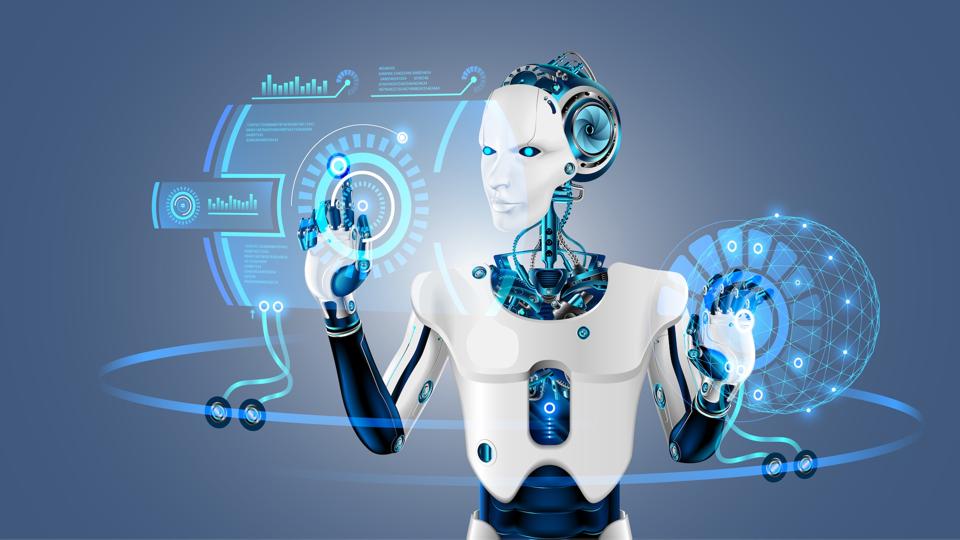
Today, machines can sense their surroundings, process enormous volumes of information and respond to changing circumstances in real time. A car can identify an obstacle and react. A factory can detect a problem on a production line before it becomes a major failure. A medical device can continuously monitor a patient and alert doctors when intervention may be necessary. A building can adjust its energy consumption according to occupancy and environmental conditions.
This convergence of the physical and digital worlds is at the heart of Cyber-Physical Systems (CPS).
CPS may sound like a technical term reserved for laboratories and engineers, but its consequences will increasingly be felt by ordinary citizens. It represents a fundamental change in the way technology interacts with the physical world. Sensors collect information, software interprets it, communication networks transmit it and machines or humans act on the resulting intelligence.
In simple terms, CPS allows technology not merely to operate, but to sense, understand and respond.
That distinction matters enormously for India.
A country of India’s scale cannot afford to remain merely a consumer of technologies that will increasingly determine the efficiency of its farms, factories, hospitals, transport systems, mines, communication networks and public infrastructure. If the physical world is becoming increasingly dependent on digital intelligence, technological self-reliance must extend beyond computers and software to the systems that connect digital intelligence with the real world.
This is where India’s National Mission on Interdisciplinary Cyber-Physical Systems (NM-ICPS) assumes strategic importance.
Approved by the Union Cabinet in 2018 with an outlay of ₹3,660 crore over nine years, the mission is attempting to build something larger than a collection of research projects. Its objective is to create an ecosystem in which universities, research institutions, industry, government and international partners can work together to develop technologies and take them towards practical deployment.
That ecosystem is perhaps more important than any individual invention.
India has never lacked scientific talent. The more difficult challenge has often been translating scientific capability into products, enterprises and solutions that can operate at scale. A promising technology can remain trapped in a laboratory if there is no mechanism to test it, finance it, manufacture it, commercialise it or connect it with an actual public need.
NM-ICPS is attempting to bridge that gap.
The establishment of 25 Technology Innovation Hubs (TIHs) as Section 8 companies at leading academic institutions is an important part of this effort. These hubs are working across technology development, skill creation, entrepreneurship and international collaboration. Their role goes beyond conventional academic research. They are expected to help convert ideas into technologies, technologies into products and products into solutions.
That transition—from invention to implementation—is where the real test lies.
The creation of four Technology Translation Research Parks (TTRPs) in 2025 adds another important layer. Located at IIT Kanpur, IISc Bengaluru, IIT (ISM) Dhanbad and IIT Indore, these parks focus on cybersecurity, robotics and AI systems, mining technologies and digital healthcare respectively.
The message is clear: India is trying to move beyond the question of whether it can develop advanced technology to the more consequential question of whether it can deploy that technology effectively.
The numbers emerging from the mission suggest that the ecosystem is gaining momentum. As of August 2026, NM-ICPS has enabled 1,146 technologies and contributed to 1,329 technology products. It has supported 5,824 fellowships, provided skills development training to more than 2.46 lakh professionals and incubated 1,136 start-ups and spin-offs, contributing to more than 24,000 jobs. The mission has also established 200 international collaborations.
These figures are significant, but numbers alone should not become the measure of success.
The ultimate question is what these technologies do outside institutional campuses.
Consider healthcare. One of the most promising possibilities offered by CPS is the digital twin—a virtual representation of a physical system that can be updated using real-world data. The CharakDT platform developed at IIT Indore, for instance, uses digital modelling of organs including the lungs, eyes and heart to study disease progression and treatment possibilities.
The potential is enormous. If technologies can increasingly simulate how an individual system behaves, medicine could move further towards prediction, personalisation and early intervention.
Agriculture offers another compelling example.
Indian agriculture operates under enormous variations in soil, weather, water availability and cropping patterns. A farmer cannot make the best possible decision merely by relying on broad seasonal information. Real-time information about soil conditions, weather and microclimate can potentially make irrigation and fertiliser use more efficient. The Agri-IoT Farm Management System developed at IIT Bombay illustrates how CPS can bring data-driven decision-making directly into agriculture.
For a country where water efficiency and agricultural productivity are both national concerns, such technologies are not simply technological experiments. They can have direct economic and social consequences.
The same logic applies to mining, one of the most hazardous industrial sectors. Drones capable of transmitting data over distances of up to 50 kilometres, developed through the TEXMiN hub at IIT (ISM) Dhanbad, can support remote monitoring in dangerous locations. Here, technology is not merely about improving efficiency; it can also reduce human exposure to risk.
Connectivity is another critical frontier.
India’s digital transformation cannot be considered complete if advanced communication remains concentrated in relatively well-connected areas. Indigenous technologies such as the 5G-Advanced ORAN Massive MIMO Radio Unit developed at IIIT Bengaluru point towards the possibility of building more affordable and adaptable communication infrastructure.
This becomes particularly relevant for remote and underserved regions, where geography and economics can make conventional infrastructure difficult to deploy.
But as more physical infrastructure becomes digitally connected, another question becomes unavoidable: Who protects these systems?
Cybersecurity is not an optional layer in the CPS era.
A cyberattack against an ordinary computer can cause serious disruption. An attack against a connected power system, industrial plant, medical device, transport network or other critical physical system could have consequences far beyond the digital domain.
The digital and physical worlds are becoming intertwined. A vulnerability in software can therefore become a vulnerability in the physical world.
The cybersecurity work being undertaken through the IHUB NTIHAC Foundation at IIT Kanpur, including an IT-OT Security Operations Centre and crypto-forensic tools, reflects this emerging reality. Protecting CPS requires understanding both information technology and operational technology. The firewall protecting a computer network is not enough when digital commands can influence machines, industrial processes or infrastructure.
This is why India’s CPS strategy must always develop security alongside innovation, rather than treating cybersecurity as an afterthought.
Artificial intelligence will make this challenge—and opportunity—even bigger.
As CPS becomes more sophisticated, the intelligence layer connecting humans, machines and environments will increasingly depend on AI. In this context, initiatives such as BharatGen acquire particular significance.
India is not a linguistically uniform society. A machine designed only around English-language interaction cannot fully serve a country with 22 Scheduled Indian languages and extraordinary linguistic diversity.
BharatGen’s development of multilingual text, speech and vision-language capabilities, including the Param-2 foundation model, along with speech-to-text and text-to-speech systems, points towards a more locally relevant technological ecosystem.
The importance of this goes beyond language.
Technology works best when it understands the environment in which it operates. Indian agriculture has Indian conditions. Indian healthcare has its own challenges. Indian legal and administrative systems have their own structures. Indian roads, cities and public institutions have their own complexities.
An AI layer designed around Indian languages and contexts could therefore make CPS more accessible and useful to the people it is ultimately intended to serve.
Mobility offers perhaps the most visible glimpse of the future.
Autonomous vehicles, drones and intelligent transportation systems are moving from science fiction towards controlled real-world applications. The TiHAN Foundation at IIT Hyderabad has established a dedicated proving ground for autonomous navigation, allowing aerial and terrestrial systems to be tested before deployment.
At IISc Bengaluru, the iRASTE application is using technology to identify accident-prone locations and provide alerts to drivers. Such systems demonstrate an important principle: the purpose of advanced technology should not be to impress us with its sophistication. Its purpose should be to make everyday life safer and more efficient.
This should also be the guiding philosophy for India’s broader CPS journey.
There is a tendency in discussions about emerging technologies to celebrate the number of models developed, patents filed, start-ups incubated or laboratories established. These indicators matter, but they are only intermediate milestones.
The real measure of technological self-reliance is whether an innovation reaches the farmer, doctor, worker, student, driver, entrepreneur or public institution that needs it.
India therefore needs to focus increasingly on deployment, affordability, interoperability and scale.
A sophisticated CPS solution that remains prohibitively expensive will have limited social impact. A brilliant system that cannot communicate with other systems will struggle to scale. A technology that works in a controlled laboratory but fails under India’s diverse environmental and operational conditions will not deliver its promised value.
The next phase must therefore be about taking successful technologies from demonstrations to widespread adoption.
This will require deeper partnerships between academia and industry, easier pathways for procurement, stronger manufacturing capabilities, reliable testing and certification infrastructure, patient capital for deep-tech enterprises and a workforce capable of maintaining these systems after deployment.
It will also require public trust.
When machines begin making decisions that affect healthcare, transport, agriculture, workplaces and public services, citizens will rightly ask how those decisions are made, what data is being collected and who is accountable when something goes wrong.
Technological progress cannot be separated from questions of privacy, safety, transparency and responsibility.
That is why CPS should not be viewed simply as another emerging technology sector. It is better understood as a foundational layer of the next economy.
The factory of tomorrow will be intelligent. The farm will increasingly be data-driven. Healthcare will become more predictive. Transport will become more autonomous. Infrastructure will become more responsive. And public services will increasingly depend on systems capable of interpreting real-time information.
The countries that build these capabilities themselves will have greater control over their technological future.
India has made a significant beginning through NM-ICPS. Its network of innovation hubs, translation parks, researchers, start-ups and international partnerships provides a foundation on which much more can be built.
But the next challenge is larger: India must ensure that indigenous innovation does not remain indigenous only in the laboratory. It must become visible in the real world.
The true promise of Cyber-Physical Systems lies not in making machines more complicated, but in making society more capable—safer roads, better healthcare, more productive farms, safer mines, stronger digital infrastructure and smarter public services.
The technological revolution ahead will not simply be about machines becoming intelligent. It will be about intelligence becoming embedded in the physical systems around us.
India has an opportunity to shape that revolution rather than merely adapt to it.
The objective should be clear: build technology in India, secure it in India, adapt it to Indian realities and, ultimately, deploy it at the scale of India.
That is how Cyber-Physical Systems can become more than a technological breakthrough. They can become part of the foundation of a self-reliant, innovation-led and technology-driven Viksit Bharat.
Comments are closed.