
Heat Is the New Health Emergency: How Rising Temperatures Are Affecting the Heart, Brain and Mind
Rising temperatures are no longer merely a summer inconvenience. They are increasingly becoming a serious public-health challenge, affecting the heart, brain, kidneys, sleep, mental well-being and overall quality of life.


Prof. (Dr.) D. Jayarajan
The way society responds to heat must therefore change. Heat should no longer be treated simply as an uncomfortable feature of summer. It must be recognised as a growing public-health challenge that requires prevention, awareness, scientific research and coordinated policy action.
For generations, heat has been considered a normal part of summer in India. People have learned to cope with hot afternoons, sweating, dehydration and occasional heat exhaustion. But the nature of heat is changing, and so is its impact on human health. Rising temperatures, longer periods of extreme heat and increasingly uncomfortable nights are transforming heat from a seasonal inconvenience into a significant public-health concern. The effects are not limited to heatstroke. Excessive heat can place considerable stress on the cardiovascular system, affect kidney function, disturb sleep, impair concentration, worsen existing illnesses and influence mental well-being.
The human body normally maintains its internal temperature within a very narrow range. When environmental temperatures rise, the body attempts to cool itself through sweating and by increasing blood flow to the skin. Under ordinary conditions, these mechanisms work efficiently. However, when temperatures become extremely high, particularly when accompanied by high humidity, the body’s cooling mechanisms may become overwhelmed. As a result, dehydration and heat exhaustion can develop, and in severe cases, heatstroke can occur. Heatstroke is a medical emergency because excessive elevation of body temperature can cause serious injury to the brain and other vital organs.
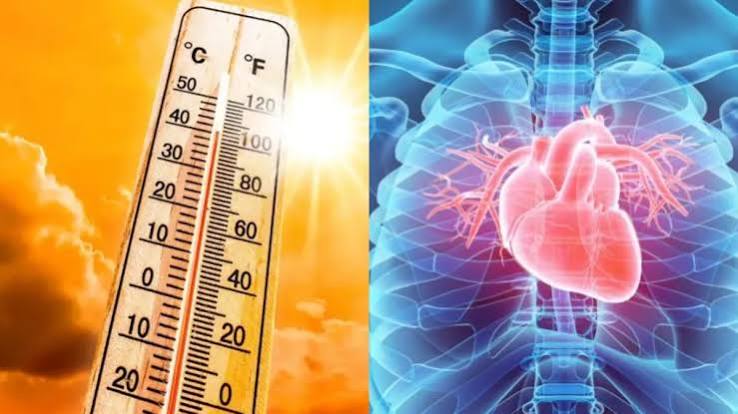
One of the most important but less frequently discussed effects of extreme heat is its impact on the heart. When the body becomes hot, the heart has to work harder to circulate blood towards the skin so that excess heat can be released. At the same time, sweating causes the body to lose water and electrolytes. Dehydration can reduce circulating blood volume, forcing the cardiovascular system to work even harder. For a healthy young person, the body may compensate for this additional burden. However, people with cardiovascular disease, hypertension, diabetes and other chronic conditions may be considerably more vulnerable. Extreme heat can aggravate existing cardiovascular problems and increase the risk of serious complications.
The kidneys are another major organ system affected by heat. Sweating is essential for cooling the body, but prolonged sweating results in the loss of water and electrolytes. If these losses are not adequately replaced, dehydration can reduce blood flow to the kidneys and increase the risk of acute kidney injury. This is particularly relevant for people who work outdoors for long periods. Agricultural workers, construction workers, traffic personnel, street vendors, delivery workers and others who spend several hours under direct sunlight may experience repeated heat exposure and dehydration. For such workers, heat protection should be regarded as an occupational-health necessity rather than simply a matter of personal comfort.
The effects of heat also extend to the brain. Excessive heat and dehydration can cause headache, dizziness, weakness, irritability and difficulty concentrating. As body temperature continues to rise, neurological symptoms can become more serious, including confusion, altered consciousness and seizures. This has important implications for everyday life. A student studying in an overheated room, a driver travelling for several hours, a factory worker operating machinery or a healthcare professional working during an exhausting shift may experience reduced concentration and alertness when exposed to excessive heat. Therefore, heat is not only a medical issue but also a workplace safety, educational and productivity issue.
Perhaps one of the most overlooked consequences of rising temperatures is their effect on sleep. Hot nights can be particularly disruptive because the body requires a reduction in core temperature to initiate and maintain normal sleep. When bedroom temperatures remain high, people may find it difficult to fall asleep or may wake repeatedly during the night. Persistent sleep disruption can result in daytime fatigue, irritability, poor concentration and reduced productivity. For students, healthcare workers, drivers and people working in safety-sensitive occupations, inadequate sleep can have consequences that extend beyond tiredness.
The relationship between heat and mental health is another area receiving increasing scientific attention. Extreme heat can contribute to physical discomfort, sleep deprivation, fatigue and psychological stress. People may become more irritable, anxious or emotionally exhausted during prolonged periods of excessive heat. While research on the precise relationship between heat and mental-health outcomes is still developing, there is growing recognition that climate-related health planning must consider psychological well-being alongside physical illness. A prolonged period of extreme heat can create a cycle in which heat disrupts sleep, poor sleep increases fatigue and irritability, and accumulated stress further affects mental well-being.
Importantly, the health effects of extreme heat are not experienced equally by everyone. Older adults are particularly vulnerable because the body’s ability to regulate temperature can decline with age. Infants and young children are also at increased risk because their bodies can become dehydrated more rapidly. People living with cardiovascular, respiratory, kidney and metabolic diseases may have greater difficulty coping with excessive heat. Individuals taking certain medications may also require particular attention because some medicines can influence hydration, sweating or the body’s response to heat. However, medications should never be stopped or altered without medical advice.
Outdoor workers represent another group requiring special attention. A significant part of India’s workforce is engaged in agriculture, construction, transportation and other occupations that require outdoor activity. These workers may have little control over their working environment and may be exposed to direct sunlight for several hours. Access to drinking water, shade, rest periods, appropriate clothing and heat-sensitive working schedules can significantly reduce the risk of heat-related illness. Protecting workers from extreme heat should therefore become an integral component of occupational-health policies.
Heat is also an issue of social and health inequality. A person working in an air-conditioned office and a person working under the open sky may experience the same weather conditions very differently. Similarly, families living in well-ventilated homes with reliable electricity and access to cooling facilities have greater protection than those living in poorly ventilated housing without adequate cooling. Access to clean drinking water, healthcare, shade and safe working conditions can determine whether an individual remains healthy during a heatwave. Consequently, heat preparedness must be viewed not only as an environmental issue but also as a matter of health equity.
Another important factor is humidity. Temperature alone does not determine how stressful heat is for the human body. When humidity is high, sweat does not evaporate efficiently from the skin. This reduces the body’s ability to cool itself and can make even moderately high temperatures physiologically stressful. This is particularly important in regions where high temperatures and humidity occur together. Therefore, public-health authorities increasingly need to consider measures that account for both temperature and humidity when assessing heat risk.
The question is no longer simply, “How hot will this summer be?” The more important question is, “How prepared are we to protect human health in a hotter world?” Because heat is no longer merely a weather story. It is a health story—and increasingly, it is becoming an emergency.
Climate change adds another dimension to this problem. Heatwaves have always occurred, but a warming climate is increasing concern about the frequency, duration and intensity of extreme heat events. As temperatures rise, communities may experience more frequent periods during which the human body struggles to maintain a safe internal temperature. This does not mean that every hot day will result in a health emergency, but it does mean that healthcare systems, workplaces, schools and communities must be better prepared for prolonged periods of extreme heat.
The good news is that many heat-related illnesses are preventable. Individuals can reduce their risk by drinking adequate fluids, avoiding unnecessary exposure to extreme heat, limiting strenuous physical activity during the hottest part of the day and wearing light, loose-fitting clothing. Homes should be kept as cool and well ventilated as possible. Elderly family members, young children and people with chronic illnesses should be checked regularly during periods of extreme heat. Outdoor workers should have access to drinking water, shaded rest areas and appropriate work-rest schedules.
Public awareness is equally important. People should recognise the early signs of heat exhaustion, including excessive sweating, weakness, dizziness, headache, nausea and intense thirst. If a person develops confusion, altered consciousness, seizures or severe overheating, the situation may represent heatstroke and requires urgent medical attention. Early recognition can make the difference between a manageable heat-related illness and a life-threatening emergency.
However, individual precautions alone cannot solve the larger problem. Heat-health preparedness requires coordinated action. Governments and local authorities need effective heat-action plans, early-warning systems and public communication strategies. Cities need more trees, green spaces and shaded public areas. Buildings should be designed with ventilation and heat resilience in mind. Employers need to protect outdoor workers through appropriate schedules, rest periods and access to water. Healthcare facilities need to prepare for increased demand during extreme heat events.
For India, the challenge is particularly important because the country contains enormous climatic, geographical and socioeconomic diversity. What may be considered an uncomfortable temperature in one region may represent an extreme condition in another. Kashmir and other traditionally cooler regions are not immune to changing climate patterns either. As weather patterns change, communities that historically experienced fewer extreme-heat events may also need to reconsider their preparedness.
The health conversation around climate change must therefore move beyond the familiar images of heatstroke and dehydration. The real impact of heat is much broader. It affects the cardiovascular system, kidneys, brain, sleep, mental health, workplace productivity and the quality of everyday life. Its consequences are often invisible until they become serious.
For decades, public health has focused on infectious diseases, malnutrition, sanitation and chronic illnesses. These remain critically important. But a warming climate is adding a new dimension to the health landscape. Environmental conditions themselves are becoming increasingly important determinants of disease and well-being.
The thermometer measures temperature, but it does not measure the strain placed on the human body. A hot day may appear to be just another number on a weather report, yet behind that number can be increased cardiovascular stress, dehydration, kidney injury, poor sleep, reduced concentration and psychological exhaustion.
The way society responds to heat must therefore change. Heat should no longer be treated simply as an uncomfortable feature of summer. It must be recognised as a growing public-health challenge that requires prevention, awareness, scientific research and coordinated policy action.
The question is no longer simply, “How hot will this summer be?” The more important question is, “How prepared are we to protect human health in a hotter world?”
Because heat is no longer merely a weather story.
It is a health story—and increasingly, it is becoming an emergency.
Comments are closed.