

Dr. Waseem Qader
“Nature operates on geological time, completely indifferent to human convenience, and the locked plates beneath will eventually shift.”
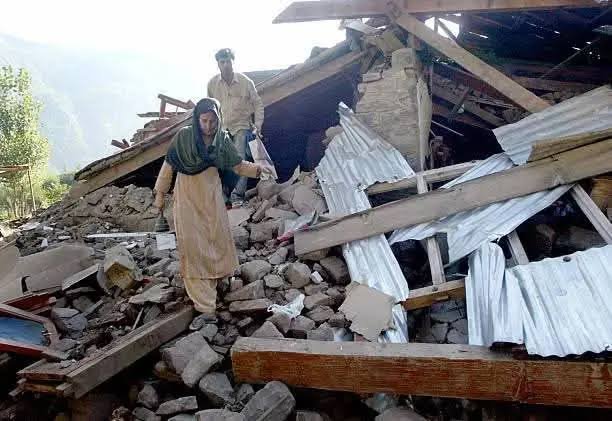
October 8 is not just a date on the calendar for the people of the Karnah Valley; it is a permanent scar. Twenty-one years ago today, at 08:50 AM, a catastrophic earthquake violently ruptured the land. In an instant, over 300 lives were lost in Karnah alone, more than 1,800 people were injured, and up to 90% of residential homes and schools were completely flattened.
With the passage of over two decades, it is dangerously easy to fall into a false sense of security as concrete cures and memory fades. But the message to Karnah this anniversary is urgent: the 2005 disaster was not a historical anomaly, it was a warning sign of the vulnerabilities that remain if an earthquake of the same intensity strikes again.
In recent studies, researchers have re-evaluated the tectonic strain building beneath the northwest Himalaya in the “Kashmir Seismic Gap”. The data proves that the 2005 earthquake did not fully release the region’s accumulated energy.
The active convergence of the Indian plate continues to pack immense strain into a completely locked boundary capable of triggering a catastrophic hazard if an earthquake of the same intensity strikes again. Karnah sits directly on the frontline of this hazard, yet the modern landscape is actively compounding this risk by making severe structural mistakes above ground while tearing down vital natural protections.
A critical, overlooked hazard is the extreme landslide vulnerability of Karnah’s terrain, which is naturally dominated by fractured mudstone-sandston, metamorphic sequences and steep, unstable slopes. This fragility is being dangerously multiplied by rapidly eroding forest cover and widespread deforestation across the hillsides. A healthy forest network acts as a primary mechanical defense because deep, interlocking tree roots serve as natural anchors that bind loose topsoil together and increase slope resistance.
By clearing these forests for timber and expanding infrastructure, the hillsides have been stripped of their natural armor. If an earthquake of the same intensity strikes again, the combination of intense shaking and barren slopes will trigger unprecedented landslides. These will not just block the 10,200-foot Sadhna Pass as they did in 2005, but will completely erase entire mountain flanks, isolating Karnah from Kupwara for weeks and making external, immediate rescue operationally impossible.
The physical behavior of the land is especially dangerous along the steep gorges, where the young streams carve deeply through highly fractured rock formations. During seismic shaking, these narrow, vertical gorges behave like acoustic and physical amplifiers, experiencing severe topographic ground motion amplification. The seismic waves bounce within the narrow valley walls, throwing loose stone and massive rock faces downward into the gorge bed.
This violent throwing of debris creates a secondary nightmare: localized landslide dams that choke the river flow. These unstable natural dams can burst within hours or days, unleashing catastrophic flash floods onto low-lying border settlements downstream. The deep, vertical topography means that communities settled along these canyon rims or valley floors are caught in a double trap of falling mountain faces from above and surging waters from below.
Simultaneously, a dangerous structural trap has emerged by completely casting aside the architectural wisdom of the past. Before 2005, local builders relied on traditional timber-laced systems like Dhajji-Dewari and Taq, which naturally bent and absorbed ground shock without falling, saving countless lives. However, forests are now severely eroded due to deforestation, fires, and ecological neglect, making the local availability of structural timber incredibly difficult while traditional building skills are rapidly fading.
As hundreds of crores are funneled into rapid development, the valley is instead being filled with heavy, non-ductile Reinforced Concrete (RCC) frames and unreinforced brick masonry. These modern buildings use heavy concrete slab roofing without the strict Seismic Zone V ductile detailing, such as horizontal lintel and plinth bands, required for high-risk zones. If an earthquake of the same intensity strikes again, these rigid, top-heavy concrete structures will not flex; instead, they will undergo sudden, brittle pancake collapses.
This shift away from lightweight materials highlights that the international post-disaster recovery directive of “Building Back Better” has been largely bypassed at the grassroots level. While institutional directives from the state government call for stricter seismic resistance and enhanced public safety guidelines during official reconstructions, this framework has not successfully governed the private housing rush over the past two decades.
Instead of upgrading and regularizing flexible vernacular patterns, modern self-construction across Tangdhar and Teetwal has simply mimicked urban masonry, increasing rigid structural mass without proper engineering supervision. True build-back-better recovery requires land-use control and strict enforcement of code compliance, yet the local trajectory has yielded an environment that is structurally stiffer and more vulnerable than it was in 2005.
Remembering the martyrs of 2005 must mean fighting for structural and environmental survival today. It is imperative to immediately enforce slope-specific regulations, halt aggressive toe-cutting of hillsides, and launch massive afforestation drives to stabilize barren slopes before the next major tremor shocks the terrain. Every single homeowner, local mason, and contractor must treat seismic building codes as life-saving barriers, integrating mandatory horizontal bands.
Furthermore, the local preference must shift away from heavy concrete roof slabs toward lightweight Corrugated Galvanized Iron (CGI) sheet roofing mounted on flexible frames. Because an earthquake’s destructive force multiplies with a building’s weight, replacing a heavy concrete ceiling with a lightweight CGI tin roof reduces top-heavy mass by up to 90%, preventing sudden structural collapse and drastically lowering the risk of fatal injuries if the ground moves violently.
Finally, because Sadhna Pass will undoubtedly close if an earthquake of the same intensity strikes again, the local administration and panchayats must treat Karnah as an isolated island, establishing independent, localized stockpiles of critical winter medical supplies, rations, and satellite communication nodes. Nature operates on geological time, completely indifferent to human convenience, and the locked plates beneath will eventually shift.
“Let the memories of those lost be honored by building with environmental respect and structural wisdom.”
Comments are closed.