
A Paradise Without Care
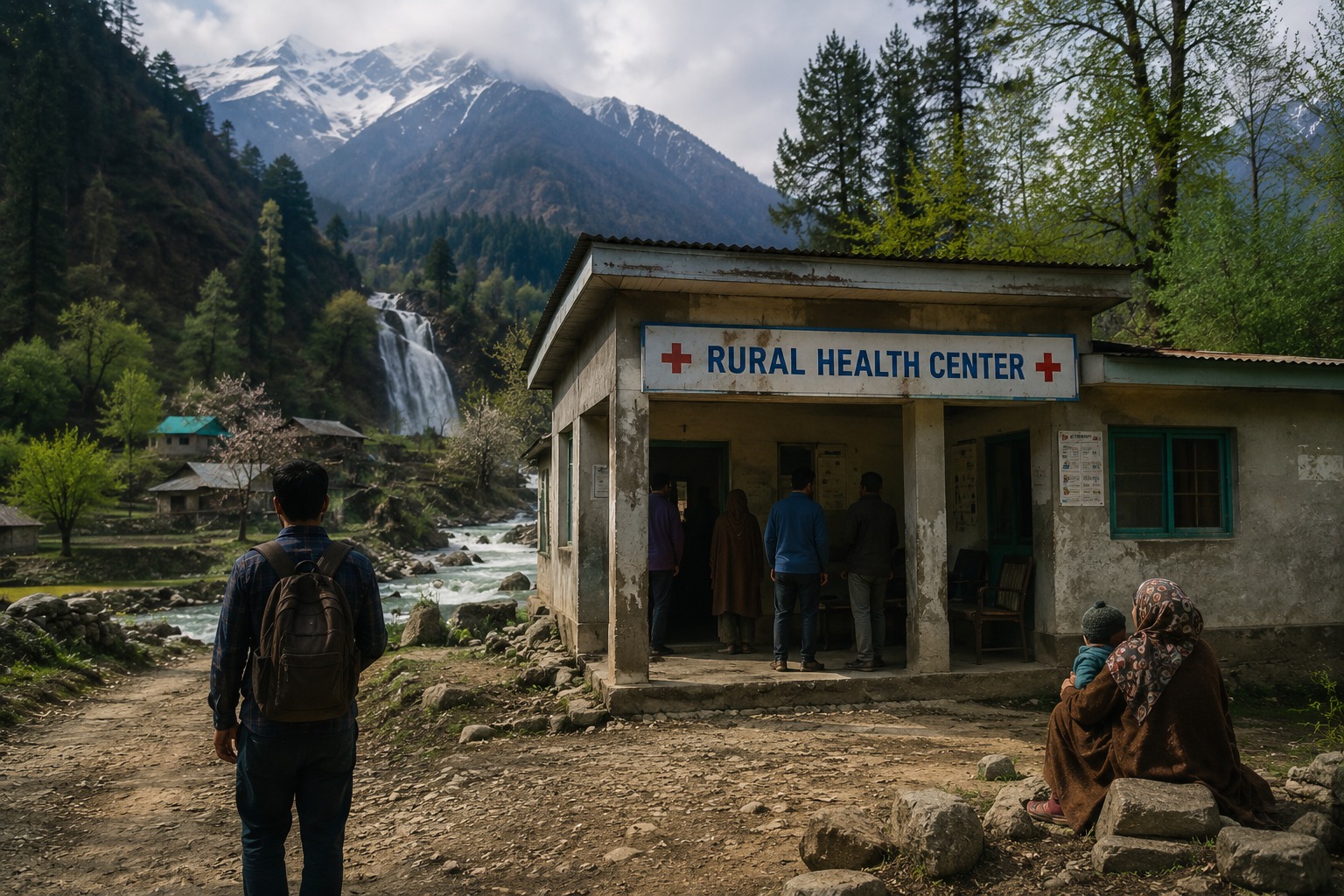
(This is a story of a rural area blessed with natural beauty, yet quietly suffering from the absence of basic healthcare. It reflects a moment in Suraj’s life that reveals a painful truth—that beauty alone can never replace essential human needs.)

Usuf Mir
“When the child finally survived after immense struggle, Suraj stood shattered — not as an Assistant Professor, not as a successful man, but simply as a father burdened by regret and helplessness.”
Suraj was a bright and promising young man from his village, known for his ability and gentle nature. He had earned quiet respect among his people. His village lay nestled in the lap of tall mountains, surrounded by lush green forests, with a soft, whispering waterfall adding to its charm. People from distant places would come here to experience its peace and untouched beauty.
One Sunday morning in the month of April, during his usual walk, Suraj met Ruhee, a visitor from the city. She appeared confident and composed, yet there was a certain heaviness in her eyes. Their brief exchange soon turned into a deeper conversation. They spoke about life, dreams, and the silent struggles hidden behind smiling faces.
Ruhee shared that she had everything one could wish for. She had success, wealth, and recognition, yet something within her remained incomplete. Suraj listened quietly and responded with simple, honest words. There was a sincerity in his thoughts that touched her.
Before leaving, she invited Suraj to come to the city for higher studies, where better opportunities and facilities were available. After some hesitation, Suraj accepted.
Time passed. With her support and his own hard work, Suraj completed his doctorate in engineering and was appointed as an Assistant Professor. Over time, their understanding deepened into love, and they married. A year later, they were blessed with a baby boy. Despite their settled life in the city, they often returned to the village. Ruhee, in particular, found comfort in its simplicity and natural charm.
During one such visit, their child developed a fever on the way. Concerned, Suraj stopped at a nearby local hospital. The facility was poorly equipped, and the doctor prescribed medicine without proper examination.
“Doctor, you haven’t even checked the child. How can you prescribe medicine like this?” Suraj asked.
“Are you a doctor?” came the cold reply.
Suraj fell silent and followed the prescription.
By the time they reached home, the child’s condition had worsened. He became unresponsive. In panic, the family rushed him to another hospital and then to a super-specialty center, where the doctors were deeply alarmed by his condition.
“Why was this medicine given?” they questioned.
After thorough treatment, the child survived—but recovery came at a cost. He now required long-term treatment and constant medical care.
Suraj stood there helpless—not as a professor, but as a father weighed down by regret.
That day changed everything. He never returned to his village again—not because its beauty had faded, but because he had seen a painful truth hidden beneath it.
Beauty alone is not enough if basic care is missing.
“The story quietly reminds us that development is not measured only through roads, buildings, or scenic beauty. True progress exists where human dignity, healthcare, safety, and essential services are available equally to every citizen.”
Comments are closed.