

Shabeer Ahmad Lone
“Heritage is not merely inherited; it is entrusted. As Riegl recognized, it holds layered values; as Lowenthal warned, it is continually reshaped; as UNESCO affirms, it is a legacy passed between generations; and as Laurajane Smith clarifies, it is a cultural process, not a thing. What ultimately endures is our collective responsibility to care.”
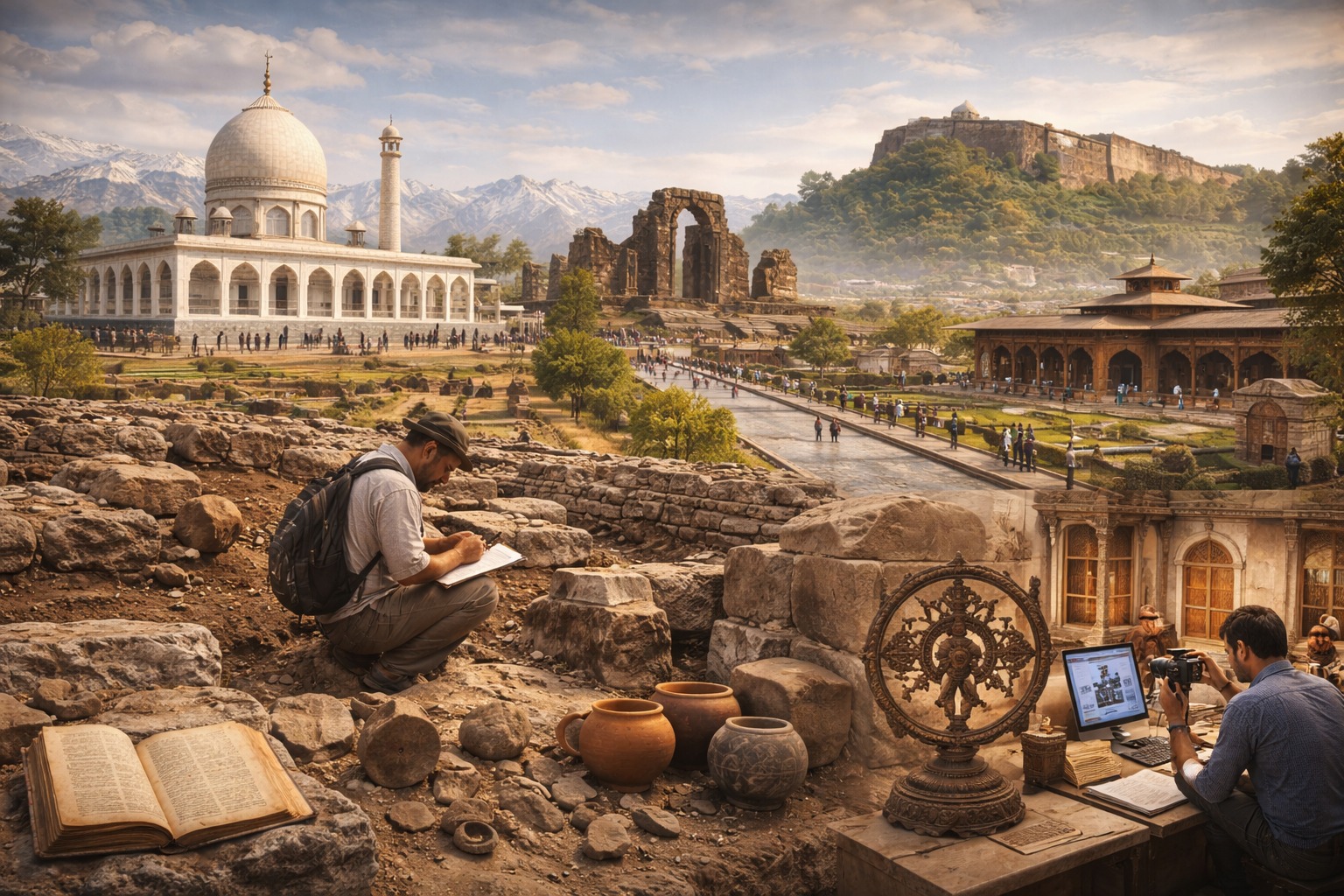
Preserving cultural heritage is neither a passive recollection of former glories nor a nostalgic indulgence; it is a profound ethical and civic imperative that sustains the dynamic continuity of human society. Cultural heritage-whether monumental forts and sacred mosques, archaeological landscapes, cultural artifacts and architectural masterpieces, royal legacies, and living traditions/the intangible practices of ritual, language, and collective memory-embodies the diversified values that define who we are as communities and as a civilization.
These values, spanning historical, aesthetic, social, spiritual, and use dimensions, are not static relics but living testaments to shared identity, memory, and experience that evolve through human engagement and interpretation over time. Heritage, thus, is a complex cultural system whose significance is socially constructed, contextually contingent, and constantly renegotiated by multiple stakeholders across generations.
Global frameworks like the UNESCO Conventions articulate heritage not simply as objects to be conserved but as vibrant agents of social cohesion, sustainable development, inclusive identity, and human dignity, capable of fostering belonging, resilience, and intercultural dialogue across diverse societies.
“Preservation is not about nostalgia or admiration of the past. It is an ethical and civic responsibility that sustains the continuity of society itself.”
Comments are closed.