

Peer Urfa Moin
“Blessed with unmatched natural beauty and cultural richness, Jammu and Kashmir holds a unique place in both India’s geography and its economic imagination. Tourism has emerged as one of its strongest engines of growth.”
Popularly known as the “Paradise on Earth,” Jammu and Kashmir holds a unique place not only in the geographical landscape of India but also in its economic and cultural imagination. Blessed with unparalleled natural beauty, snow-capped mountains, lush green valleys, serene lakes, diverse wildlife, and a rich cultural heritage, the region has long attracted visitors from across the globe. Tourism in Jammu and Kashmir is not merely about sightseeing; it is an immersive experience that combines nature, spirituality, culture, and hospitality. Over the years, this sector has evolved into one of the most significant contributors to the region’s economy, generating employment, encouraging entrepreneurship, and sustaining thousands of livelihoods directly and indirectly.
The tourism potential of Jammu and Kashmir is deeply rooted in its diverse geography. The region is home to some of the most breathtaking valleys such as the Kashmir Valley, Lidder Valley, Sindh Valley, and Chenab Valley, each offering a distinct experience to visitors. These valleys are not only scenic but also form the backbone of local economies where tourism supports small businesses such as handicrafts, local cuisine, transport services, and homestays. The natural beauty of these areas encourages eco-tourism and adventure tourism, including trekking, camping, and river rafting, thereby expanding the economic scope beyond traditional sightseeing.
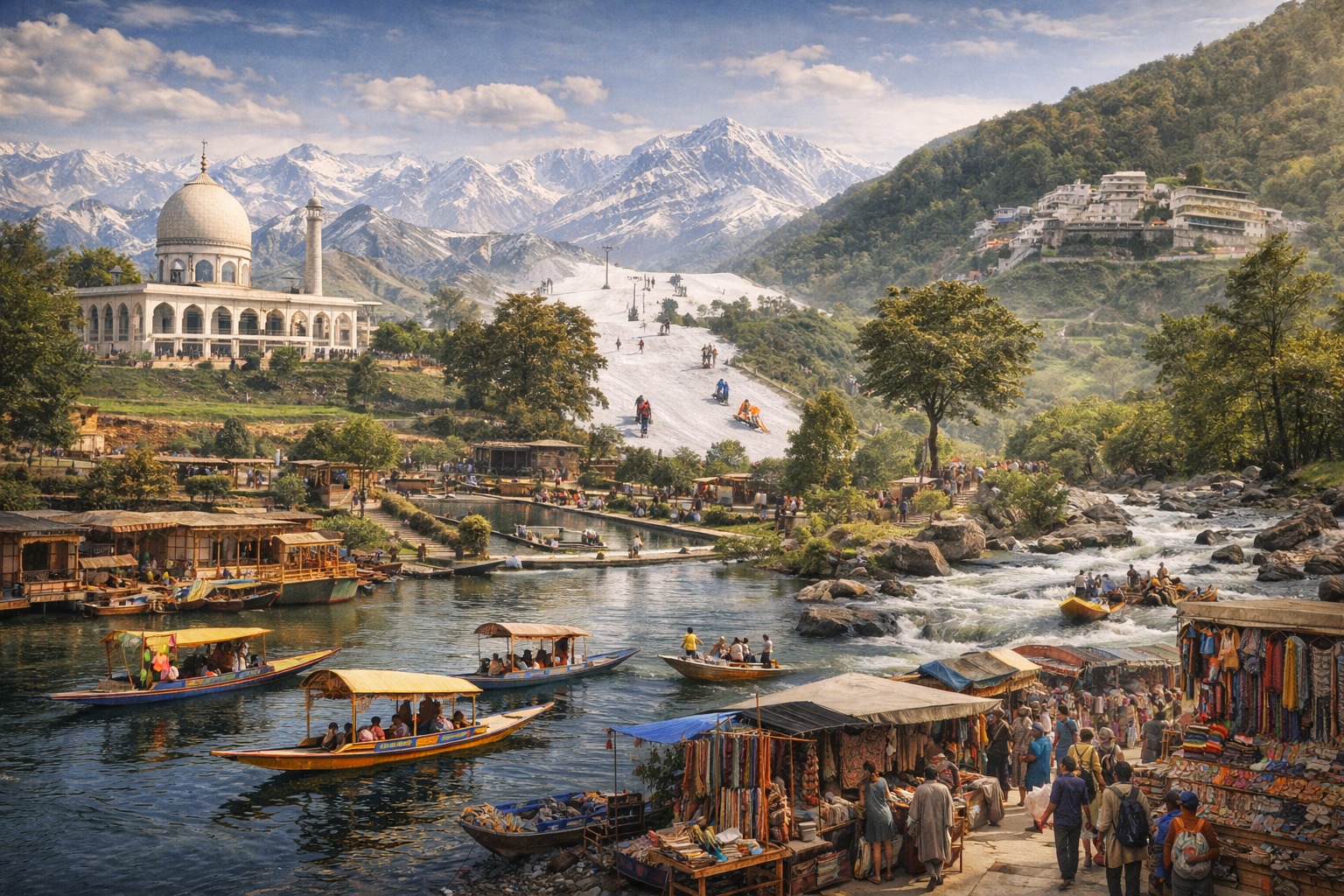
Among the major tourist hubs, Srinagar stands out as the heart of Kashmir’s tourism industry. The iconic Dal Lake, with its houseboats and shikaras, represents not only the beauty of the region but also a source of livelihood for thousands of families. Religious and cultural landmarks such as the Hazratbal Shrine attract devotees and tourists alike, reinforcing the role of spiritual tourism in the local economy. The famous Mughal gardens, including Shalimar Bagh and Nishat Bagh, reflect the historical and architectural richness of the region while also serving as major tourist attractions that contribute to revenue generation and cultural preservation.
Adventure and winter tourism have also gained prominence, particularly in destinations like Gulmarg, which is widely regarded as one of the premier ski resorts in India. The inflow of tourists during winter months significantly boosts the hospitality sector, transport services, and local businesses. Similarly, Pahalgam plays a dual role as both a scenic destination and a base camp for the sacred Amarnath Yatra. Religious tourism, especially pilgrimages such as the Vaishno Devi Temple, attracts millions of devotees every year, creating a steady flow of economic activity and supporting a wide network of services ranging from accommodation to transportation and retail.
The Jammu region, often described as the gateway to Kashmir, holds its own significance in the tourism economy. Known as the “City of Temples,” Jammu offers a diverse range of attractions, including historical forts, religious sites, and cultural landmarks. Structures like Bahu Fort, Amar Mahal Palace, and Raghunath Temple not only preserve the region’s history but also draw tourists, thereby contributing to the local economy. The presence of multiple religious sites representing different faiths highlights the cultural diversity of the region and strengthens its appeal as a holistic tourism destination.
From an economic perspective, tourism in Jammu and Kashmir holds immense untapped potential that can be further enhanced through strategic planning and investment. In a largely capitalist economic framework, the efficient use of resources and the encouragement of private sector participation can significantly boost tourism productivity. The development of modern infrastructure such as shopping complexes, cafes, hotels, and entertainment hubs can create a more vibrant tourism ecosystem. These developments not only attract tourists but also generate employment opportunities for the local population, thereby improving overall economic conditions.
The role of the government is equally critical in shaping the future of tourism in the region. By introducing supportive policies, offering financial assistance, and encouraging entrepreneurship through loans and incentives, the government can empower local businesses and stimulate economic growth. Initiatives aimed at skill development and capacity building can further enhance the quality of services provided to tourists, ensuring a more satisfying and sustainable tourism experience.
Infrastructure development remains one of the most crucial factors in unlocking the full economic potential of tourism. The construction and maintenance of roads, highways, and transport networks are essential for improving accessibility to remote tourist destinations. Better connectivity not only facilitates the movement of tourists but also ensures the smooth functioning of supply chains that support the tourism industry. At the same time, the preservation and maintenance of historical and cultural heritage sites must be prioritized, as these are key assets that define the identity and attractiveness of the region.
Equally important is the need for sustainable and responsible tourism practices. Jammu and Kashmir’s natural beauty is one of its greatest strengths, but it is also fragile and requires careful protection. Eco-friendly initiatives, waste management systems, and awareness campaigns can help preserve the environment while allowing tourism to flourish. Sustainable tourism ensures that economic benefits are achieved without compromising the ecological balance or cultural integrity of the region.
For tourism-driven economic growth to be truly effective, there must be strong structural accountability and transparency in governance. Proper checks and balances, decentralization of economic planning, and active participation of local communities are essential for ensuring that the benefits of tourism reach all sections of society. Awareness programmes can educate people about the importance of tourism and encourage them to actively participate in and benefit from this sector.
In essence, Jammu and Kashmir is not only a land of natural splendour but also a region of immense economic promise. Its unique combination of scenic beauty, cultural richness, and spiritual significance provides a strong foundation for a thriving tourism industry. By adopting a balanced approach that combines investment, infrastructure development, environmental conservation, and community participation, the region can transform tourism into a powerful engine of economic growth and social development.
The responsibility, however, does not lie solely with policymakers or businesses. It extends to every individual who is a part of this region. By working collectively towards improving infrastructure, preserving heritage, promoting sustainable practices, and ensuring transparency, the people of Jammu and Kashmir can shape a prosperous future. Tourism, when nurtured thoughtfully, has the potential not only to boost the economy but also to strengthen the social and cultural fabric of the region, making it a better place to live in and a more meaningful place to visit.
Comments are closed.