

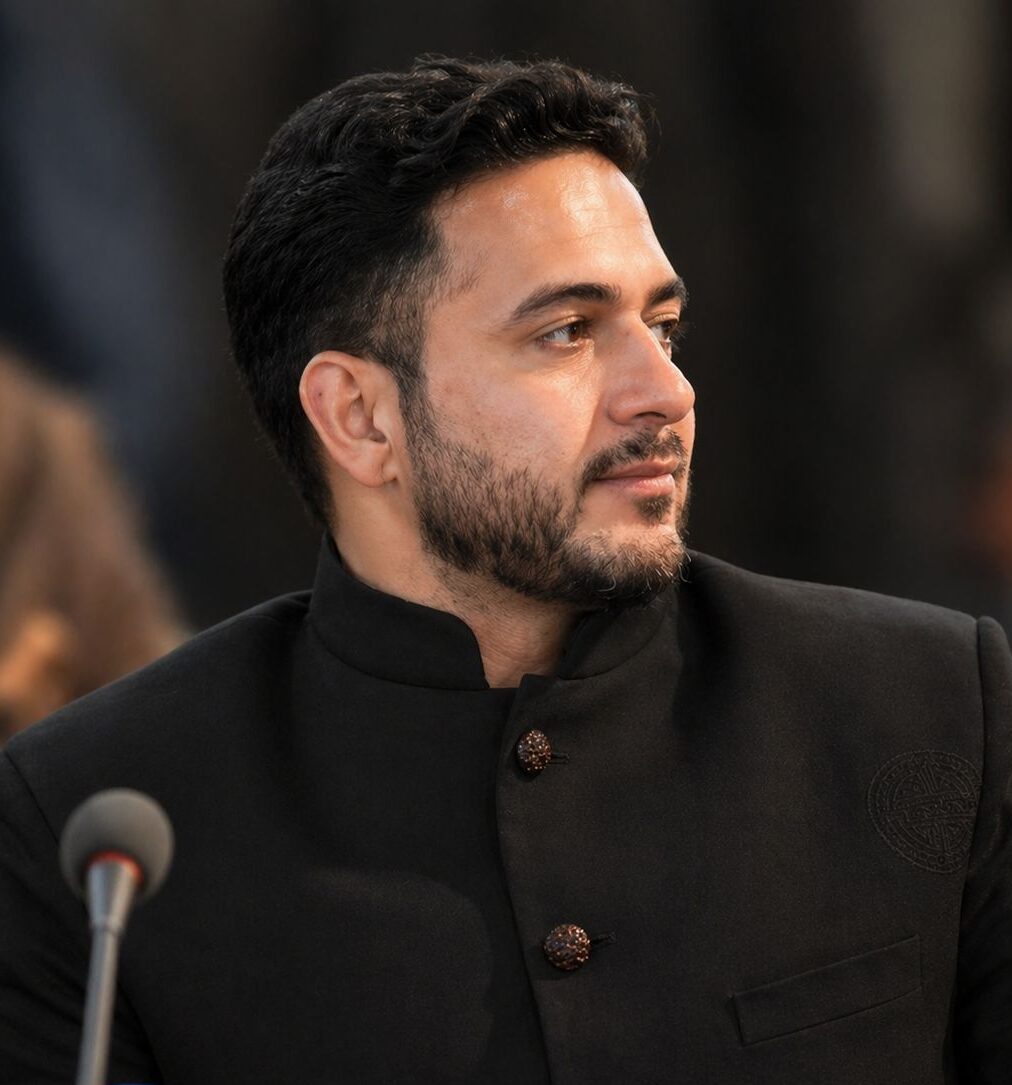
Advocate Mudasir Naqshbandi
“A successful fight against drugs requires more than arrests and legal action; it demands awareness, rehabilitation, education, emotional support, and collective participation from society as a whole.”
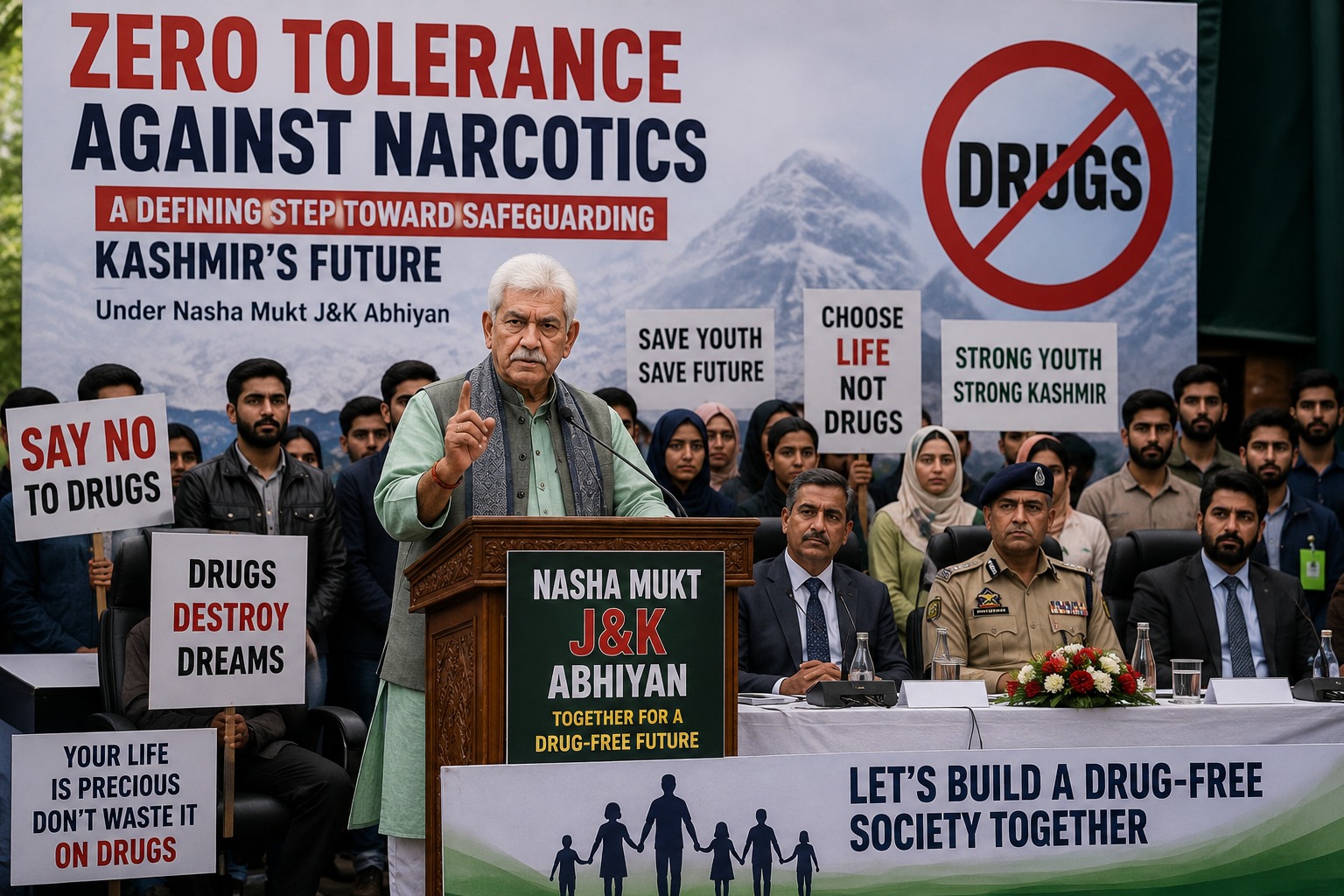
In a strong show of support for the ongoing fight against drug abuse in Jammu & Kashmir, prominent voices from across society have endorsed the message and vision of the Hon’ble Lieutenant Governor under the Nasha Mukt J&K Abhiyan. The initiative, which calls for a united and decisive stand against the growing menace of narcotics, has been widely welcomed as a timely and necessary step towards safeguarding the future of the region’s youth and reinforcing the social fabric of the Union Territory.
In a region already grappling with complex socio political challenges, the growing menace of narcotics has emerged as one of the most dangerous threats to the social fabric of Jammu & Kashmir. Drug abuse not only destroys individuals but also dismantles families, erodes community values, and fuels criminal networks that undermine long term peace and stability.
Against this backdrop, the recent decisive action taken by the Hon’ble Lieutenant Governor of J&K against narco networks and narco-terrorism deserves strong appreciation and public support. The newly issued order targeting drug mafias signals a firm and unambiguous commitment to a zero-tolerance policy. This is not merely an administrative move it is a bold declaration that the future of Kashmir’s youth will not be held hostage by those who profit from addiction and despair.
By tightening the legal and enforcement framework, the administration has taken a crucial step toward dismantling the organized networks that have been poisoning society from within.
Narcotics trafficking in Jammu & Kashmir is not an isolated criminal issue, it is deeply intertwined with larger security concerns.
The term narcoterrorism itself highlights the dangerous nexus between drug money and activities that destabilize the region. Therefore, cracking down on these networks is not only about public health it is equally about national security and preserving the integrity of the region.
The Lieutenant Governor’s action comes at a time when families across Kashmir are increasingly alarmed by the rise in drug addiction among youth. Schools, colleges, and neighborhoods have all felt the ripple effects of this crisis. In such a scenario, strong governance and proactive intervention are essential. The recent measures send a clear message: the administration stands with the people, especially with parents and communities who have been silently battling this epidemic.
However, while enforcement is critical, it must go hand in hand with awareness, rehabilitation, and community participation. Eliminating the supply chain is only one side of the battle; addressing demand through education, counseling, and support systems is equally important. Civil society, religious leaders, educators, and families must now come forward to complement the government’s efforts and ensure a holistic response to the crisis.
This moment should be seen as a turning point. The decisive action against drug mafias has the potential to restore hope and confidence among the people. It reinforces the belief that governance, when guided by clarity and courage, can confront even the most deep-rooted challenges.
The fight against drugs is, ultimately, a fight for the soul of Jammu & Kashmir for its youth, its dignity, and its future. The recent order by the Lieutenant Governor is a step in the right direction, and it must be supported, strengthened, and sustained until the menace is eradicated completely.
Another important dimension of this crackdown is its deterrent effect. For far too long, drug peddlers and organized networks operated with a sense of impunity, exploiting loopholes and the vulnerability of society. The latest order changes that narrative decisively. It sends a powerful warning that those involved in this illegal trade will face strict consequences, and that the law will pursue them relentlessly.
Such firmness is essential to break the confidence of these networks and discourage new entrants into this destructive cycle. Equally significant is the message of reassurance it delivers to the common people. In recent years, there has been a growing sense of anxiety among families witnessing the rapid spread of drug abuse in their communities. The governors strong stance offers renewed confidence that their concerns are being heard and acted upon. It restores faith in institutions and strengthens the bond between the administration and the people it serves.
Moreover, this initiative has the potential to inspire a broader societal movement against drugs. When the government leads with conviction, it creates space for communities to rise with equal determination. Youth groups, NGOs, and local organizations can play a pivotal role in spreading awareness, identifying vulnerable individuals, and promoting a culture that rejects substance abuse. This collective responsibility is crucial in ensuring that the impact of such policies is long-lasting and deeply rooted.
Finally, it is imperative to recognize that the success of this mission will depend on sustained commitment. One strong order, however impactful, must be followed by continuous monitoring, strict implementation, and adaptive strategies to counter evolving threats.
The fight against narcotics is not a one-time effort but an ongoing battle. With consistent political will, administrative efficiency, and public cooperation, Jammu & Kashmir can move toward a future that is free from the shadow of drugs and full of promise for its younger generations.
Comments are closed.