The Gurez Tragedy Exposes the Grim Reality of Healthcare in Remote Kashmir.Carrying a child in her womb for nine months is one of the most extraordinary journeys in a woman’s life. It is a journey filled with hope, sacrifice, anxiety, anticipation and an indescribable sense of joy.
For a mother, pregnancy is not merely a biological process, it is the beginning of a lifelong emotional bond with a life she has not yet held in her arms but has already embraced in her dreams. Every passing day brings new expectations, silent prayers and countless imaginations about the future of the child she is preparing to welcome into this world.
A mother imagines holding her baby, watching the child take the first steps, hearing the first words and guiding those little hands through the challenges of life.
Alongside her, a father dreams of building a future for his family while the entire household eagerly awaits the arrival of a new member. For nine months a family prepares not merely for a birth but for the beginning of a new chapter in its life.
But what happens when the very system entrusted with protecting this precious journey becomes a source of despair? What happens when a mother approaches a healthcare facility seeking medical assistance and returns to the world no more, taking with her the life developing in her womb and leaving behind a family whose dreams have been shattered forever?
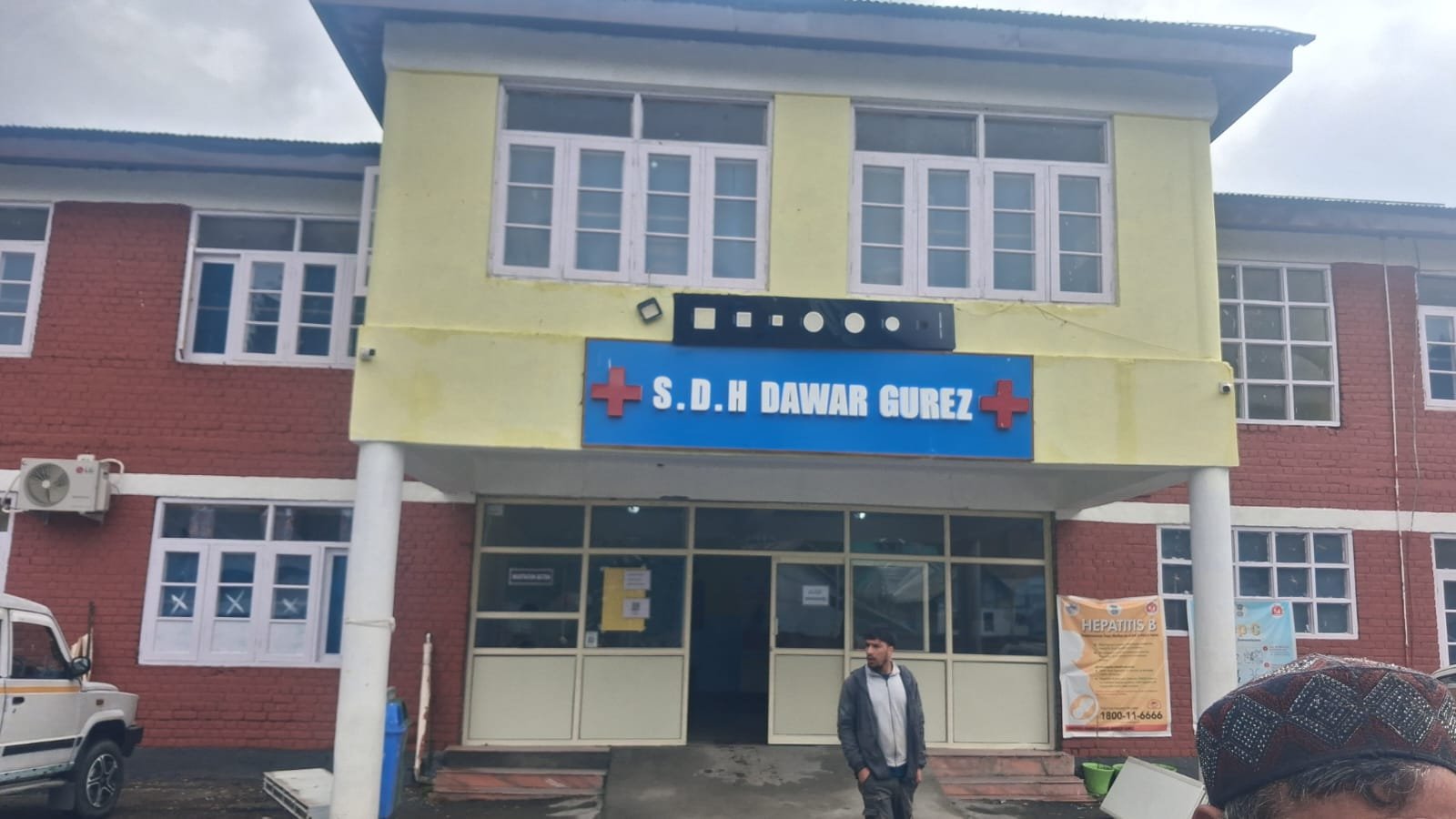
The reported tragedy involving a pregnant woman from the far-flung Tulail area of Gurez who died at the Sub-District Hospital in Gurez amid the reported absence of a gynaecologist and essential medical support raises deeply disturbing questions about the state of healthcare in remote areas of Jammu and Kashmir.
It is not simply a story of personal loss. It is a painful reminder of the consequences that can follow when essential healthcare services are unavailable, emergency decisions become difficult and vulnerable patients are left dependent on a system that may not be adequately prepared to save them. When a mother loses her life while seeking medical care, it is not only a family that suffers, the credibility of the entire healthcare system comes under scrutiny.
A Tragedy That Should Never Have Happened:
The reported death of the woman from Gurez along with her unborn child has brought the harsh realities of healthcare in remote Kashmir into sharp focus. According to the concerns raised following the incident, the absence of a gynaecologist, the reported unavailability of blood transfusion facilities and the handling of decisions concerning her transfer to a higher medical centre have become major points of public concern.
Reports and allegations surrounding the incident suggest that the woman was in a critical condition with her haemoglobin level reportedly as low as two. Such an extremely low level if medically confirmed represents a life-threatening emergency requiring urgent specialist assessment and appropriate treatment. In a situation where a pregnant woman is critically ill every minute matters.
The availability of trained medical personnel, emergency blood facilities, specialist obstetric care and a clear referral mechanism can make the difference between life and death. The most painful aspect of this tragedy is that the family had entrusted its hope to a healthcare institution.
A hospital is expected to provide immediate assistance, assess the severity of an emergency, stabilise the patient and arrange timely referral whenever the required treatment is beyond its capacity. When these expectations are not met, the consequences can be devastating.
It is important that the circumstances surrounding this particular case be established through an impartial investigation. However the questions raised by the incident cannot be dismissed as mere public outrage. They demand serious answers from the health authorities and the administration.
The family deserves the truth, and the public deserves assurances backed by concrete improvements rather than temporary statements of sympathy.
The Absence of a Gynaecologist. A Question of Basic Healthcare must be answered.
Gurez is a geographically remote region where harsh winters, heavy snowfall and difficult road conditions can isolate communities from the rest of the district. For residents of such areas access to healthcare is not a matter of convenience, it is a matter of survival.
Pregnant women are particularly vulnerable because complications can arise suddenly, even when a pregnancy has appeared normal until that point. Severe anaemia, haemorrhage, obstructed labour, pregnancy-induced hypertension and other obstetric emergencies require timely medical intervention.
In these circumstances the absence of a gynaecologist is not a minor administrative deficiency. It is a serious gap in a service that can determine whether a mother and her child survive. The question that demands an answer is straightforward.
If tourists can be encouraged to visit Gurez from different parts of the country why should the residents of this beautiful valley have to struggle for access to essential specialist medical care?
Tourism can bring recognition, employment and economic opportunities. The promotion of Gurez as a tourist destination may be a welcome development but tourism infrastructure cannot substitute for public healthcare. A destination’s beauty and popularity cannot become measures of its overall development while the people who live there remain anxious about receiving emergency treatment.
A region cannot be considered genuinely developed merely because its landscapes attract visitors. Development must also be measured by whether a pregnant woman can receive timely medical attention, whether an injured person can access emergency services and whether a critically ill patient can be transferred safely to a facility equipped to provide definitive treatment.
Blood Availability Is Not a Luxury, It Is a Lifesaving Necessity. One of the most disturbing concerns associated with this tragedy is the reported absence of blood transfusion facilities when the woman was said to have an extremely low haemoglobin level.
Blood transfusion can be a critical component of treatment in severe anaemia and certain obstetric emergencies, although the appropriate treatment depends on the patient’s clinical condition and the underlying cause. Such a situation requires urgent medical evaluation, appropriate blood testing, and timely access to compatible blood and other necessary interventions.
For a remote hospital serving a population exposed to difficult weather and transportation challenges, emergency preparedness must be a priority.
A hospital’s emergency response cannot depend on hope, improvisation or the assumption that a patient’s condition will remain stable until help arrives.
In remote areas the absence of essential facilities becomes even more dangerous because reaching an alternative hospital may take considerable time. Consequently emergency planning must account for geographical isolation, seasonal road closures and the possibility that routine transportation arrangements may suddenly become unavailable.
If a patient’s life depends on blood the system must have a plan to respond. If a specialist is unavailable there must be an alternative. If roads are blocked, emergency protocols must already exist. These are not unreasonable expectations. They are fundamental requirements of a healthcare system that claims to serve every citizen.
Another serious concern relates to the reported delay and decision-making surrounding the woman’s transfer from Gurez to a higher medical facility in Bandipora. When a patient’s condition exceeds the treatment capacity of a local hospital, medical personnel must assess the risks of remaining at the facility against the risks of transferring the patient.
This assessment requires clinical judgement, appropriate stabilisation, communication with the receiving hospital and the safest feasible transportation arrangements. Neither transferring a patient without adequate preparation nor keeping a critically ill patient in a facility that cannot provide the necessary treatment should become an automatic response.
The central question is whether the available options were assessed promptly, whether appropriate medical advice was sought, whether the patient’s condition was monitored adequately, and whether every reasonable effort was made to secure timely specialist care.
An investigation should not be conducted merely to calm public anger. Its purpose must be to establish the facts, identify responsibility where warranted and prevent similar tragedies in the future. Government Assurances Must Translate into Ground-Level Reality
Following tragedies of this nature public protests often emerge, political representatives issue statements and the administration announces an inquiry. These responses may be necessary but they are not sufficient. The real test begins after the headlines fade and public attention shifts elsewhere.
Government announcements about improved healthcare in remote areas must be evaluated against measurable outcomes. The number of buildings constructed, ambulances purchased or schemes announced cannot by itself establish that healthcare is accessible when a patient needs it most.
A hospital building without adequate doctors, medicines, diagnostic services and emergency facilities may offer little protection during a medical crisis. Similarly an ambulance without a functioning referral network cannot independently solve the problems created by geographical isolation.
The administration must move beyond symbolic assurances and develop a comprehensive healthcare strategy for Gurez and other far flung areas of Bandipora. This should include specialist staffing, emergency obstetric services, blood availability arrangements, adequate medical supplies, reliable communication systems and an effective referral mechanism for critically ill patients.
The government must also consider seasonal healthcare planning. If winter routinely makes road travel difficult, preparations should be completed before the onset of severe weather rather than improvised after an emergency occurs. A remote population cannot be expected to accept preventable suffering as the natural price of living in the mountains.
Tourists may arrive in search of adventure, landscapes and an escape from crowded cities. Residents however cannot treat their home as a temporary destination. They must live through every season, face the difficulties of winter, raise their children and depend on local institutions during illness and emergencies.
A tourist can choose when to visit and when to leave. A pregnant woman in an emergency does not have that luxury. The dignity of a region is reflected not only in the number of visitors it attracts but also in the quality of life it provides to its residents.
A Family Has Lost Its World The System Must Not Move On Unchanged.
Behind every statistic is a human story. Behind this tragedy is a husband who has reportedly lost both his wife and his unborn child, a family deprived of the happiness it had anticipated and dreams that will never take the shape their loved ones had imagined.
The child who was expected to enter the world, hold its parents’ fingers and begin a journey of discovery will never have that opportunity. The mother who spent months preparing emotionally and physically for this moment will never experience the joy of holding her baby. No compensation, inquiry report or administrative announcement can restore what this family has lost.
But the system can honour that loss by ensuring that another family is not forced to endure the same suffering because essential healthcare was unavailable or an emergency was not handled appropriately.
The purpose of raising these questions is not to pass judgement without establishing the facts. It is to demand that the circumstances be investigated honestly and that any shortcomings exposed by the tragedy be corrected without delay. A mother should not have to depend on geographical luck to survive childbirth. A family should not have to fear that the absence of a specialist or the unavailability of blood could turn a hospital visit into a permanent farewell and the people of Gurez should not have to choose between living in their ancestral homeland and accessing the basic healthcare services necessary to protect their lives.
A Mother’s Life Is More Valuable than Government Slogans:
The tragedy in Gurez is a painful reminder that development loses its meaning when it fails to protect human life. A government may promote tourism, celebrate infrastructure, announce welfare schemes and make tall claims about public services.
But the true measure of governance emerges when a citizen faces an emergency and needs the system to respond. If a pregnant woman cannot access essential medical care in time, the question is not whether enough promises have been made.
The question is whether those promises have reached her hospital, her doctor, her emergency ward and the treatment she needs to survive. Protests may eventually end. News headlines may disappear. Official inquiries may be completed. But for a husband who has lost his wife and unborn child the tragedy will remain a lifelong wound.
Let this not become another story that begins with a mother’s death, continues with public outrage and ends with administrative silence. Let it become the moment when the healthcare system is compelled to confront its shortcomings and make meaningful changes.
Because a mother’s life is not a statistic. An unborn child’s future is not an administrative detail. And the right to life-saving healthcare must never depend on where a person lives. If a woman can lose both her life and her unborn child while seeking medical assistance in the twenty-first century then the failure is not merely medical, it is a question of governance, accountability and our collective commitment to human dignity.


Comments are closed.