

Mahbooba Hassan
When a girl receives the opportunity to learn, she gains the ability to shape her own future and contribute to the progress of others.
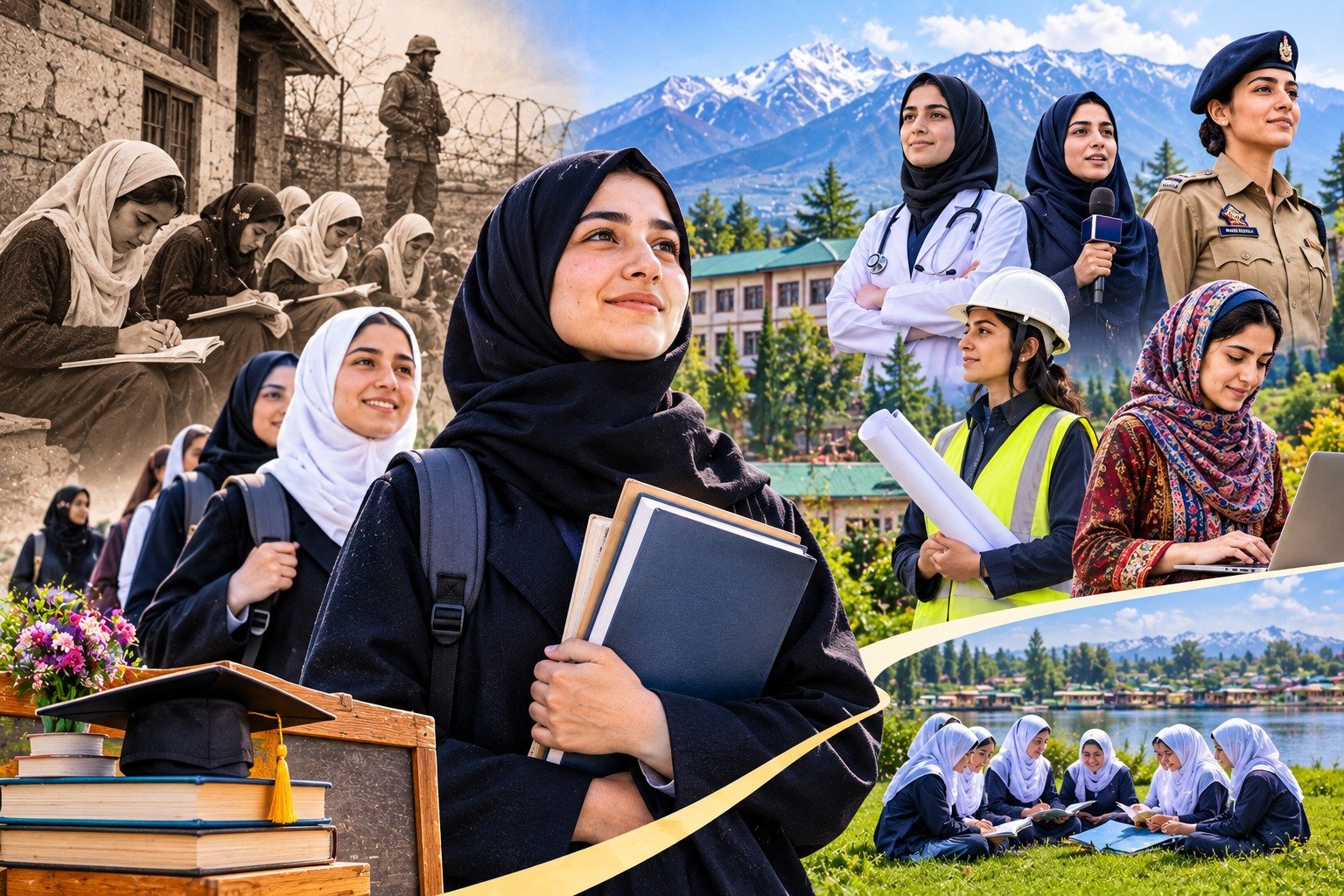
Education is more than attending school or earning a degree. It builds confidence, encourages independent thinking, and enables individuals to shape their own futures. In Kashmir, the journey of women’s education has witnessed significant changes over the decades. From periods when uncertainty and social circumstances restricted opportunities to a time when girls are increasingly pursuing higher studies and professional careers, this transformation reflects determination, awareness, and changing attitudes within society.
There was a time when continuing education was particularly difficult for many girls in Kashmir. During periods of unrest, schools and colleges frequently experienced disruptions. Classes were interrupted, examinations were postponed, and academic schedules became uncertain. Transportation difficulties and concerns about safety further affected students’ ability to attend educational institutions regularly.
For girls, these circumstances often created additional challenges. Many parents were hesitant to send their daughters outside their homes during uncertain situations. Even when girls wished to continue their studies, travelling to schools or colleges, particularly in distant towns and districts, could become difficult. In some families, higher education remained a distant possibility, while completing basic schooling itself required considerable effort.
A Gradual Change in Educational Awareness
Over the years, Kashmir has witnessed encouraging changes in educational awareness, particularly regarding the importance of educating girls. Families are increasingly recognising that daughters deserve equal opportunities to learn, develop their abilities and pursue careers according to their interests.
The changing picture is also reflected in literacy figures. According to Census-based data, female literacy in Jammu and Kashmir increased from 43.00 per cent in 2001 to 58.01 per cent in 2011.
Another significant development is the growing presence of female students in higher education. According to the All India Survey on Higher Education (AISHE) 2021–22, Jammu and Kashmir had approximately 2.07 lakh female students enrolled in higher education, compared with around 1.93 lakh male students. This encouraging difference highlights women’s increasing participation in universities, colleges and professional academic programmes.
J&K achieved full literacy status as a Union Territory in September 2026, becoming the first UT to accomplish a literacy rate of 98.43% due to efforts like Beti Bachao Beti Padhao and ULLAS since 2019. Girl child education has been promoted, with girls obtaining GERs of 114.5% in primary school, 80% in upper primary school, and 67.5% in secondary schools in 2024–25. Better enrollment rates and community efforts, along with government initiatives, have led to lower dropout rates among girls.
This improvement represents an important step towards greater educational participation among women. It also reflects the combined efforts of families, educational institutions, and initiatives aimed at expanding access to learning.
Parents are now more willing to support their daughters in pursuing university education, preparing for competitive examinations and exploring opportunities beyond their immediate surroundings. Young women are also showing greater interest in research, professional training, technology and other emerging fields.
Women Making Their Mark Beyond Classrooms
The progress of women’s education is increasingly visible beyond academic institutions. Kashmiri women are contributing to different sectors as doctors, teachers, engineers, researchers, administrators, journalists, and entrepreneurs. Their achievements demonstrate how education can create opportunities for professional growth while strengthening their ability to participate in society.
An educated woman is better equipped to make informed decisions, express her opinions and understand the issues affecting her community. Her contribution extends beyond personal achievements, influencing family well-being, children’s education and social development.
Women are also becoming increasingly involved in community initiatives and social organisations. They are raising awareness about healthcare, menstrual hygiene, child education, environmental protection and women’s rights. Through these activities, they are encouraging others to recognise their potential and participate in addressing social concerns.
Entrepreneurship has opened another promising avenue. Many women are developing small businesses, promoting traditional Kashmiri products, exploring digital platforms and converting their skills into economic opportunities. These efforts encourage financial independence, create employment possibilities, and inspire other women to consider self-employment.
Their growing involvement in leadership and decision-making is equally important. Women’s experiences and perspectives can bring valuable insights into discussions concerning education, healthcare, employment, and community welfare. Their meaningful participation helps create a more inclusive approach to development.
Challenges That Still Need Attention
Despite considerable progress, educational opportunities are not equally accessible to every girl. Young women from remote areas and economically disadvantaged families may still encounter difficulties related to transportation, financial resources, digital access and career guidance. Some also require greater encouragement to pursue professional ambitions and participate confidently in wider academic and public spaces.
Addressing these concerns requires collective responsibility. Families must continue supporting their daughters’ aspirations, while schools and colleges should provide guidance, practical learning opportunities and an environment where girls can express themselves freely. Community organisations and institutions can further contribute by promoting awareness and helping students access available educational resources.
A Future Built Through Education
Kashmir’s changing educational landscape reflects more than an improvement in literacy or enrolment figures. It represents a gradual shift in aspirations, family attitudes and the role women are playing in society. The girls who once faced uncertainty about continuing their studies are increasingly entering universities, building professional careers and taking initiatives that benefit their communities.
The journey is still progressing, and sustained efforts are necessary to ensure that every girl, regardless of her background or location, receives the opportunity to fulfil her potential.
Ultimately, the success of women’s education should not be measured only by degrees or academic achievements, but also by confidence, independence, leadership and meaningful participation.
When a girl receives the opportunity to learn, she gains the ability to shape her own future and contribute to the progress of others. An educated woman does not simply transform her individual circumstances; she becomes an important part of building a more aware, inclusive and progressive Kashmir.
An educated woman does not simply transform her individual circumstances; she becomes an important part of building a more aware, inclusive and progressive Kashmir.
Comments are closed.