


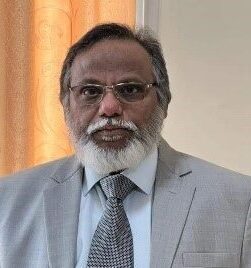
Dr. Reyaz Ahmad
“The real distinction lies in our willingness to listen, observe and reconsider before consequences force us to do so. Wisdom begins when we learn to value an observation regardless of the age, status or popularity of the person offering it.”
Almost every Indian household knows the sting of four familiar words: “I told you so.” They are often heard after an avoidable mistake: a risky financial decision, a quarrel that went too far, or a warning dismissed as unnecessary interference. By then, the lesson has become expensive. The question is why we so often insist on paying for knowledge that was available to us for free.
An old insight captures the dilemma: the wise learn from everyone, while the foolish learn only after they fall. Its purpose is not to divide humanity into the intelligent and the unintelligent. Brilliant people can make reckless choices, and those with little formal education can possess extraordinary judgment. The real distinction lies in our willingness to listen, observe and reconsider before consequences force us to do so.
Learning from everyone does not mean believing everything we hear. An elderly neighbour may understand the history of a locality; a young colleague may know a better digital method; a child may ask the inconvenient question that adults have stopped asking. Even a critic can expose a weakness in our argument. Wisdom begins when we separate the value of an observation from the age, status or popularity of the person offering it.
That is not merely a comforting moral lesson. Psychologist Albert Bandura’s pioneering research on observational learning demonstrated that people, especially children, can acquire patterns of behaviour by watching others. Observation can transmit harmful conduct as readily as constructive habits. The challenge, therefore, is not simply to imitate. It is to examine what we see, test it against evidence and decide which lessons deserve to guide our own actions.
Consider two imaginary young professionals beginning their careers in Bengaluru on similar salaries. One watches an experienced colleague struggle under high-interest consumer debt and decides to build a modest emergency fund. She also learns useful software skills from a younger teammate. The other assumes that financial planning and retraining can wait. When an unexpected family expense or a change at work arrives, the second employee has fewer choices. Neither story guarantees success or failure; their difference illustrates how small, informed decisions can widen our room for manoeuvre.
Of course, it would be unfair to lecture a low-income household about savings when its income barely covers rent, food and school fees. Debt is sometimes a necessity, not a luxury. Likewise, unemployment cannot be reduced to a failure to acquire skills. The wiser lesson is that individual foresight matters, but so do fair wages, accessible education, reliable public services and institutions that respond to warning signs. Personal responsibility must never become an excuse for ignoring structural hardship.
The Indian classroom offers a revealing test of our relationship with learning. For generations, many students have been rewarded for producing the expected answer more readily than for asking a difficult question. Yet genuine understanding requires the courage to admit confusion. In mathematics, a carefully examined error can teach more than a correct solution copied without thought. The teacher, too, must be willing to learn from a student who approaches a problem differently.
The learning challenge is real. The Annual Status of Education Report 2024 found that only 48.8 per cent of children in Standard V surveyed in rural India could read a Standard II-level text. This was an improvement over 2022, but it still revealed a substantial foundational gap. The National Education Policy 2020 rightly emphasises critical thinking and experiential learning. Translating that ambition into everyday classrooms will require patient diagnosis, regular feedback, teacher support and space for children to question without embarrassment.
The same attitude is needed at home. Indian families often pass down valuable experience across generations, but respect should not be confused with unquestioning obedience. A parent may know the value of thrift; a daughter may understand an emerging profession better. Young people need not reject inherited wisdom to establish independence, and elders need not surrender dignity when they change their minds. A household becomes stronger when experience and fresh knowledge can speak to each other.
In workplaces, the cost of refusing to listen can spread beyond one person. A junior employee spots a safety problem, but a supervisor regards the warning as criticism. A customer repeatedly identifies a defect, but management dismisses the complaint. An employee proposes a better process, yet hierarchy silences the suggestion. These are not simply failures of individual humility; they are failures of organisational design. The strongest institutions make it safe to report problems early and expect leaders to respond.
Road safety shows why learning after disaster is an inadequate national strategy. According to the Ministry of Road Transport and Highways, India recorded 4,80,583 road accidents and 1,72,890 deaths in 2023. Behind those numbers are families who lost earners, children who lost parents and survivors whose lives changed permanently. Unsafe driving decisions are part of the problem, but road design, enforcement, vehicle safety and emergency care also matter. A responsible society studies near-misses and known hazards before another family receives tragic news.
Public life presents a similar challenge. Citizens can learn from history without treating every disagreement as disloyalty. Administrations can learn from independent research, local experience and criticism without surrendering their authority. When a policy fails, the useful questions are what the evidence showed, whose warnings were missed and what should change. Democracy is healthier when people are prepared to revise an opinion in the light of facts rather than defend it simply because it belongs to their group.
Our digital habits make this discipline more difficult and more necessary. Social media rewards quick certainty; thoughtful corrections rarely travel as fast as confident misinformation. We can surround ourselves with voices that repeat our own assumptions and mistake agreement for proof. Learning from everyone requires listening beyond that circle while checking a claim’s source, expertise and supporting evidence. Openness without judgment invites deception; judgment without openness hardens into prejudice.
What, then, can we practise? Before a major decision, seek three perspectives: someone directly affected, someone with relevant expertise and someone likely to disagree. Ask not only, “Who is right?” but also, “What evidence could change my mind?” When corrected, resist the immediate urge to defend yourself. At the end of a week, recall one lesson learned from another person’s success, failure or question. These small habits turn humility into a practical skill.
Schools can make constructive feedback routine rather than humiliating. Employers can protect those who raise concerns and examine failures without automatically searching for a scapegoat. Public authorities can publish clear information, evaluate interventions and act on early warnings. None of these measures makes mistakes disappear. They do, however, reduce the number of mistakes we repeat simply because we were unwilling to listen.
There will always be lessons that experience alone can teach. Even the most attentive person will sometimes fall. But suffering should not be mistaken for a necessary qualification for wisdom. A mature individual learns from other lives without looking down on others; a mature society builds systems that notice danger before it becomes a catastrophe. Life will remain a demanding teacher. Our task is to become better students.
“Life will always remain a demanding teacher, but we do not have to experience every failure ourselves to become wiser. Sometimes, the greatest wisdom lies in learning from the experiences of others.”
Comments are closed.