Bandipora, April 30: PM Shri Government Secondary School Laharwalpora on Thursday wore an entirely different look- different from the routine that replaced textbooks with taste.
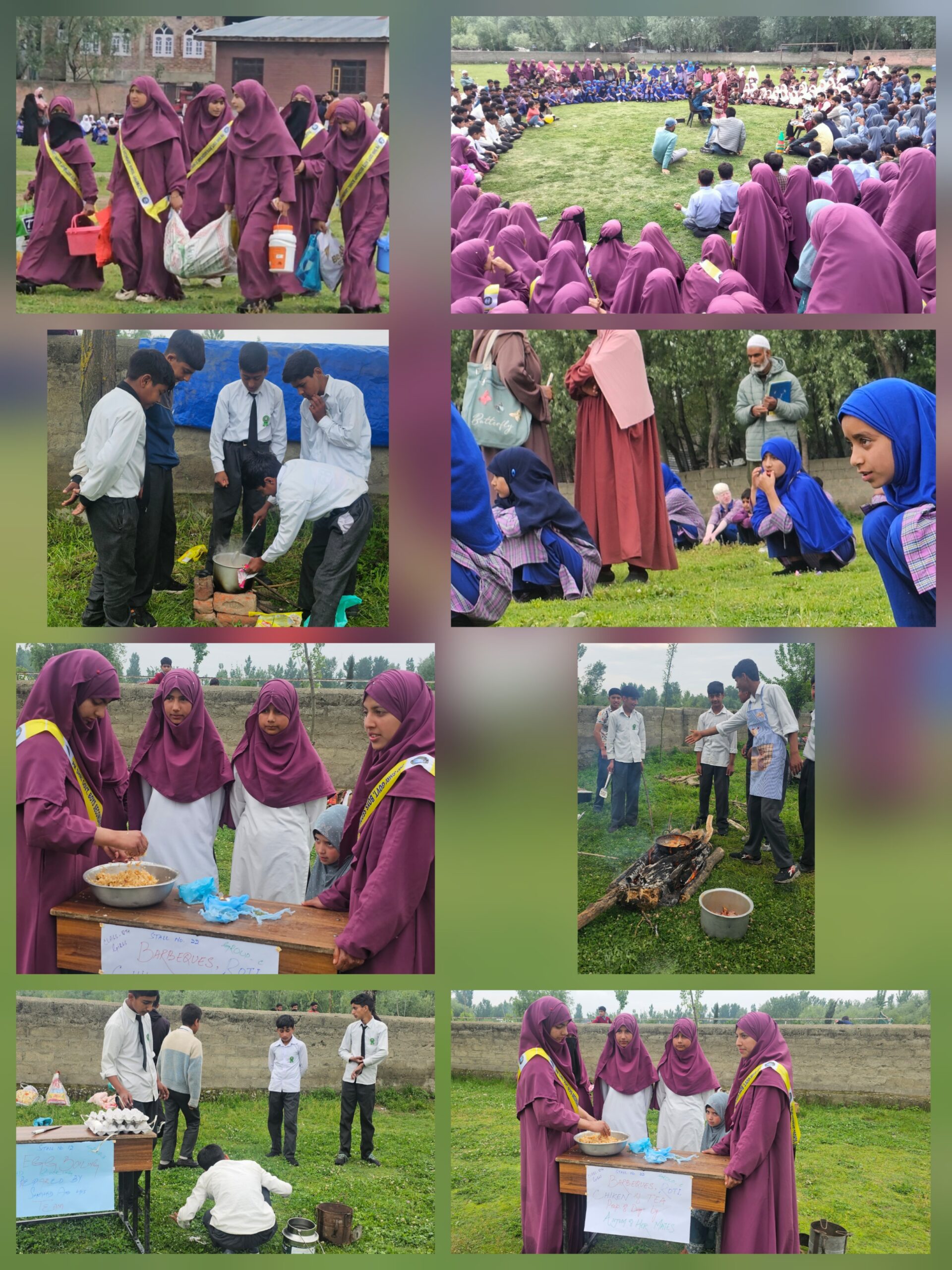
The vast ground of the school wore a festive look. The air was alive with the smoky perfume of firewood hearths, where flames danced beneath copper pots and iron pans.
The crackle of burning wood blended with the sharp sizzle of oil, creating a soundtrack that signaled something extraordinary. This was no ordinary school day—students arrived not with school bags, but with utensils, baskets of ingredients, and visible excitement.
Dressed in colorful uniforms and tall chef hats, students took on new roles—as chefs, hosts, and storytellers. Nearly 500 students from nearby schools of the village including Primary School Fishermen Colony Primary School Malla Mohalla Primary School Farhang Mohalla Middle School Reshi Mohalla gathered in the Secondary School that had turned into an open kitchen.
Students at different corners erected their stalls to cook their favourite dishes.
Food stalls lined the grounds with dishes including fish curry, chicken curry, barbeques, different wazwan dishes, Maki Ki Roti, Tehri, Biryani, Polav. samosas to egg rolls and fried rice. Yet one preparation stood out—Gaad Munj (fish with lotus stem), a dish deeply rooted in Kashmir’s culinary identity.
With most residents belonging to the fishing community, Laharwalpora village, situated on the banks of Wular Lake, has a distinct expertise in cooking fish.
Tender fish soaked in a spiced gravy paired with the distinct texture of lotus stem created a balance of flavour and tradition. Served with rice, it was more than a meal—it was heritage on a plate.
Close by, a samovar brewed Nun Chai, its salty warmth offered to visitors with quiet pride. Sweets like Gulab Jamun and bowls of kheer added a comforting finish to the experience.
Beyond the food, the festival carried a deeper purpose.
Headmaster of the institution Javid Jawad described it as an effort to make school a place of joy while challenging stereotypes.
Cooking, he emphasized, is a life skill for everyone—not confined by gender. That message was evident. Boys confidently handled cooking tasks.
He said the initiative was also aimed at addressing stereotypes among students that cooking is a female-specific task. He added that such activities help challenge taboos often associated with government schools by introducing vibrant, culturally rooted programmes that prevent students from developing any sense of inferiority.
“This festival is more than a celebration; it is an innovative educational platform. By moving beyond the four walls of a classroom, our students are mastering creativity, responsibility, and social confidence in real-time,” he added.
Teachers also shared personal experiences with the students, recalling that during their childhood, cooking at picnic spots was a compulsory activity and involved collective effort.
“Months in advance, duties were assigned to each student, and dishes were prepared by the entire class, which helped instil a spirit of teamwork and coordination,” they said.
“Even when the outcome was far from perfect, we would still enjoy the food, as it reflected our collective effort. It also made us appreciate the hard work involved in cooking and helped us recognise the effort our parents, especially our mothers, put in at home,” the teachers added.
Parents praised the school authorities for organising the unique festival. “Earlier, we thought it was a waste of time, but after attending and witnessing the activities, we realised it will have a long-lasting impact on students. Education is not limited to the four walls of a classroom; it also lies in real-life experiences,” said Ghulam Hassan, a parent who had come to witness the festival.
As the day progressed, the festival evolved into more than an event—it became a reflection of culture, creativity, and community learning. Under cloudy skies and light showers, the warmth of the hearths and the energy of the students created a memorable atmosphere.
By the end, as the fires dimmed and plates emptied, what remained was not just the lingering aroma of spices but a sense of achievement.
In this quiet village by Wular, students had done more than cook—they had learned, collaborated, and redefined what education can look like.
“We learned new cooking skills as many of us tried cooking for the first time, and it turned out to be a valuable learning experience. We really enjoyed the process. Earlier, we believed cooking was a female-specific task, but now we understand it is gender-neutral—anyone can cook. We also realised the effort our mothers put into preparing food at home,” said a student, Saddam Hussain.


Comments are closed.