

S Ahmad
India’s rural credit system is a key pillar of rural development and agricultural growth. It supports agriculture, allied activities, rural enterprises, and household consumption needs. Over time, the system has evolved from informal lending to a diversified institutional framework. Institutions such as NABARD, commercial banks, regional rural banks, cooperative banks, and small finance banks drive rural credit delivery.
For decades, discussions on India’s economic transformation have revolved around urban infrastructure, manufacturing, exports and technology. Yet the true foundation of India’s growth story continues to lie in its villages, where nearly two-thirds of the population resides and where agriculture and allied activities remain the principal source of livelihood. Rural India is no longer viewed merely as a beneficiary of development; it has emerged as an active contributor to national economic growth, entrepreneurship and consumption. At the heart of this transformation lies one indispensable element—access to affordable, timely and institutional credit.
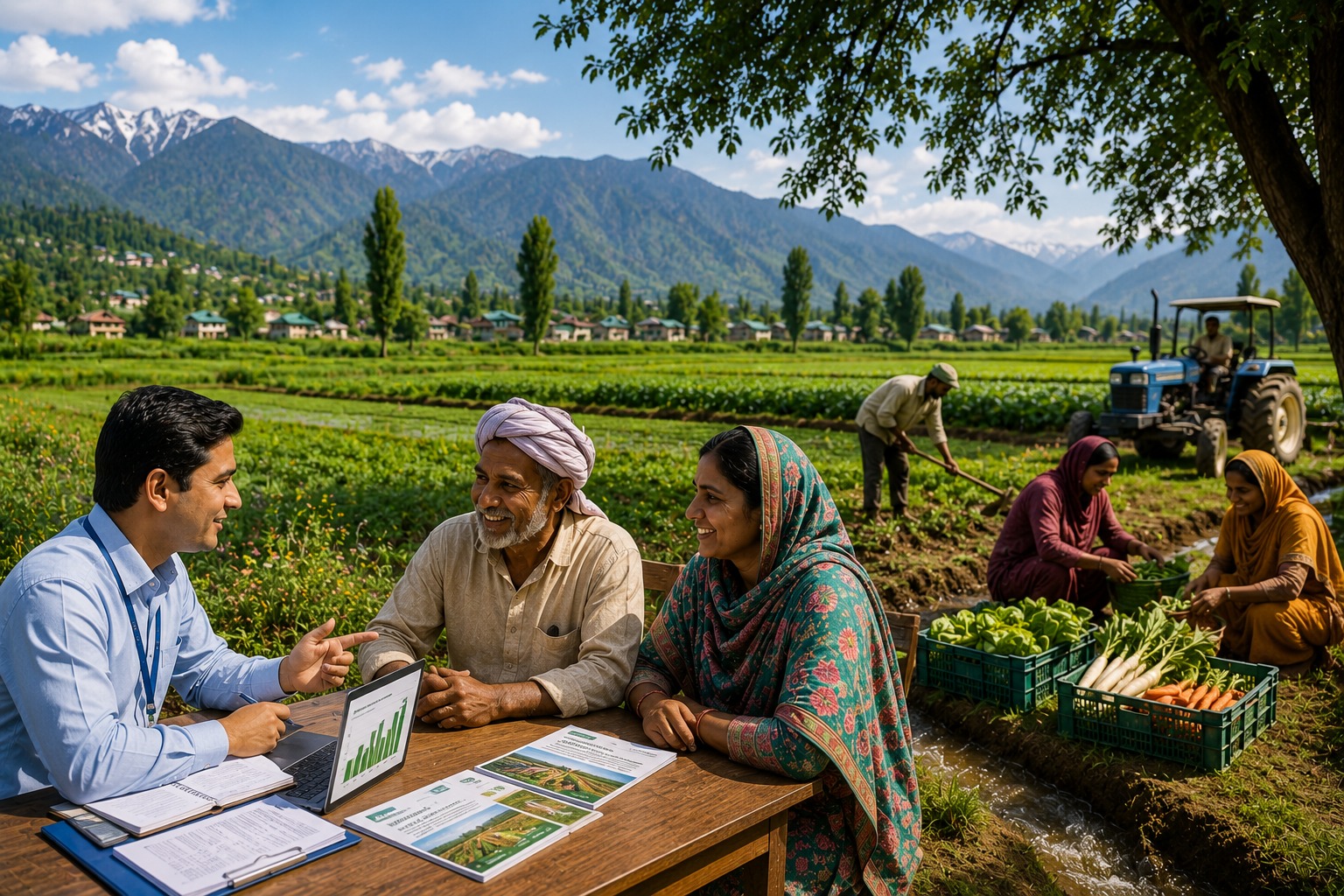
Credit is more than a financial transaction. For a small farmer, it determines whether quality seeds can be purchased before the sowing season. For a dairy entrepreneur, it provides the capital to expand production. For a rural artisan, it offers the means to invest in better tools and reach wider markets. For women organised into Self-Help Groups, it creates opportunities for financial independence and entrepreneurship. In essence, rural credit has become one of the most powerful instruments for reducing poverty, strengthening livelihoods and promoting inclusive development.
India’s rural credit ecosystem has undergone a remarkable transformation since Independence. What was once dominated by moneylenders charging exorbitant interest has gradually evolved into a diversified institutional framework supported by commercial banks, regional rural banks, cooperative institutions, small finance banks and the National Bank for Agriculture and Rural Development (NABARD). This evolution reflects not merely the expansion of banking services but a broader commitment to making economic growth more equitable and accessible.
The importance of this transition cannot be overstated. Informal lending, while often convenient, has historically trapped rural households in cycles of indebtedness. High interest rates, lack of transparency and exploitative practices frequently undermined agricultural productivity and household welfare. Recognising these structural challenges, policymakers over successive decades sought to expand institutional credit, ensuring that farmers and rural entrepreneurs could access finance on fair and affordable terms.
The journey began soon after Independence when expanding agricultural production became central to India’s development strategy. The establishment of the State Bank of India in 1955 and the creation of dedicated agricultural credit funds marked early attempts to institutionalise rural finance. The nationalisation of major commercial banks in 1969 further accelerated this process by directing banking resources towards priority sectors, particularly agriculture and rural development. These measures fundamentally altered the landscape of rural banking by extending institutional finance to communities that had long remained outside the formal financial system.
Perhaps the most significant milestone came in 1982 with the establishment of NABARD. Conceived as the apex development financial institution for agriculture and rural development, NABARD brought together financing, refinancing, developmental and supervisory functions under one umbrella. Over the past four decades, it has played a transformative role in strengthening rural financial institutions, supporting infrastructure development and promoting innovative models of financial inclusion.
NABARD’s contribution extends well beyond refinance. It prepares district-level credit plans, supports cooperative banks and regional rural banks, promotes financial literacy and encourages institutional reforms that improve the efficiency of rural finance. The institution has also pioneered initiatives such as the Self-Help Group-Bank Linkage Programme, widely recognised as one of the world’s largest microfinance initiatives, enabling millions of rural women to access formal banking services for the first time.
The significance of institutional credit has grown alongside the changing nature of the rural economy. Agriculture today is no longer confined to crop cultivation. Dairy farming, fisheries, horticulture, poultry, food processing, agro-based enterprises and rural services increasingly contribute to household incomes. These activities require flexible financing that extends beyond seasonal crop loans to support investment in machinery, storage facilities, livestock, irrigation systems and value addition.
Encouragingly, recent indicators suggest that rural economic conditions have shown resilience despite global economic uncertainties. Surveys conducted by NABARD indicate improving household consumption levels and increasing dependence on formal financial institutions. Such trends reflect not only rising purchasing power but also growing confidence in institutional banking. When more households choose banks over informal lenders, the benefits extend beyond individual borrowers. Formal credit creates financial histories, encourages savings, improves repayment discipline and strengthens the overall financial ecosystem.
One of the defining characteristics of India’s rural credit architecture is its diversity. Scheduled Commercial Banks continue to account for a significant share of agricultural lending through their extensive branch network and digital banking services. Regional Rural Banks, created specifically to cater to small and marginal farmers, remain deeply rooted in local communities and continue to play an indispensable role in extending financial services to underserved regions. Cooperative banks, despite facing governance challenges in some areas, retain strong community connections and remain particularly important in agricultural credit delivery.
The emergence of Small Finance Banks has added another dimension to this ecosystem. By leveraging technology and focusing on underserved segments, these institutions have expanded financial access for micro-enterprises, small businesses and rural households that previously struggled to secure institutional finance. Their technology-driven models demonstrate how innovation can complement traditional banking structures in advancing financial inclusion.
Technology itself has become one of the strongest catalysts for rural financial transformation. Digital banking, Aadhaar-enabled authentication, mobile connectivity and online credit platforms have significantly reduced transaction costs while making banking services more accessible. Farmers no longer need to travel long distances merely to submit applications or check loan status. Digital platforms increasingly enable faster processing, greater transparency and reduced paperwork, making institutional finance both efficient and user-friendly.
The broader financial inclusion agenda has further accelerated this transformation. The launch of the Pradhan Mantri Jan Dhan Yojana fundamentally altered India’s banking landscape by bringing millions of previously unbanked households into the formal financial system. Jan Dhan accounts, linked with Aadhaar and mobile connectivity under the JAM framework, have enabled direct transfer of government benefits while simultaneously introducing millions of rural citizens to formal banking. Beyond welfare delivery, these accounts have become gateways to credit, insurance and pension services, strengthening household financial security.
Similarly, the Kisan Credit Card (KCC) scheme has emerged as one of the most significant instruments supporting agricultural finance. Designed to provide timely and affordable credit, KCC has simplified access to crop loans while extending coverage to allied sectors such as dairy, fisheries and animal husbandry. Features such as revolving credit, flexible withdrawals and simplified documentation have made it a practical financial tool for millions of farmers navigating increasingly uncertain agricultural conditions.
Another transformative initiative has been the expansion of women-led Self-Help Groups. The SHG-Bank Linkage Programme, strengthened under the Deendayal Antyodaya Yojana–National Rural Livelihoods Mission, has demonstrated how collective action can expand financial inclusion while empowering women socially and economically. By enabling group-based savings, credit and enterprise development, SHGs have become engines of grassroots entrepreneurship across rural India. Women who once had little access to formal finance now manage enterprises, generate incomes and contribute meaningfully to local economies.
The deployment of Bank Sakhis has further strengthened this model by bridging the gap between financial institutions and rural communities. Acting as facilitators, they assist Self-Help Groups in opening accounts, preparing loan applications and ensuring timely repayments. Such community-based approaches illustrate that financial inclusion depends not merely on institutions but also on trust, awareness and local participation.
Yet the expansion of rural credit should not be measured solely through rising loan disbursement figures. The real test lies in whether credit contributes to sustainable income generation, improved productivity and enhanced resilience. Loans that finance productive investments create lasting economic value. They enable farmers to adopt improved technologies, diversify crops, invest in irrigation, establish storage facilities and reduce vulnerability to climatic and market uncertainties. When credit supports productive capacity rather than merely consumption, it becomes a catalyst for long-term rural transformation.
India’s rural credit journey, therefore, represents much more than the expansion of banking services. It reflects the gradual construction of an inclusive financial architecture capable of supporting one of the world’s largest rural populations. The progress achieved over recent decades demonstrates what coordinated policy, institutional innovation and technological advancement can accomplish. However, the journey towards universal financial inclusion remains unfinished. Significant regional disparities, credit gaps and structural challenges continue to demand sustained policy attention.
As India aspires to become a developed economy over the coming decades, strengthening rural credit will remain central to that ambition. Inclusive growth cannot be achieved if millions of farmers, artisans, rural entrepreneurs and women-led enterprises continue to face barriers in accessing affordable finance. Expanding credit responsibly, efficiently and equitably is therefore not simply an economic necessity—it is a national imperative.
A major strength of India’s rural credit ecosystem lies in its policy architecture, which seeks to ensure that institutional finance reaches sectors traditionally overlooked by commercial lending. One of the most significant pillars of this framework is Priority Sector Lending (PSL). By mandating banks to allocate a prescribed share of their lending to agriculture and other socially important sectors, PSL has helped correct market imbalances that might otherwise discourage lending to small and marginal farmers.
Agriculture remains inherently vulnerable to uncertainties arising from weather fluctuations, volatile market prices and changing input costs. Left entirely to market forces, many financial institutions would naturally perceive small agricultural loans as high-risk and low-return. Priority Sector Lending recognises this reality by balancing commercial objectives with developmental responsibilities. It ensures that access to finance is not determined solely by profitability but also by national priorities of food security, rural employment and equitable growth.
Complementing PSL are annual Ground Level Credit (GLC) targets, which provide measurable benchmarks for agricultural lending. The steady rise in these targets over the past decade reflects the Government’s recognition that expanding rural investment requires sustained financial support. More importantly, dedicated allocations for allied sectors such as dairy, fisheries and animal husbandry acknowledge the changing character of India’s rural economy.
This diversification deserves appreciation. Agriculture today extends well beyond crop cultivation. Livestock, poultry, inland fisheries, horticulture and food processing increasingly provide stable income opportunities, particularly for small farmers whose landholdings continue to shrink. Expanding institutional finance to these sectors not only reduces dependence on traditional farming but also creates more resilient rural livelihoods capable of withstanding climatic and market shocks.
The cooperative credit structure continues to occupy a unique place in this ecosystem. Primary Agricultural Credit Societies (PACS), District Central Cooperative Banks and State Cooperative Banks have historically served as the first point of contact for millions of rural borrowers. Their local presence and familiarity with community conditions allow them to reach areas where conventional banking institutions often struggle.
Recognising both their strengths and limitations, recent efforts to modernise cooperative institutions through digitisation represent an important reform. Migration of thousands of PACS to a common Enterprise Resource Planning platform promises greater transparency, standardisation and operational efficiency. Digital records can reduce delays, improve accountability and strengthen financial discipline while enabling better integration with the wider banking system.
The proposal to establish thousands of new multipurpose cooperative societies further reflects an effort to transform PACS from simple credit institutions into comprehensive rural service centres. If implemented effectively, these institutions could provide credit, input supply, storage, marketing support and other essential services under one roof, thereby reducing transaction costs for farmers and strengthening local agricultural economies.
Technology has emerged as another defining feature of contemporary rural finance. Over the past decade, India’s digital public infrastructure has fundamentally altered the delivery of financial services. Digital identity through Aadhaar, expanding internet connectivity, mobile banking applications and online government platforms have together reduced many of the barriers that previously discouraged rural borrowers.
The Jan Samarth Portal illustrates this transition towards integrated digital governance. By bringing together multiple government-supported credit schemes on a single platform, it simplifies application procedures and enables beneficiaries to identify suitable financial assistance without navigating multiple departments. Similarly, digitisation of Kisan Credit Card applications through e-KCC has significantly reduced processing time, allowing farmers to receive timely credit during critical agricultural seasons.
These developments matter because agriculture is time-sensitive. A delay of even a few weeks in accessing credit during sowing season can reduce crop yields and household incomes for an entire year. Faster loan processing is therefore not merely an administrative improvement; it directly influences agricultural productivity and economic security.
The Modified Interest Subvention Scheme represents another important intervention designed to make institutional borrowing affordable. By reducing effective borrowing costs for farmers who repay loans on time, the scheme encourages responsible credit behaviour while lowering financial burdens. The enhancement of collateral-free loan limits and increased ceilings under the Kisan Credit Card scheme demonstrate an understanding that rising cultivation costs require corresponding adjustments in credit availability.
Inflation has steadily increased expenditure on seeds, fertilisers, labour, irrigation and farm machinery. Credit policies that fail to account for these realities risk becoming outdated. Periodic revisions of lending limits therefore represent an essential component of responsive agricultural policy.
Financial inclusion, however, extends beyond farmers. Rural entrepreneurship has become an increasingly important driver of economic transformation. Programmes supporting micro and small enterprises recognise that sustainable rural development requires diversification beyond agriculture. Food processing units, handicrafts, rural tourism, repair services, digital enterprises and local manufacturing all generate employment while reducing excessive dependence on farming alone.
Schemes such as the Pradhan Mantri Mudra Yojana have expanded collateral-free lending to non-farm enterprises, enabling thousands of entrepreneurs to establish or expand businesses. Such initiatives contribute not only to income generation but also to broader structural transformation within rural economies.
Women have emerged as among the greatest beneficiaries of expanding institutional finance. The remarkable growth of Self-Help Groups under the DAY-NRLM demonstrates how collective financial models can simultaneously strengthen livelihoods, promote social empowerment and enhance community resilience.
When women gain access to formal credit, the benefits extend beyond individual borrowers. Numerous studies have shown that women tend to invest in education, healthcare, nutrition and household welfare at higher rates than men. Consequently, expanding women’s financial inclusion contributes directly to broader human development outcomes.
The success of Bank Sakhis reinforces another important lesson: financial inclusion depends as much on trust as on technology. Digital platforms may simplify transactions, but many first-generation borrowers continue to require guidance in understanding banking procedures, loan conditions and repayment responsibilities. Community facilitators bridge this gap, making institutional finance more accessible and less intimidating.
Despite these achievements, important challenges remain. Regional disparities continue to influence access to rural credit. States with stronger banking infrastructure and better institutional capacity generally record higher credit penetration than economically weaker regions. Addressing these imbalances will require targeted interventions, improved banking outreach and greater investment in underserved districts.
Similarly, tenant farmers, sharecroppers and oral lessees often continue to face difficulties accessing institutional loans due to the absence of formal land ownership records. Although policy reforms have expanded eligibility under various schemes, practical implementation remains uneven across states. Innovative lending models capable of recognising cultivation rights rather than ownership alone deserve greater attention.
Climate change presents another emerging challenge. Increasing frequency of droughts, floods, erratic rainfall and extreme weather events has heightened agricultural risk across many regions. Rural credit systems must therefore evolve beyond traditional lending by integrating crop insurance, climate-resilient technologies and disaster-responsive financial products.
Credit alone cannot compensate for repeated crop failures. Sustainable rural finance increasingly requires coordination with irrigation, extension services, weather forecasting, insurance and market infrastructure. An integrated approach is essential if agricultural finance is to remain effective under changing climatic conditions.
Equally important is the need to ensure that expanding credit does not translate into unsustainable indebtedness. Responsible lending requires careful assessment of repayment capacity, productive utilisation of loans and continuous financial literacy. Institutional expansion must therefore be accompanied by strong consumer protection, transparent lending practices and effective grievance redressal mechanisms.
The future of India’s rural economy will ultimately depend not only on how much credit is disbursed but on how wisely it is deployed. Productive investment, technological adoption, market integration and value addition should remain central objectives of rural finance policy. Credit that merely finances recurring consumption cannot generate lasting prosperity; credit that builds productive assets can transform entire communities.
As India advances towards its aspiration of becoming a developed nation, strengthening rural credit must remain a strategic national priority. The country has already laid a robust institutional foundation through NABARD, commercial banks, cooperative institutions, digital platforms and financial inclusion initiatives. The next phase should focus on improving quality, expanding outreach and ensuring that every deserving rural household can access timely, affordable and productive finance.
The story of India’s rural credit system is therefore not merely about banking. It is about enabling aspirations. It is about ensuring that a farmer can invest confidently before the monsoon, that a rural entrepreneur can establish a business without fear of exploitative borrowing, that women can become economic decision-makers within their communities, and that villages can participate fully in India’s development journey.
Inclusive growth is ultimately measured not by the prosperity of a few urban centres but by the opportunities available to millions living beyond them. A resilient rural credit ecosystem strengthens agriculture, encourages entrepreneurship, supports employment and creates economic resilience from the grassroots upward. As India prepares for the next stage of its development, investing in accessible, affordable and accountable rural finance will remain one of the surest pathways towards sustainable and truly inclusive national growth.
Comments are closed.