Srinagar, October 26: A farmer in south Kashmir’s Pulwama district has set up a 10-metric-tonne mini cold storage facility in Tahab village after suffering losses when the fallout of the Pahalgam incident disrupted the market for his vegetables. The initiative aims to address a persistent challenge for growers: preserving their produce and securing better prices.
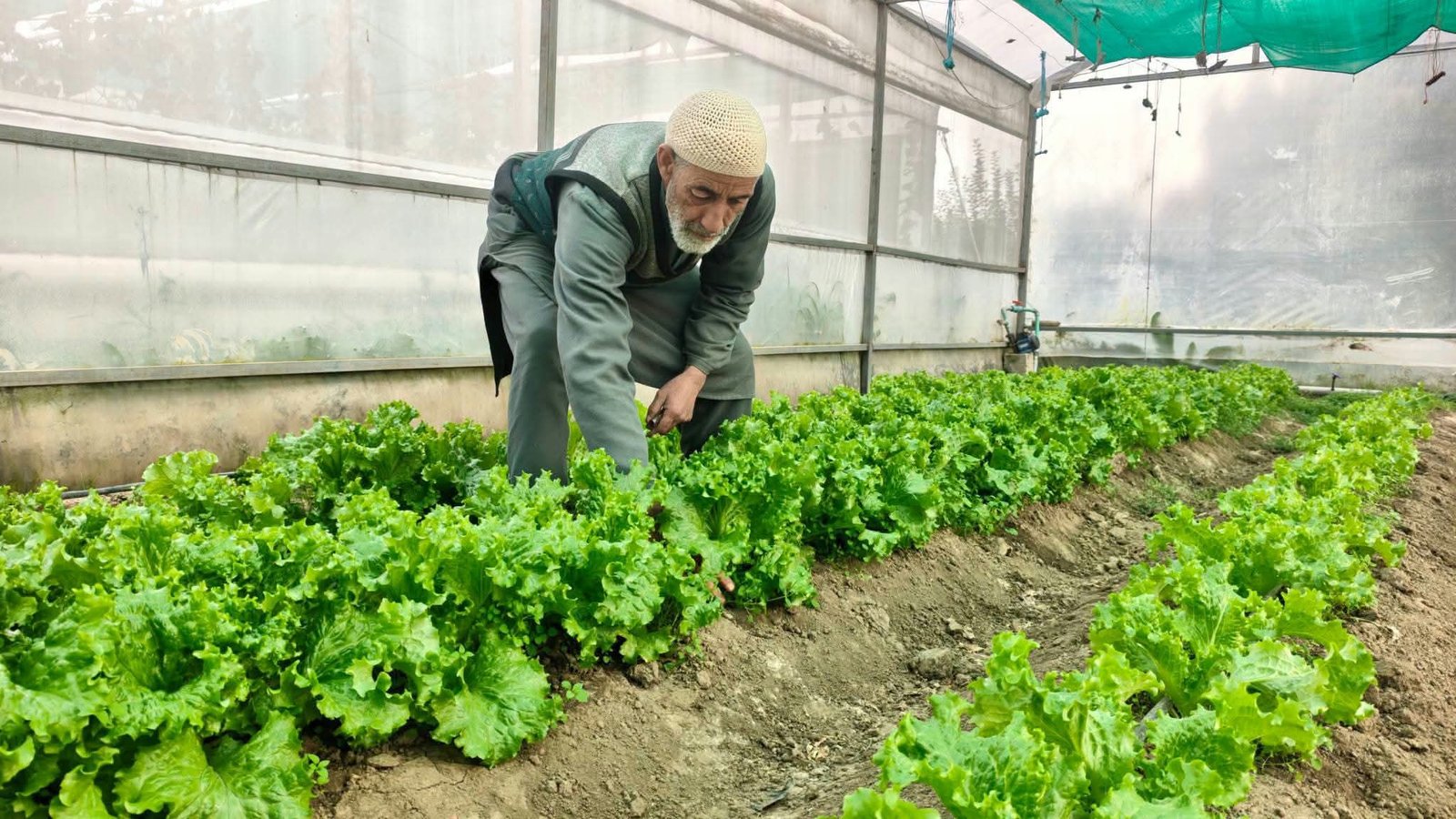
Speaking to Kashmir Convener, Farooq Ahmad, who has been cultivating vegetables since 2019, said the idea took shape after he was left with produce worth around Rs 5 lakh last year when the fallout of the Pahalgam incident affected tourism and demand for his vegetables.
He said the facility, which has a storage capacity of 100 quintals, was designed to preserve vegetables for two to four months, allowing farmers to avoid distress sales when supplies are high and prices are low. Ahmad claimed it was the first facility of its kind in south Kashmir.
“Last year, I had vegetables worth around Rs 5 lakh ready for harvesting. When the situation affected tourism, I had to spend a considerable amount on transporting the produce to other markets,” Ahmad told Kashmir Convener.
He said the experience prompted him to explore ways of storing vegetables for longer periods rather than depending entirely on immediate sales.
Ahmad said vegetable cultivation could provide farmers with a more regular source of income than traditional horticulture, where returns generally come after a longer period. However, abundant supplies during the peak season often push prices down, reducing growers’ earnings.
“If we store vegetables during the season when everyone has them, their value can increase during the off-season,” he said, adding that the facility could help farmers manage their produce according to market demand.
Ahmad said he researched storage technologies before establishing the unit, as conventional air-conditioning systems were not suitable for preserving fresh vegetables over extended periods. Different fruits and vegetables require specific temperature and storage conditions, he said, adding that he would follow the technical guidance and temperature charts provided by the equipment supplier.
The facility can also accommodate fruits, depending on their storage requirements. Ahmad said he planned to explore solar power to reduce electricity costs, while the unit would remain connected to the conventional power grid.
The project has involved an investment of around Rs 25 lakh, including civil construction and machinery, with the equipment alone costing approximately Rs 23 lakh.
While government schemes provide support for post-harvest infrastructure, Ahmad said the assistance available and the scale of facilities offered may not always meet the needs of small vegetable growers seeking compact storage units.
He suggested establishing similar facilities under government schemes, including the Holistic Agriculture Development Programme (HADP), to benefit individual farmers or groups of five to 20 growers.
“Even if a mini cold storage facility is established for a group of farmers, it would make a significant difference,” he said.
For small growers, such facilities could offer an alternative to selling their entire harvest immediately after picking. By reducing post-harvest losses and allowing farmers to sell when market conditions are more favourable, cold storage could help improve returns.
Ahmad’s initiative highlights the need for decentralised post-harvest infrastructure in Kashmir’s vegetable-growing areas. Its wider impact, however, will depend on operating costs, the suitability of storage conditions for different crops and how easily other farmers can access such facilities.


Comments are closed.