

Mariya Noor
“Interfaith dialogue is not about changing anyone’s beliefs; it is about creating understanding, building trust, and recognizing the shared humanity that exists beyond religious differences.”
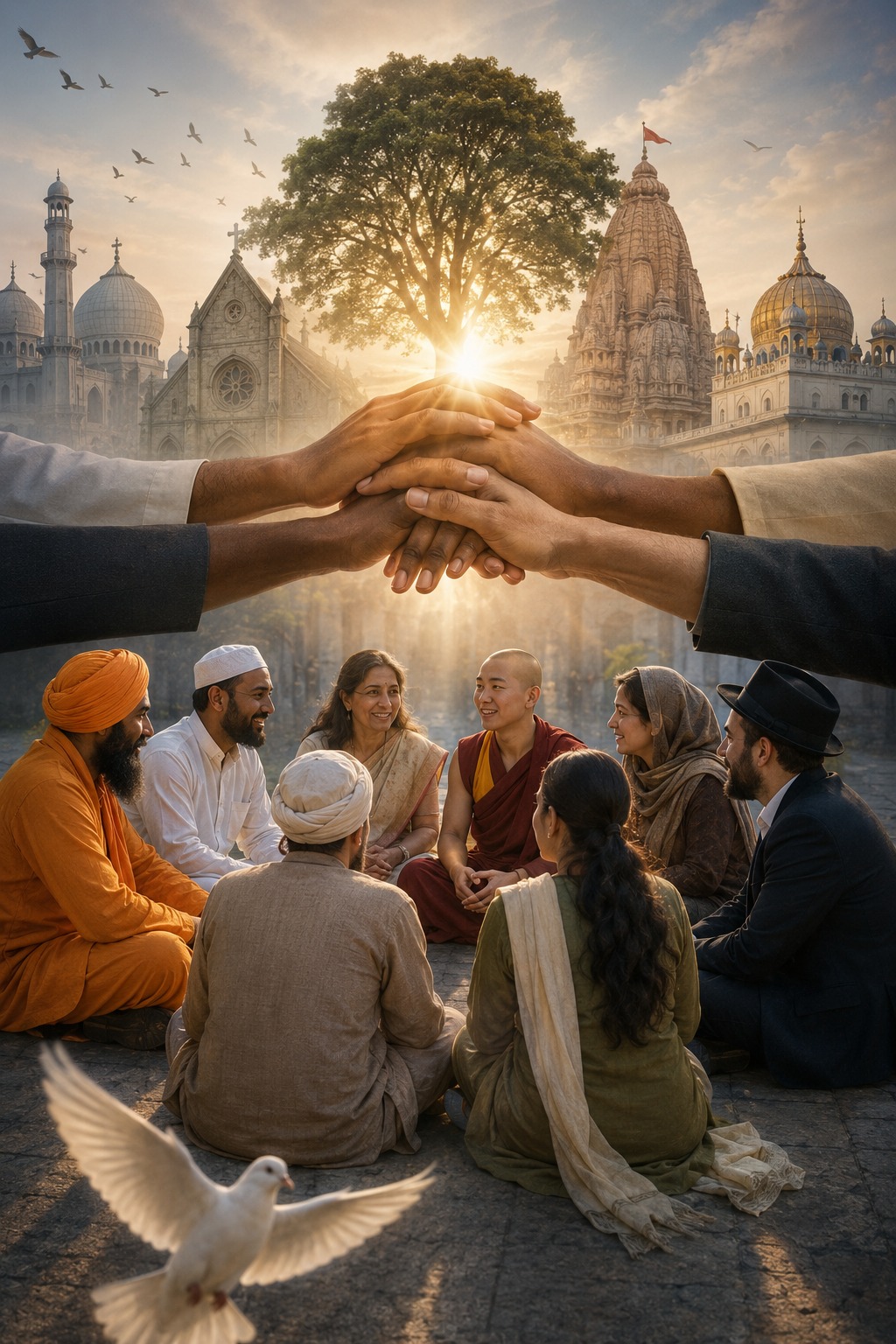
We live in a world where people from different backgrounds are connected like never before but we are also very divided. The importance of talking to people from different faiths has never been more important. Our societies are made up of people from religions, cultures and ethnic groups which is a good thing because it brings different ideas and perspectives together.. When we do not respect and talk to each other our differences can cause problems and conflicts. This is where interfaith dialogue comes in. It helps people from different faiths understand and respect each other which leads to a more harmonious society.
Interfaith dialogue is when people from different religions talk to each other in a respectful way. It is not about trying to change someone’s beliefs or make them less important but about understanding and appreciating each others beliefs and values. When people talk to each other they learn about each others faiths and traditions. This helps to break down stereotypes and build trust.
We have seen times in history how misunderstandings about religion have caused problems and conflicts. A lot of the time these problems are not really about religion. About not understanding each other and being misled by false information. When people from different faiths do not talk to each other they can start to fear and distrust each other. Interfaith dialogue helps to stop this from happening by giving people the chance to learn from each other and understand each others perspectives.
One of the things about interfaith dialogue is that it helps people to be more tolerant and respectful of each other. All major religions teach us to be kind, fair, honest and peaceful and to help others. When we focus on these shared values we can see that we have more in common than we think even if we have beliefs. This helps us to respect each others differences and not judge each other based on stereotypes or false information.
For a society to be harmonious people need to trust and understand each other. Interfaith dialogue helps to make this happen by encouraging people to talk to each other and learn from each other. It helps us to see each other as people than just as members of a particular faith group. This approach helps to build communities and promotes a sense of responsibility for the well-being of everyone in society.
In countries like India, where there are different religions interfaith dialogue is especially important. India is an example of how different faiths can coexist and learn from each other. Throughout history India has had examples of people from different faiths living together in peace and harmony. The teachings of leaders have emphasized the importance of unity, tolerance and mutual respect.
Even with these good examples modern societies still face many challenges. The internet and social media have changed the way we communicate. They have also made it easier for false information and hate speech to spread. This can cause mistrust and division among people from faiths. Interfaith dialogue is a way to counter this by encouraging people to talk to each other and learn from each other.
Schools and universities play a role in promoting interfaith understanding. They are places for people from different backgrounds to meet and learn from each other. Educational programs that teach about faiths in a respectful way can help young people develop a more open-minded and tolerant attitude. When people learn about faiths and perspectives from a young age they are more likely to grow up to be respectful and empathetic towards others.
Religious leaders also have a responsibility to promote interfaith dialogue. They can help to shape peoples attitudes and inspire them to work for the common good. When religious leaders from faiths work together on social issues it shows that people from different backgrounds can unite and work towards a common goal.
Interfaith dialogue is not about formal meetings and conferences. It can happen in life through community events, cultural exchanges and joint projects. When people from faiths come together to celebrate festivals work on community projects or volunteer it helps to build relationships and trust. These experiences can help to break down barriers and create a sense of belonging among people from faiths.
Young people have a role to play in promoting interfaith harmony. They are often more open to ideas and perspectives and they can help to bring people together across faith boundaries. Programs that empower people to take part in interfaith initiatives can have a lasting impact on society. When young people work together on projects and learn from each other they can help to create a harmonious and inclusive society.
Women also play a role in promoting social harmony through interfaith engagement. They often work as educators, community organizers and leaders. They can help to bring people together and build bridges between different faith communities. When women are involved in interfaith dialogue it helps to create an inclusive and sustainable approach to building harmony.
At a global level interfaith dialogue is essential for addressing many of the challenges we face today. Issues like climate change, poverty and inequality affect people from all faiths and backgrounds. They require a collective response. When people from faiths work together they can draw on their shared values and principles to create a more just and peaceful world.
The idea of harmony is not just about the absence of conflict but about creating a society where people can thrive and live together in peace. Interfaith dialogue helps to make this happen by promoting understanding reducing fear and encouraging cooperation. It helps to create a society where diversity is celebrated and valued.
Interfaith dialogue requires effort, patience and commitment. It requires people to be open-minded to listen to each other and to be willing to learn from each other. It requires us to recognize both our similarities and our differences and to respect each others perspectives. Building trust takes time. It is worth it in the end.
Governments, civil society organizations, educational institutions and faith communities all have a role to play in promoting interfaith engagement. Policies that promote inclusion protect freedom and support community-building initiatives can help to create a favorable environment for dialogue. The media can also help by highlighting examples of interfaith cooperation and promoting responsible reporting that counters stereotypes and misinformation.
As the world becomes more interconnected the need for coexistence among people from different faiths becomes more urgent. Interfaith dialogue offers an effective way to achieve this goal. It helps to build relationships promote respect and create resilient communities that can address shared challenges.
In conclusion interfaith dialogue is not a conversation between people from different faiths. It is a vital investment, in the future of our society. By promoting understanding, trust and cooperation it helps to create a harmonious and peaceful world. In a world that’s often divided and mistrustful interfaith dialogue offers a beacon of hope reminding us that our diversity can be a source of strength, not weakness.
Comments are closed.