Srinagar, May 20: In a society where snake handling has long been considered a man’s job, a woman has silently rewritten the rules — walking into kitchens, government offices, and backyards to rescue a wide range of reptiles during Kashmir’s peak snake breeding season.
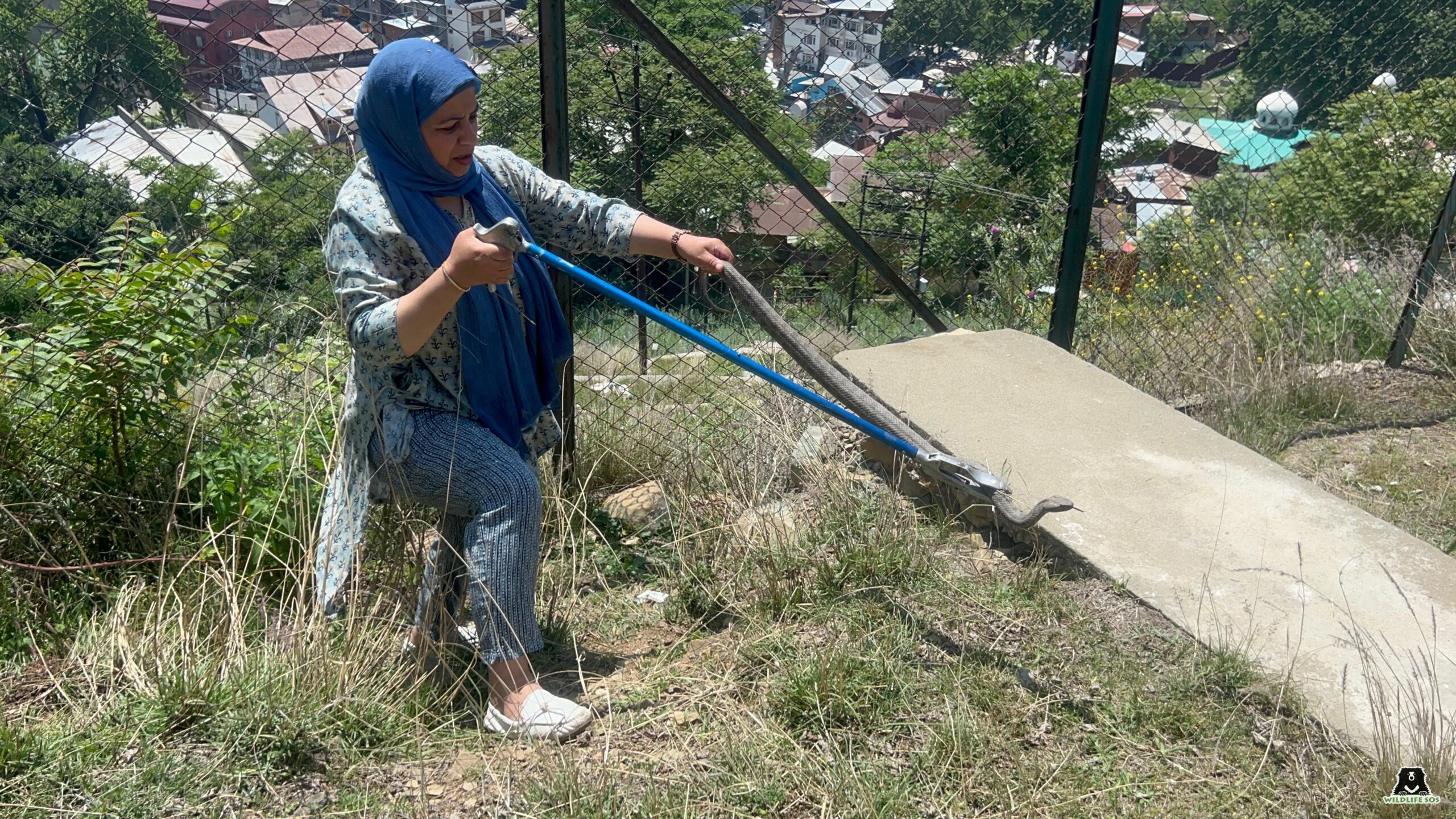
Aaliya Mir, Programme Head for Wildlife SOS in Jammu & Kashmir, this week alone rescued two Indian rat snakes from Awantipora and two Levantine vipers from Wathora. The reptiles were spotted by residents in kitchen gardens and on the premises of the Water and Irrigation Department.
The rescue of the Levantine vipers was particularly delicate. The species is one of the few venomous snakes found in the Valley, typically inhabiting dry, rocky, mountainous terrains. But habitat fragmentation, Aaliya Mir said, is driving them into residential spaces.
Wildlife SOS teams exercised special precautions while rescuing the vipers. After careful extrication and health assessment, all four snakes were released into suitable wild habitats away from human settlements.
As the breeding season continues, Aaliya Mir said, “It is common for snakes to move closer to human habitation during the mating season while searching for secure spaces. We urge residents not to panic or attempt handling snakes on their own, and instead immediately contact trained rescue teams for assistance.”
Snake sightings in the Valley typically spike between April and May — the peak breeding season. Females prepare for egg-laying during this period, with hatchlings emerging around August during the monsoon.
Kartick Satyanarayan, Co-founder and CEO of Wildlife SOS, said, “Snake rescues during the breeding season require extra caution and sensitivity, especially when dealing with venomous species. Timely intervention helps prevent panic among residents while ensuring these ecologically critical reptiles are safely returned to the wild.”


Comments are closed.