

Convener News Desk
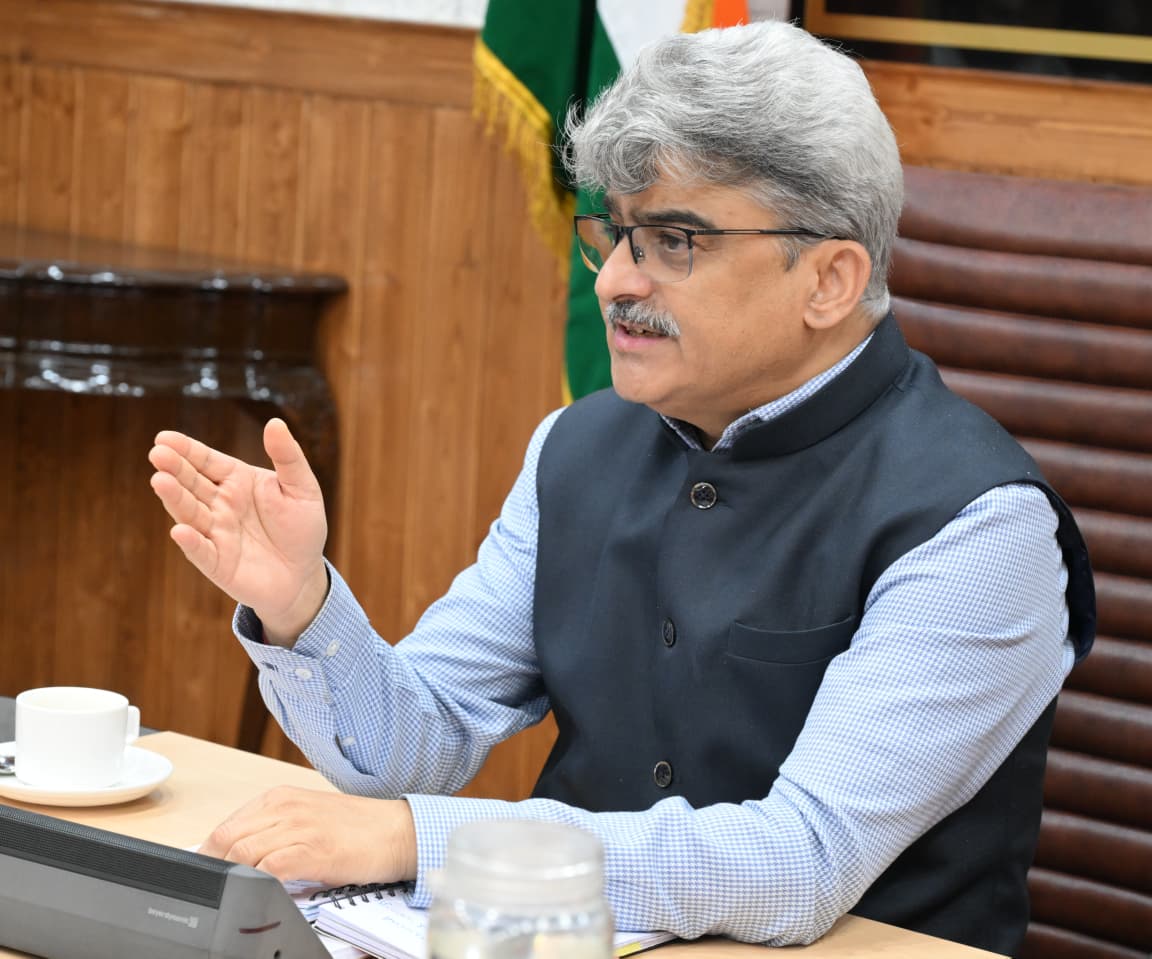
Jammu, May 20: Chief Secretary Atal Dulloo on Wednesday reviewed the readiness, operational framework and long-term sustainability plan for the Industrial Biotech Parks being established at Kathua and Handwara, calling for their transformation into vibrant hubs of innovation, entrepreneurship and technology-driven industrial development in Jammu and Kashmir.
During the meeting, the Chief Secretary assessed the infrastructure developed at the Industrial Biotech Park at Ghatti, Kathua, and reviewed the progress achieved on the Handwara Biotech Park project.
Emphasising the need for professional and efficient management, Dulloo directed the Science & Technology Department to address governance gaps highlighted by experts. He observed that an institutional structure already exists for running these parks and stressed the importance of putting in place a professional management system for day-to-day operational decisions and optimum utilisation of the assets.
He further underscored the need for clearly defining the responsibilities of the Science & Technology Department and CSIR-IIIM Jammu in developing a conducive ecosystem for startups, entrepreneurship and capacity building. He urged IIIM to deploy professional manpower at the facilities in accordance with ground requirements to provide scientific and technical support.
The Chief Secretary also called for formulation of measurable Key Performance Indicators (KPIs) with fixed timelines to ensure tangible outcomes and develop the biotech parks into high-performing innovation assets at the national level. He asked CiTaG to extend all possible support in this regard.
Commissioner Secretary, Science & Technology Department, Babila Rakwal, informed the meeting that the parks require professional management and convergence with Government of India schemes for optimal utilisation and efficient functioning.
Director CSIR-IIIM, Dr Zabeer Ahmed, and CEO CiTaG, Dr Sandeep Ananthanarayanan, gave detailed presentations on the present status and future operational strategy for the biotechnology parks.
The meeting was informed that the Kathua Biotech Park, spread over nearly 10 acres, has been equipped with advanced infrastructure including fermentation and enzyme production units, medicinal and aromatic plant cultivation facilities, micro-propagation laboratories, farmer and youth skill development centres and central instrumentation facilities.
Officials said the park already houses a BIRAC-BioNEST Incubator to support agri-based startups and innovation-driven enterprises in sectors such as agriculture, nutraceuticals, phytopharmaceuticals, aroma and food processing, fermentation and healthcare biotechnology.
Comments are closed.