Srinagar, June 30: The High Court of Jammu & Kashmir and Ladakh has restrained the Union Territory administration from interfering with a tract of land proposed for a police housing colony in north Kashmir’s Bandipora district. The court held that any administrative action on the disputed property must be taken strictly “under due course of law” until further orders.
The ad-interim direction was passed by a single-judge bench of Justice Mohd Yousuf Wani during the preliminary hearing of a writ petition filed by Ali Mohammad Parray and 14 other residents of Putushay village. The bench issued formal notices to the UT administration and other arrayed respondents, directing them to file their objections ahead of the next scheduled hearing on July 29.
“In the meantime, subject to any vacation/modification upon the consideration of objections/arguments of the other side and till further orders, the non-applicants/respondents are restrained to interfere with the subject matter of the petition except under due course of law,” the court ordered while granting interim protection to the agrarian petitioners.
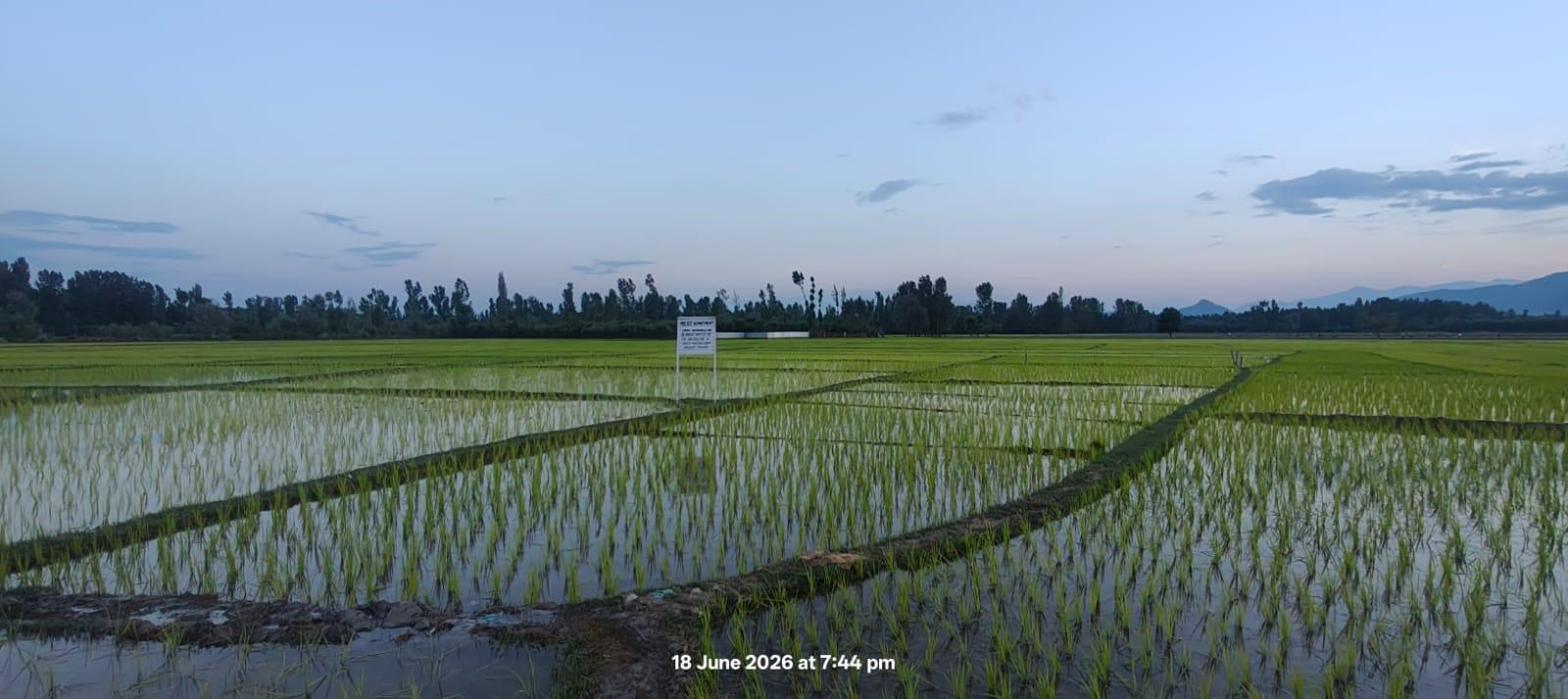
The legal dispute centers on agricultural land in Putushay, Bandipora, where the administration has conceptualized a police housing colony. Represented by advocate Ishtiyaq Ahmad Mir, the petitioners moved the High Court after revenue and police officials allegedly entered their fields unexpectedly to erect fencing and install project signboards.
According to the plea, the official signboards declare that an area measuring 110 kanals and 2 marlas has been proposed for the housing colony. The petitioners contend that this executive action was unilateral, executed without completing mandatory land demarcation exercises or initiating formal acquisition proceedings under the relevant land laws.
Photographs demonstrating the newly erected perimeter fencing and the official project signboards were annexed to the petition to substantiate claims of an imminent threat of dispossession.
In their main petition, the villagers state that they and their predecessors have remained in peaceful, uninterrupted possession and cultivation of the land for decades. The site currently comprises mature, fruit-bearing apple orchards and standing paddy crops, which form the primary source of livelihood for the families.
The petitioners argue that the land is a mix of proprietary holdings and communal Shamilat/Kahcharai (grazing) land. They assert that even if the state claims title over any fraction of the property, settled legal position bars the government from forcibly dispossessing occupants or destroying standing cultivation without adhering to strict legal procedures.
Furthermore, the petition introduces critical environmental concerns, pointing out the site’s close proximity to Wular Lake, an ecologically fragile wetland designated as a Ramsar site.
The plea said that any large-scale construction footprint in the area must first satisfy stringent environmental safeguards and comply with the existing buffer zone directives issued by the High Court’s Division Bench and the National Green Tribunal (NGT).
After hearing arguments from the petitioners’ counsel, the court noted that it had meticulously perused the interim application, the supporting affidavit, and the annexed documentary evidence before intervening.
While the ad-interim order avoids entering into the final merits of the land’s ownership, it effectively freezes any further executive action on the ground. (KDC)


Comments are closed.