

Dr Irfan Peerzada
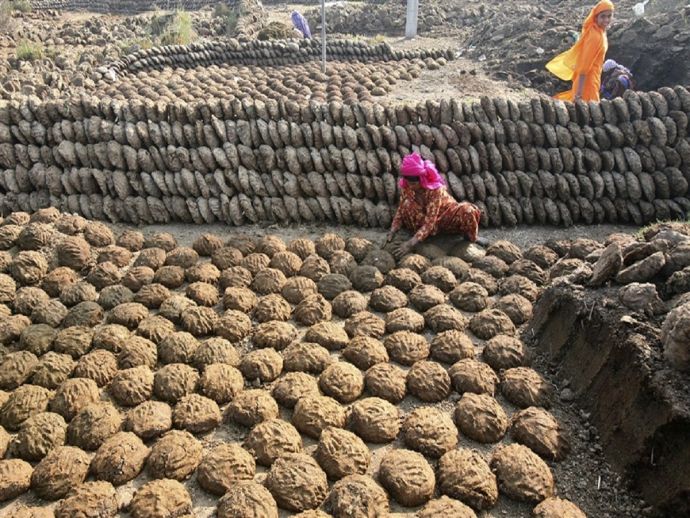
The Gobar Bank concept presents a practical, eco-friendly, and sustainable solution to some of the most pressing challenges faced by India today, including environmental degradation, declining soil health, rural unemployment, and health risks associated with chemical-intensive agriculture. By promoting systematic collection, processing, and value addition of cattle dung and cow urine, Gobar Banks transform waste into wealth and environmental liabilities into economic opportunities.
There are multiple interconnected challenges that threaten human health, environmental sustainability, and socio-economic stability. Among these, the excessive use of chemicals in food production and agriculture has emerged as a major concern due to its long-term adverse effects on human health and ecosystems. Simultaneously, rising unemployment among educated and semi-educated youth, inefficient utilisation of natural resources and renewable energy, and increasing environmental degradation caused by improper waste management practices have intensified these challenges. India, as a developing country with a large agrarian base, is particularly vulnerable to these issues.
Rapid industrialisation and commercialisation of agriculture have resulted in the indiscriminate use of chemical fertilisers, pesticides and herbicides. While these inputs initially contributed to increased agricultural productivity, their prolonged and excessive use has degraded soil health, contaminated water resources, and introduced harmful residues into food chains. These residues are linked to numerous health disorders, including cancers, hormonal imbalances, and chronic diseases. In addition, unmanaged organic waste in rural areas has become a source of environmental pollution, leading to unhygienic living conditions and the spread of diseases.
In this context, sustainable and locally adaptable solutions are urgently required to address environmental degradation, promote soil health, generate rural employment, and ensure safe food production. One such innovative and holistic approach is the concept of the Gobar Bank, which focuses on the systematic management and value addition of cattle dung and cow urine. This model has the potential to transform rural waste into wealth while promoting environmental sustainability and rural livelihoods.
Environmental and soil degradation due to improper waste management.
The improper management of cattle dung and urine has serious implications for environmental sustainability and soil health. Open dumping of dung leads to nutrient loss through leaching and volatilisation, reducing its agricultural value. During the monsoon season, nutrients from dung heaps are washed into water bodies, causing water pollution and eutrophication.
In rural areas, unhygienic surroundings caused by unmanaged dung also pose serious public health risks. Diseases such as diarrhea, respiratory infections, and vector-borne illnesses are commonly reported in villages with poor sanitation. Women and children are particularly affected due to prolonged exposure to smoke from firewood and unsanitary environments. Moreover, the unmanaged decomposition of dung contributes to greenhouse gas emissions and environmental pollution. Thus, the dual problem of soil degradation and environmental pollution demands an integrated solution that combines waste management, sustainable agriculture, and rural development. The concept of the Gobar Bank addresses these challenges effectively.
Concept of Gobar Bank
The term Gobar Bank may initially appear unconventional, but its concept is similar to other well-established functional banks such as financial banks, blood banks, milk banks, seed banks, and fodder banks. A Gobar Bank is a structured institutional system where cattle rearers deposit dung and cow urine, which are then collected, processed, and converted into value-added products.These products are supplied to farmers, households, and other consumers based on demand, after charging a nominal administrative or service cost.
India is predominantly a rural country, with nearly 70% of its population residing in villages and depending directly or indirectly on agriculture and animal husbandry for their livelihood. Livestock plays a crucial role in the rural economy by providing food, income, draught power, manure, and employment. According to the 19th Livestock Census, India possesses the largest cattle population in the world, with approximately 190.92 million cattle.
Cattle contribute not only primary products such as milk and dairy items but also a wide range of valuable by-products including dung (gobar), cow urine, biogas, organic manure, vermicompost, bio-pesticides, and bio-enhancers. Traditionally, Indian agriculture relied heavily on these organic inputs, which maintained soil fertility and ecological balance for centuries.
Cow dung and urine are renewable resources available throughout the life cycle of cattle, irrespective of age, breed, or milk production status. This makes them a reliable and continuous raw material for rural enterprises. Gobar Banks can operate at village, cluster, or gaushala levels, depending on cattle population and local demand. The core objective of the Gobar Bank is to ensure the scientific collection, storage, processing, and utilisation of cattle waste in an environment friendly manner. By doing so, it prevents wastage, reduces pollution, and enhance the economic value of dung and urine.
Benefits of Gobar Bank
-
Additional income to cattle rearers.
-
Promotion of cleanliness and hygiene.
-
Availability of quality organic manure.
-
Encouragement of organic and low-input farming.
-
Employment opportunities for men and women.
-
Value-added products from cow urine.
-
Clean energy through community biogas plants.
-
Reduced dependence on firewood and fossil fuels.
-
Improved health of women and children.
-
Access to manure for non-cattle-owning farmers.
-
Proper management of dung and cow urine.
-
Development of gauchar (grazing) lands.
-
Promotion of cattle rearing and animal welfare.
-
Reduction of stray cattle problems in urban areas.
-
Improved soil health and reduced farming costs.
-
Conservation of foreign exchange spent on chemical fertilisers
Employment generation and clean environment
One of the most significant advantages of the Gobar Bank model is its potential to generate rural employment. Activities such as dung collection, transportation, processing, packaging, and marketing create jobs at the village level. This helps address the problem of rural unemployment and migration to urban areas.
Gobar Banks also contribute directly to the objectives of the ‘Swachh Bharat Mission’ by reducing open dumping of dung, improving village sanitation, and creating cleaner surroundings. Community biogas plants established through Gobar Banks provide clean and smokeless fuel, reducing indoor air pollution and improving the health of women.
By reducing dependence on firewood, biogas also helps prevent deforestation and conserve natural resources. Thus, Gobar Banks play a crucial role in environmental conservation and climate change mitigation.
Value addition and product diversification
Cow dung and urine offer immense potential for value addition. Through simple and low-cost technologies, they can be converted into a variety of useful products, including:
-
Organic manure and farmyard manure
-
Vermicompost• Biogas for cooking and lighting
-
Electricity generation
-
Bio-pesticides and bio-fungicides
-
Plant growth promoters
-
Cow urine-based medicines and disinfectants
-
Soaps, floor cleaners, and cosmetic products
-
Bricks, tiles, and construction materials
Many of these activities require minimal technical skills, making them accessible to uneducated or semi-educated rural youth, women, and landless labourers. This enables inclusive participation and income generation at the grassroots level. Hence, dung and cow urine can truly be considered “raw gold” for rural development.
Role of Gobar Bank in soil health and sustainable agriculture
Organic manure produced from dung plays a vital role in improving soil health. It enhances soil structure, increases organic carbon content, improves water retention, and promotes microbial activity. The beneficial microorganisms present in cow dung and urine help in nutrient mineralisation and suppress soil-borne diseases.
By reducing dependence on chemical fertilisers, Gobar Banks also help farmers lower input costs, improve profitability, and enhance long-term sustainability of agriculture. This aligns with the growing demand for organic and natural farming practices in India and globally.
Implementation strategy
A key question regarding the Gobar Bank model is its feasibility at the local level. If organised systems can be successfully developed for perishable commodities like milk, similar mechanisms can be established for cow dung and urine collection. Small villages typically have good number of cattle, while gaushalas house more than 200 cattle, providing sufficient raw material. A phased implementation approach ensures gradual expansion and sustainability. Effective implementation requires proper planning, including:
-
Organised collection and transportation systems
-
Assessment of local demand
-
Establishment of processing units
-
Marketing strategies for products
-
Capacity building and training
Comments are closed.