

Tamanna Hazarika
Razia Sultana matters in world history because she was the first and only female ruler of the Delhi Sultanate, breaking a major gender barrier in a powerful medieval Islamic state. Her reign from 1236 to 1240 is remembered as a rare example of female political authority in a strongly patriarchal era.
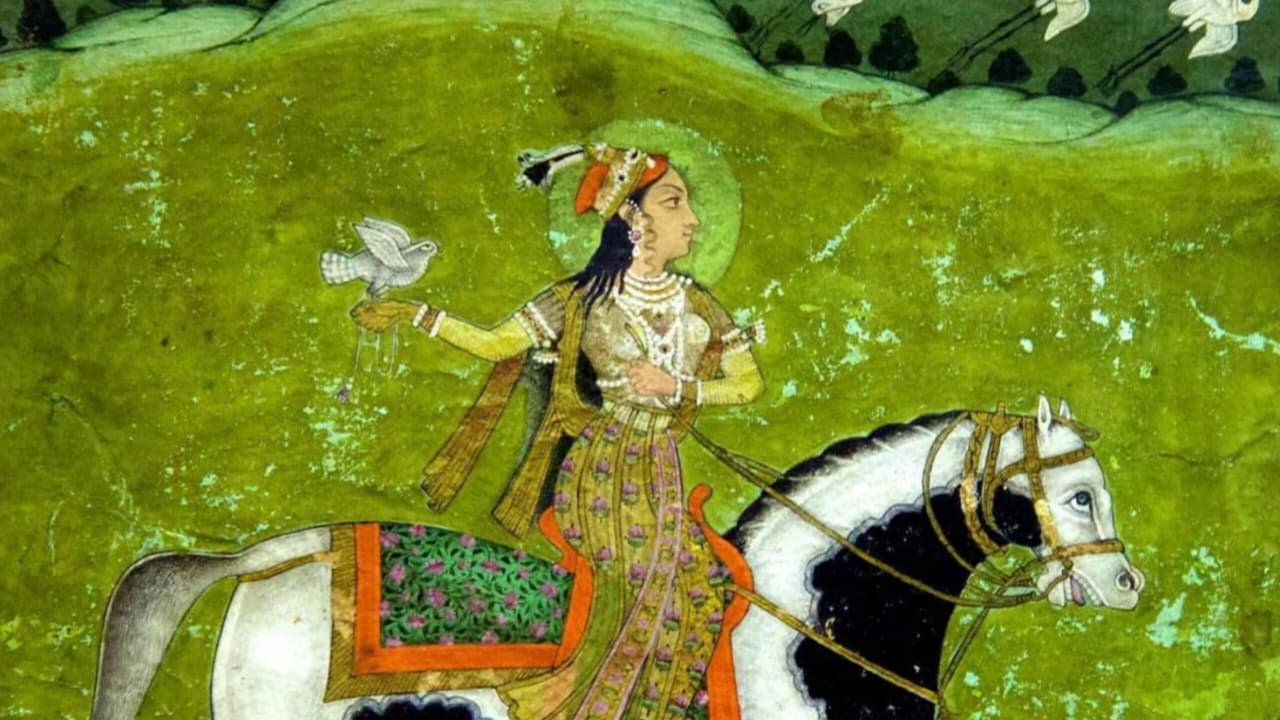
Razia Sultan, whose full name was Raziyyat-Ud-Dunya Wa Ud-Din, ruled the Delhi Sultanate from 1236 to 1240 before being removed from power. She was the first Muslim woman to rule in the Indian subcontinent and remains the only female Muslim sultan of Delhi, breaking tradition in a male-dominated era.
This made her a historic figure, as women rarely held such authority in medieval Islamic kingdoms there. Born around 1205, she died on October 15, 1240. Her short reign highlighted both her capabilities and the challenges of gender biases among nobles.
Razia Sultana’s name is sometimes written in different ways, like Raḍiyya or Raziyya, because of differences in language and spelling. Many modern writers call her “Sultana”, but this might not be correct. The word Sultana usually means “the wife of a Sultan,” not a woman who rules.
Razia did not want to be seen as just a queen or wife—she ruled as a king. On her coins, she used strong royal titles like “Sultan Jalalat al-Duniya wal-Din” and “al-Sultan al-Muazzam Raziyat al-Din, daughter of the Sultan.” These titles show that she considered herself a full ruler, equal to male kings.
In Sanskrit inscriptions of that time, her name was written as Jallaladina. A historian named Minhaj-i-Siraj also referred to her as “Sultan Raziyat al-Duniya wa’l Din, daughter of the Sultan.” She was even given another title, Padshah (Badshah), which is usually used for male emperors. Overall, all these titles show that Razia wanted to be recognized not as a female ruler with a lesser status, but as a powerful and independent monarch, equal to any king of her time.
Early life:
Razia was born to Shamsuddin Iltutmish, the ruler of the Delhi Sultanate. He was originally an Ilbari Turk and had once been a slave (mamluk) of his master, Qutb ud-Din Aibak, before rising to power and becoming Sultan himself. Razia’s mother, Turkan Khatun, was the daughter of Qutb ud-Din Aibak and the chief (main) wife of Iltutmish. This made Razia part of a strong and important royal family from both her father’s and mother’s side.
Razia was the eldest daughter of Iltutmish and was likely his first child. From a young age, she was brought up in a royal environment where she received good education and training. Unlike most girls of her time, she was taught not only reading and writing but also skills related to ruling a kingdom, such as administration, decision-making, and even warfare.
Because of her intelligence, courage, and leadership qualities, Iltutmish trusted her more than his sons. He believed that Razia was capable of ruling the kingdom, which later played an important role in her becoming one of the few female rulers in Indian history.
Razia’s rise to power:
Shamsuddin Iltutmish had trained his eldest son, Nasiruddin Mahmud, to become the next ruler. Nasiruddin Mahmud was appointed governor of Bengal and during his tenure, he led military campaigns against Raja Prithu of Kamarupa.
Nasiruddin Mahmud defeated and killed Raja Prithu during his eastern campaigns, becoming the ruler of Kamarupa kingdom. However, Nasiruddin died suddenly in 1229, which was a big loss for Iltutmish. The Sultan then looked at his other sons, but he felt they were more interested in luxury and enjoyment and were not capable of ruling the kingdom properly.
In 1231, when Iltutmish went on a military campaign to Gwalior, he left his daughter Razia in charge of Delhi. Razia handled the administration very efficiently and impressed her father. After returning, Iltutmish decided that Razia was the most capable among his children and chose her as his successor.
He even ordered an official decree to declare her the next ruler. When some nobles objected, saying that he had sons, Iltutmish replied that Razia was more worthy than all of them. However, after Iltutmish’s death, the nobles ignored his decision and made his son Ruknuddin Firuz the Sultan.
Ruknuddin proved to be a weak ruler and left most of the power to his mother, Shah Turkan. She ruled harshly and became very unpopular. She even ordered the blinding and killing of Iltutmish’s other son, which angered many nobles. Soon, several nobles and officials rebelled against the rule of Ruknuddin and his mother.
The situation worsened when some officers started killing other important officials in the court. While Ruknuddin went away to fight the rebels, Shah Turkan planned to kill Razia in Delhi. But Razia acted quickly. During a public prayer gathering, she spoke to the people and told them about the injustice being done. The people supported her and rose against Shah Turkan. A crowd attacked the palace, captured Shah Turkan, and many nobles and soldiers declared their support for Razia.
As a result, Razia was placed on the throne in 1236, becoming the first female Muslim ruler in South Asia. Ruknuddin tried to return and regain power, but Razia’s forces captured him. He was imprisoned and later executed.
Opposition of the forty nobles: The “Forty Turkic nobles”, also known as the Chahalgani, were an influential group of elite nobles during the early period of the Delhi Sultanate. They were originally created by Shamsuddin Iltutmish in the 13th century. Iltutmish selected about forty loyal Turkic slave-officers (called bandagan) and elevated them to high administrative and military positions. These nobles formed a powerful inner circle that helped him govern and stabilize the Sultanate after a period of political uncertainty.
From the very beginning of Razia’s rule, she faced strong opposition from these Turkic nobles. These nobles were not happy because she became the ruler with the support of the common people of Delhi instead of their support. They believed that only they had the right to choose the ruler. Razia also tried to reduce their power by giving important positions to non-Turkic people, which made the Turkic nobles even more angry and jealous.
One important officer, Nizamul Mulk Muhammad Junaidi, who had been the wazir (prime minister) since the time of Iltutmish, refused to accept Razia as the ruler. He joined hands with four powerful Turkic nobles—Malik Izzuddin Muhammad Salari of Badaun, Malik Izzuddin Kabir Khan Ayaz of Multan, Malik Saifuddin Kuchi of Hansi, and Malik Alauddin Jani of Lahore. All of them united against Razia and began marching towards Delhi from different sides to remove her from power.
Razia needed support to fight them, so she called out for help from Malik Nusratuddin Taisi, the governor of Awadh But unfortunately, while coming to Delhi, Nusratuddin Taisi was captured by the forces of Kuchi after crossing the Ganges River. He was taken prisoner and died in captivity, which was a big loss for Razia.
Even after this setback, Razia did not lose courage. She herself led her army out of the safety of Delhi and moved towards the Yamuna River, where she set up a camp to face the rebels. There were some small and unclear battles between the two sides.
During this time, two rebel leaders, Muhammad Salari and Kabir Khan Ayaz, changed their minds. They decided to support Razia and secretly met her. Together, they made a plan to arrest the other rebel leaders, especially Junaidi.
However, this secret plan was discovered by Junaidi and the other rebels. As a result, they quickly escaped before they could be captured. Razia’s army chased them. Saifuddin Kuchi and his brother Fakhruddin were caught, imprisoned, and later executed as punishment.
Junaidi ran away to the Sirmaur hills, where he eventually died. Another rebel, Alauddin Jani, was killed in Nakawan village, and his head was brought to Delhi as proof of his death. In this way, Razia managed to defeat many of her enemies. This showed her bravery, leadership, and determination. However, the opposition from powerful nobles did not completely end, and she continued to face challenges throughout her rule.
Reign & Administration:
After becoming the ruler, Razia quickly made several important decisions to strengthen her control over the kingdom. She appointed Khwaja Muhazzabuddin as her new wazir (prime minister) and gave him the title Nizamul Mulk. He had earlier worked as a deputy under the previous wazir, Junaidi, so he already had experience in administration.
For the army, Razia first appointed Malik Saifuddin Aibek Bahtu and gave him the title Qutlugh Khan. But he died soon after, so Razia created a new post called naib-i lashkar (in-charge of the army) and gave this responsibility to Malik Qutubuddin Hasan Ghuri.
Razia also rewarded those who supported her. She gave the region of Lahore (called an iqta’) to Malik Izzuddin Kabir Khan Ayaz, who had earlier been a rebel but later joined her side. She placed her trusted people in important positions in the royal court. For example, Malik-i Kabir Ikhtiyaruddin Aitigin was made Amir-i Hajib (a high-ranking court official), and Malik Jamaluddin Yaqut was made Amir-i Akhur (in charge of royal stables). Soon after these appointments, most nobles across the empire accepted Razia’s authority.
Razia also had to deal with threats from outside. In 1238, Malik Hasan Qarlugh, a former governor of Ghazni, was under danger from the Mongols. He sent his son to Delhi to ask Razia for help, likely hoping for a military alliance. Razia treated the prince kindly and gave him financial support by granting him the revenues of Baran. However, she refused to form an alliance against the Mongols, probably to avoid getting involved in a dangerous conflict.
Conflict with Chahamanas:
After dealing with internal rebellions, Razia focused on strengthening her control over other regions. Her first military campaign against a non-rebel area was directed at Ranthambore. The ruler there had declared independence after the death of Iltutmish. Razia sent Malik Qutubuddin Hasan Ghuri to capture it.
He managed to safely bring back the Turkic officers from the fort, but he could not fully defeat the local rulers, known as the Chahamanas. The Chahamanas then formed an alliance with the Mewatis and captured a large part of north-eastern Rajasthan.
They also started using guerrilla warfare tactics, especially around Delhi. This made it difficult for Razia’s army to control them. She also tried to regain control over Gwalior by sending another army, but this campaign had to be stopped before success.
Anti-Sunni riots during her reign:
During her reign, there were also religious conflicts. A group of Shias revolted against the Sultanate, but Razia managed to control the situation. In one serious incident, a group of Qarmatians attacked the main mosque (Jama Masjid) in Delhi during Friday prayers.
Their leader, Nuruddin Turk, opposed the Sunni beliefs and had gathered about 1,000 followers from different regions like Delhi, Gujarat, Sindh, and the Doab. On 5 March 1237, they entered the mosque and started attacking the people praying there. However, the citizens of Delhi fought back, and the attack was eventually stopped.
Consolidation of power:
Razia Sultan was originally supported by nobles who wanted her to be just a symbolic ruler, but she slowly began to take real control of the kingdom. In the beginning, the coins were issued in her father Iltutmish’s name along with hers. However, by 1237–1238, she became more confident and started issuing coins only in her own name.
At first, Razia followed the tradition of purdah (seclusion). She sat behind a screen during court, separated from the nobles and the public, and was protected by female guards. But later, she broke these customs. She began to appear in public openly, dressed like a male ruler.
She wore a long coat (qaba) and a cap (kulah), and even rode elephants through the streets of Delhi, just like earlier Sultans. This showed her confidence and desire to be seen as a strong ruler.
However, her growing power and bold actions made many nobles unhappy, especially the Turkic nobles. They were also angry because Razia started giving important positions to people who were not Turks. One such person was Jamal-ud-Din Yaqut, who was of Abyssinian (African) origin. She appointed him to the important post of Amir-i-Akhur (in charge of royal stables), which had traditionally been held by Turkic nobles. This caused jealousy and anger among them.
Rebellion against Razia:
Around 1238–1239, a governor named Malik Ikhtiyaruddin Kabir Khan Ayaz rebelled against her rule in Lahore. Razia personally led her army against him, forcing him to run away towards Sodhra. Since that area was under Mongol control, he had no safe place to escape and finally surrendered. Razia showed kindness by forgiving him. She took away Lahore from him but gave him control of Multan instead.
Razia promoted officers like Ikhtiyaruddin Aitigin and Ikhtiyaruddin Altunia, both former slaves of Iltutmish. However, these men later turned against her. While Razia was busy dealing with the rebellion in Lahore, they secretly joined other Turkic nobles in plotting to remove her from power.
When Razia returned to Delhi on 3 April 1240, she found out that Altunia had rebelled in Tabarhinda. Not knowing that many nobles in Delhi were also against her, she quickly marched to suppress the revolt. During the conflict, her loyal supporter Yaqut was killed, and Razia herself was defeated and captured by Altunia.
When Razia Sultan was captured, the nobles in Delhi quickly took advantage of the situation. They placed her half-brother Muizuddin Bahram Shah, a son of Iltutmish, on the throne. He officially became Sultan on 21 April 1240, and by 5 May, the nobles had formally accepted him as their ruler.
However, the nobles did not want Bahram Shah to have real power. They wanted a weak ruler they could control. For this purpose, they created a powerful post called naib-i mamlakat (similar to a regent), and gave it to Ikhtiyaruddin Aitigin. But things did not go as planned. Within one or two months, Bahram Shah had Aitigin killed, showing that he was not willing to be controlled so easily.
Razia’s attempt to regain power:
Meanwhile, after removing Razia, the nobles in Delhi divided important positions and lands (iqtas) among themselves. They ignored Ikhtiyaruddin Altunia, even though he had played a major role in capturing Razia. Feeling cheated and disappointed, Altunia changed his mind. He decided to join hands with Razia instead of opposing her. Razia also saw this as a chance to regain her throne. To strengthen their alliance, she married Altunia in September 1240.
Together, they gathered support from some nobles who were also dissatisfied with Bahram Shah’s rule. Among their supporters were leaders like Malik Qaraqash and Malik Salari. Altunia then raised an army, which included groups like the Khokhars, Jats, and Rajputs. With this army, Razia and Altunia marched towards Delhi to reclaim power. But Sultan Bahram Shah also prepared his forces and confronted them. In a battle fought around September–October 1240, Bahram Shah’s army defeated Razia and Altunia on 14 October 1240.
Death: After their defeat, Razia and Altunia tried to escape and flee towards Kaithal. Reportedly, they were killed by bandits while resting under a tree. More likely, they were captured and killed by local people or enemies on 13 October 1240.
Razia’s tomb: The grave of Razia Sultan is believed to be located in the area of Mohalla Bulbuli Khana, near Turkman Gate in Delhi. The famous 14th-century traveler Ibn Battuta wrote that Razia’s tomb had become a place of pilgrimage. A dome was built over her grave, and many people used to visit it to offer prayers and seek blessings, showing how respected she was even after her death.
It is believed that her tomb was built by her half-brother and successor Muizuddin Bahram Shah. Next to her grave, there is another tomb which is said to belong to her sister, Shazia. Razia was also a follower of the Sufi saint Shah Turkman Bayabani, and it is said that she was buried in the same place where his hospice (khanqah) was located.
Interestingly, there is another site in Kaithal where a ruined structure is believed by some people to be the original burial place of Razia Sultan. This has created some confusion about her exact burial location, but the tomb in Delhi is more widely accepted as her resting place.
Her tomb in modern day: Today, however, the condition of her tomb is not very good. The site does not receive much attention. The Archaeological Survey of India carries out basic maintenance once a year, but it has not been able to properly restore or beautify the area.
This is mainly because the tomb is surrounded by illegal constructions and is located in a very narrow and crowded lane, making access difficult. In the late 20th century, locals rebuilt the old mosque that was once part of the hospice. The place lacks proper care and recognition.
Coinage: Razia Sultan’s coins were mainly made of silver and billon (a cheaper silver alloy), with just one rare gold coin known in the Bengal style. She struck silver tankas—standard coins at the time—from mints in both Bengal’s Lakhnauti and Delhi. While ruling from Delhi, she put her own coins in her father Iltutmish’s name, using the female version of his title, “Nasrat” (instead of the male “Nasir”), as a way to legitimize her rule during a time when few women led Muslim empires.
Significance: Razia Sultana matters in world history because she was the first and only female ruler of the Delhi Sultanate, breaking a major gender barrier in a powerful medieval Islamic state. Her reign from 1236 to 1240 is remembered as a rare example of female political authority in a strongly patriarchal era. Razia’s importance is not only that she ruled, but that she ruled a major political center, Delhi, at a time when women almost never held sovereign power there.
She is widely described as a capable leader. Her reign is significant in broader world history because it shows that medieval societies were not entirely closed to women’s rule, even if such cases were exceptional. Razia became a lasting symbol of resistance to patriarchal politics in South Asia, and her story is still used to discuss women’s leadership and state power.
Bibliography:
-
Juzjani, Minhaj-i-Siraj. (1970). Tabakat-i-Nasiri. Munshiram Manoharlal.
-
Changsan, Lalpiengmawi., Das, Ankita., & Das, Bandita. (2024). History of India (1206-1757 CE). Union Book Publication.
-
Habib, Mohammad., Nizami, Khaliq Ahmad. (1970). A Comprehensive History of India: The Delhi Sultanat (A.D. 1206-1526). People’s Publishing House.
Comments are closed.