
The Last Lesson We Cannot Afford to Skip
NEP 2020 envisages learners who think, question and act. Our schools can begin by teaching children to protect the planet.

Afshan Nabi
“We have taught children about the environment without teaching them to care for it. Education must change not only what a child knows, but also how a child lives.”
A child can recite the water cycle perfectly and still leave the tap running. She can score full marks in a chapter on pollution and still toss a wrapper out of a bus window. This is the quiet failure of our education system: we have taught children about the environment without teaching them to care for it.
The stakes are no longer abstract. Toxic air hangs over our cities, groundwater levels are falling, forests are shrinking and the seasons have become increasingly unpredictable. Today’s schoolchildren will inherit all of this. We must ask ourselves whether we are preparing them merely to live with the consequences—or to help solve them.
A policy with the right instinct
The National Education Policy 2020 points the way. It calls for experiential learning, critical thinking, constitutional values and environmental awareness. It seeks to dissolve the rigid divide between “curricular” and “co-curricular” activities and to replace rote memorisation with meaningful understanding.
Its message is clear: education should change how a child lives, not merely what she writes in an examination. Environmental education is where that promise can be tested first.
The classroom is bigger than the classroom
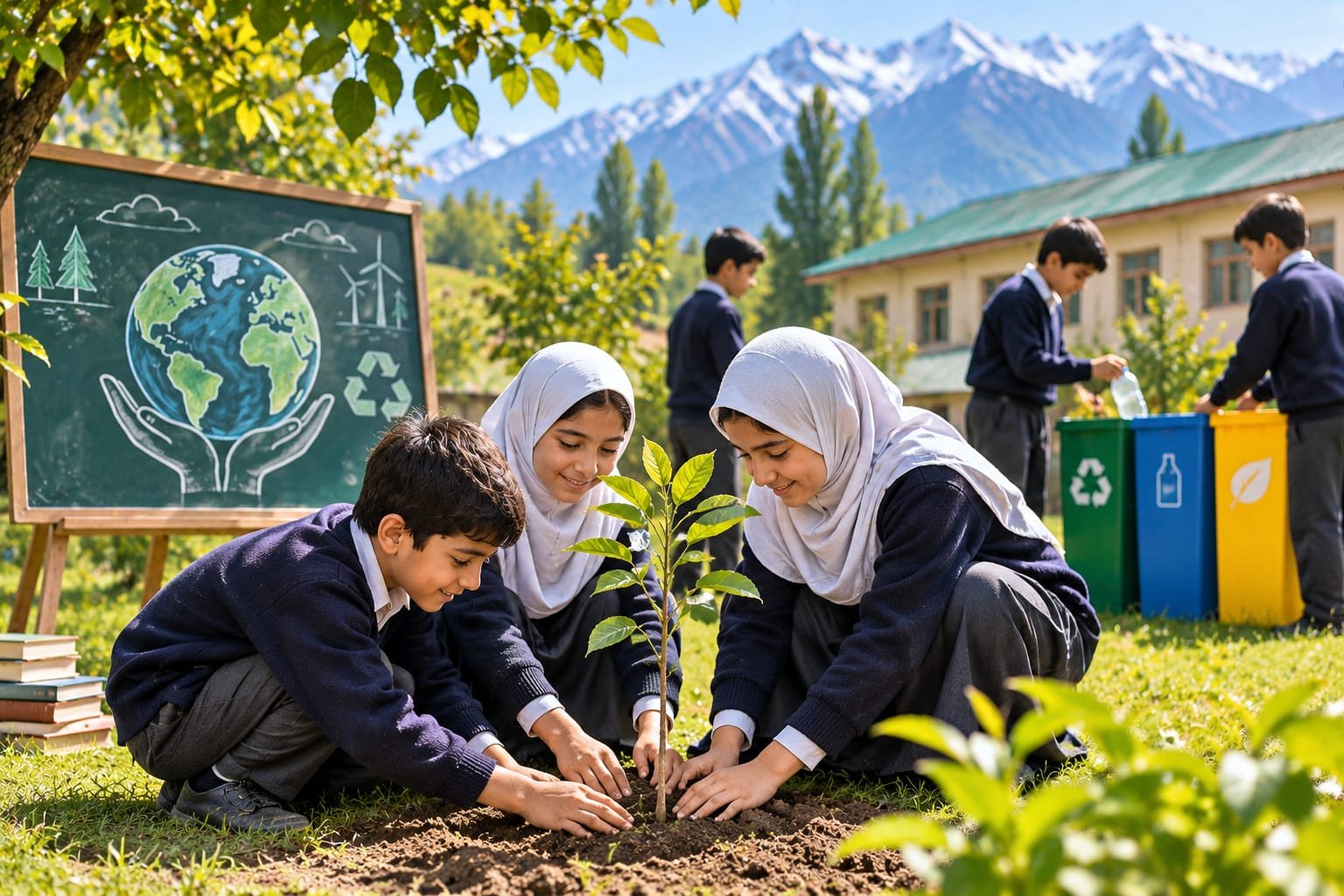
A child who plants a sapling and waters it for a year learns more about ecosystems than any textbook definition can teach. A class that audits its school’s water and electricity consumption learns mathematics, science and civic responsibility in a single exercise. A child who segregates wet and dry waste for a month will never again see garbage as somebody else’s problem.
None of this requires large budgets. It requires imagination, commitment and consistency. Schools can begin with simple, practical initiatives:
-
Kitchen gardens and plantation drives that teach patience and show children where food comes from.
-
Waste segregation and reuse practices that make environmental responsibility a daily habit.
-
Nature walks that turn children into careful observers of local birds, insects and plants.
-
Plastic-free campuses that set an example for homes and neighbourhoods.
-
Water and energy audits that make conservation measurable, personal and meaningful.
Small voices, larger change
The deepest impact begins when learning moves beyond the school gate. A child who refuses a plastic bag can change what a family brings home from the market. A child who notices a leaking tap can inspire a household to repair it. Children are among society’s most persuasive messengers, and schools must deliberately nurture them as young environmental ambassadors.
Children who observe, question and test solutions to real problems also develop the scientific temper that NEP 2020 values. Some of them will become the scientists, engineers, teachers and policymakers who solve the challenges our generation has left unresolved.
Everyone’s classroom
Governments can frame policies and organisations can run campaigns, but neither can succeed alone. This effort needs teachers who weave nature into every subject, parents who practise at home what children learn in school, and communities that protect the resources they share.
We often say that children are the future. The harder question is: what kind of future are we handing them, and are we raising the kind of people capable of protecting it?
Let us educate children not merely to succeed in life, but to safeguard the life that makes success possible. The values we plant today will determine whether tomorrow’s world still has clean air to breathe and green land to walk upon.
Comments are closed.